
The complete guide
Choosing Crunchy Cat Treats, A Practical Buyer's Guide
The treat drawer problem
Most cat owners end up with a drawer full of half-finished treat bags. One was too soft and went sticky. One was too big and the cat only chewed the corner off. One smelled so strongly of fish that it had to be exiled to the garage. Buying cat treats looks simple until you have done it five times and your cat has rejected four of them.
The trouble is that treats get sold on packaging rather than on anything you can compare. A bag covered in words still does not tell you the one thing you want to know, which is whether this particular cat will eat this particular thing twice. So the practical approach is to narrow the field by the factors you can actually check, texture, main protein, piece size, pack size, and the ingredient panel, then test cheaply before you commit.
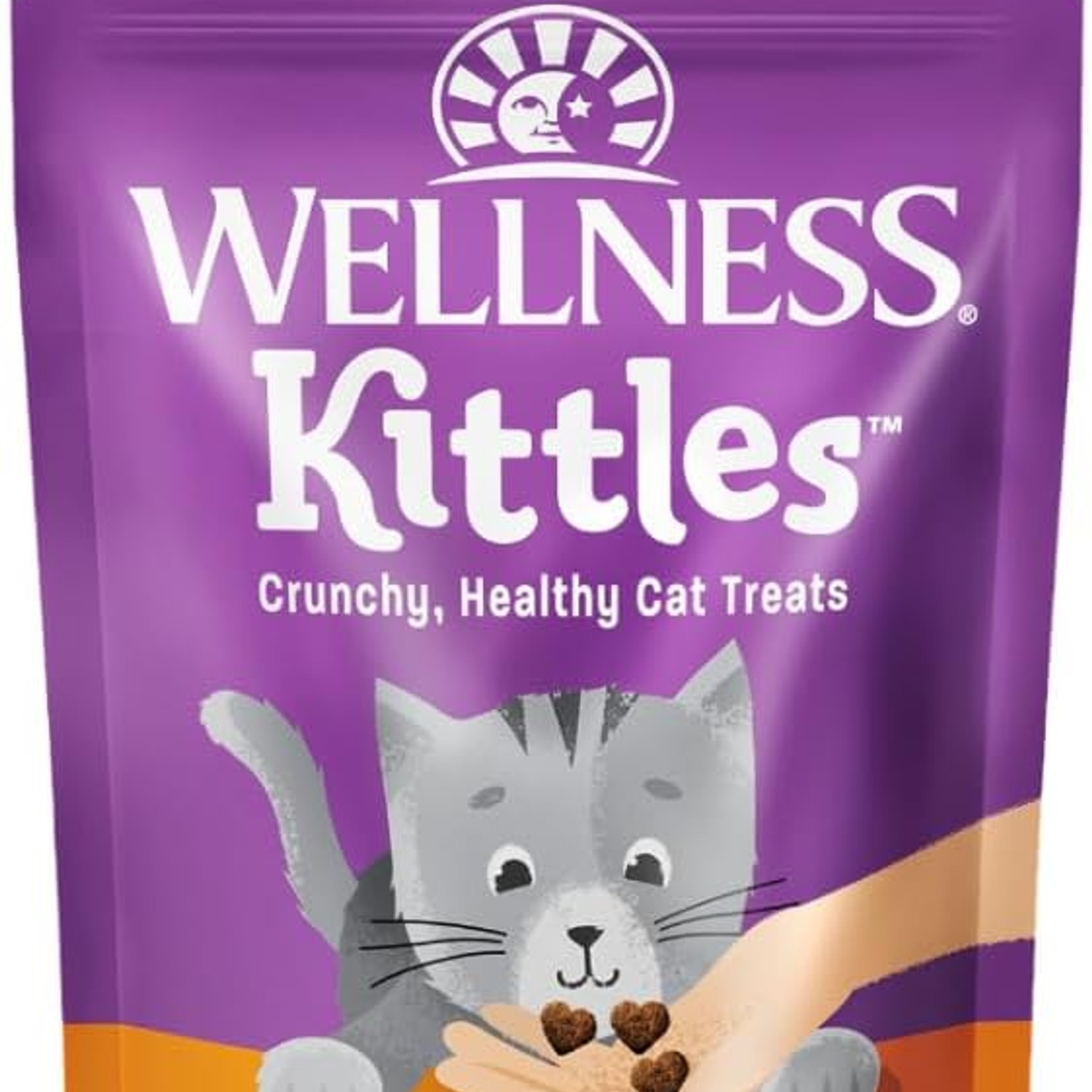
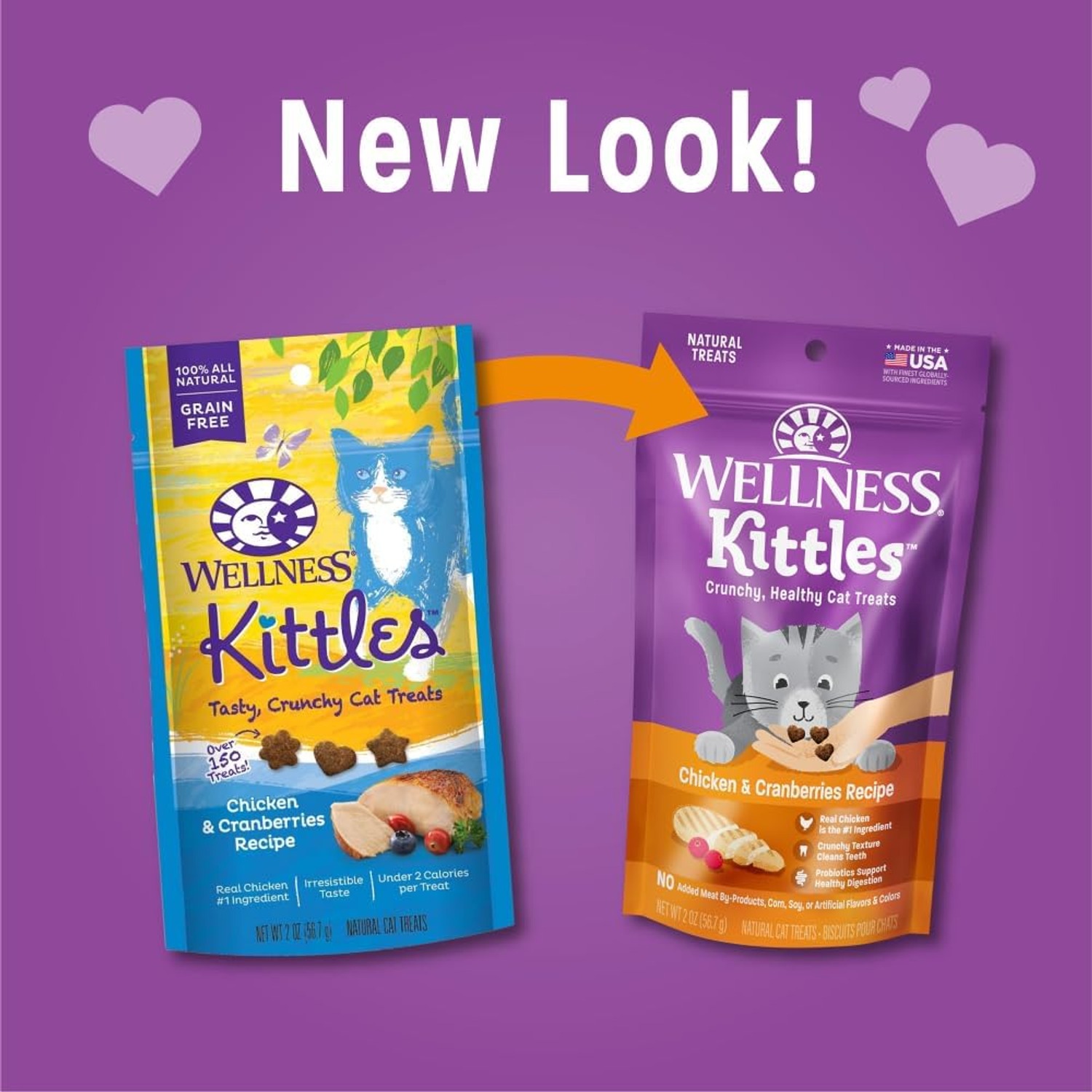
This guide walks through those factors using the Wellness Kittles Chicken & Cranberries Recipe as the worked example. It is a 56.7 g bag of crunchy dry kibble treats made by Wellness Pet LLC, listed for all life stages and all breed sizes.
Crunchy versus soft, and why it matters
Treats generally fall into two camps. Crunchy ones are dry kibble pieces, firm, shelf stable, and they pour. Soft ones are chewy or semi-moist, usually richer smelling, and they tend to need more careful storage once opened.
Crunchy treats have some everyday advantages. They do not leave residue on your fingers or the rug. They sit in a cupboard happily. They rattle in the bag, which a lot of cats learn to recognise within about two days. And because the pieces hold their shape, you can hand them out one at a time without the whole lot clumping together.
Soft treats win on aroma, which can matter for a fussy or older cat who needs more convincing. If your cat has previously ignored anything dry, that is useful information and you should probably look at the chewy side of the range instead.
Wellness Kittles sits firmly in the crunchy camp. The maker lists the item form as dry kibble and the texture as crunchy. The pieces are small, which is the other half of the equation.
Piece size and handing out treats
Small pieces are underrated. A treat that takes one bite lets you spread a handful across a whole evening, or across a short training session, without feeling like you have overfed. Bigger treats force you into an all-or-nothing choice, and most cats will not voluntarily leave half a biscuit on the floor.
If you use treats for recall, carrier practice, nail trims or just getting a nervous cat to come out from under the bed, small crunchy pieces are the easier tool. You can keep a few in a pocket. They do not disintegrate. People searching for the best training treats for cats usually end up at small, dry, single-bite products for exactly those reasons.
Reading the ingredient panel properly
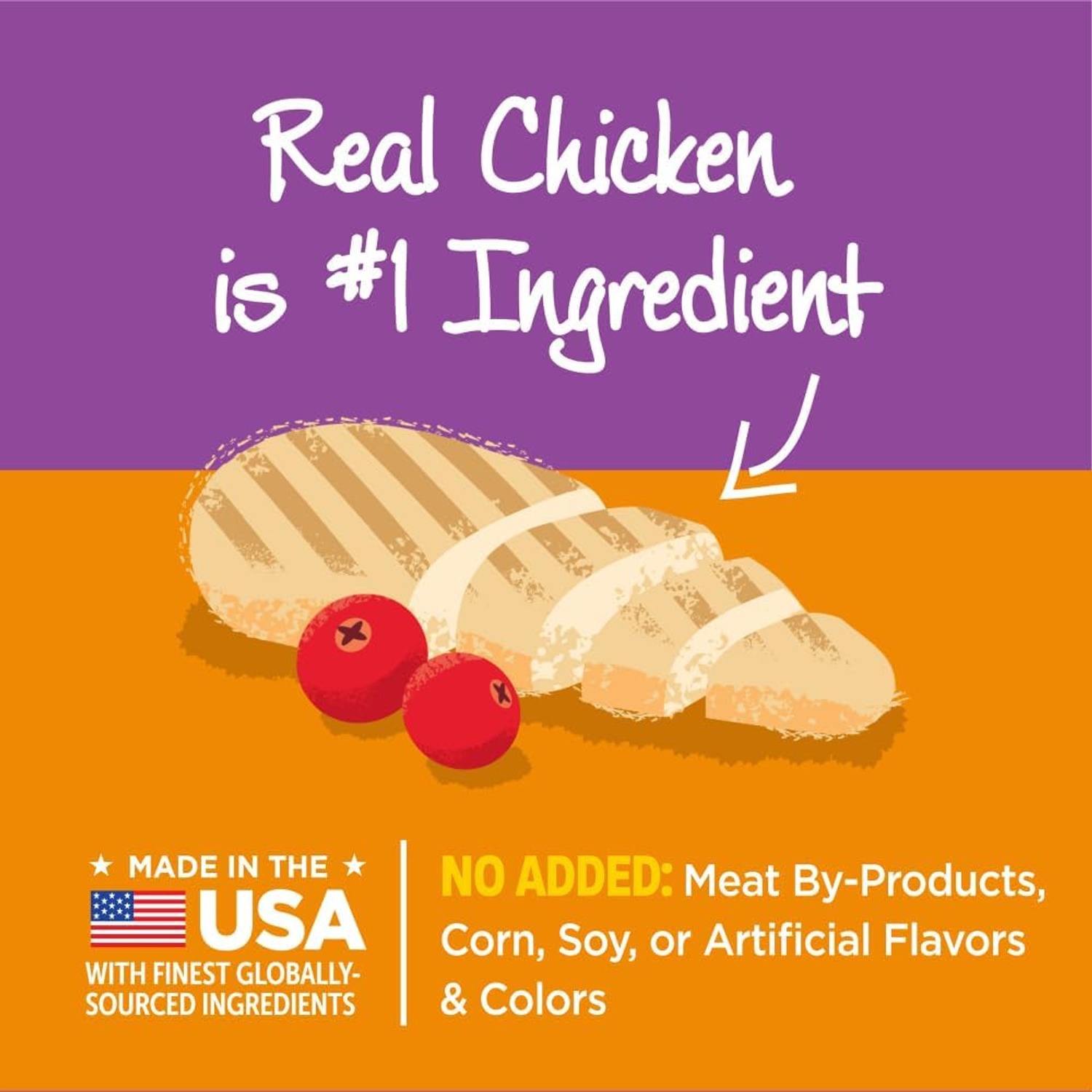
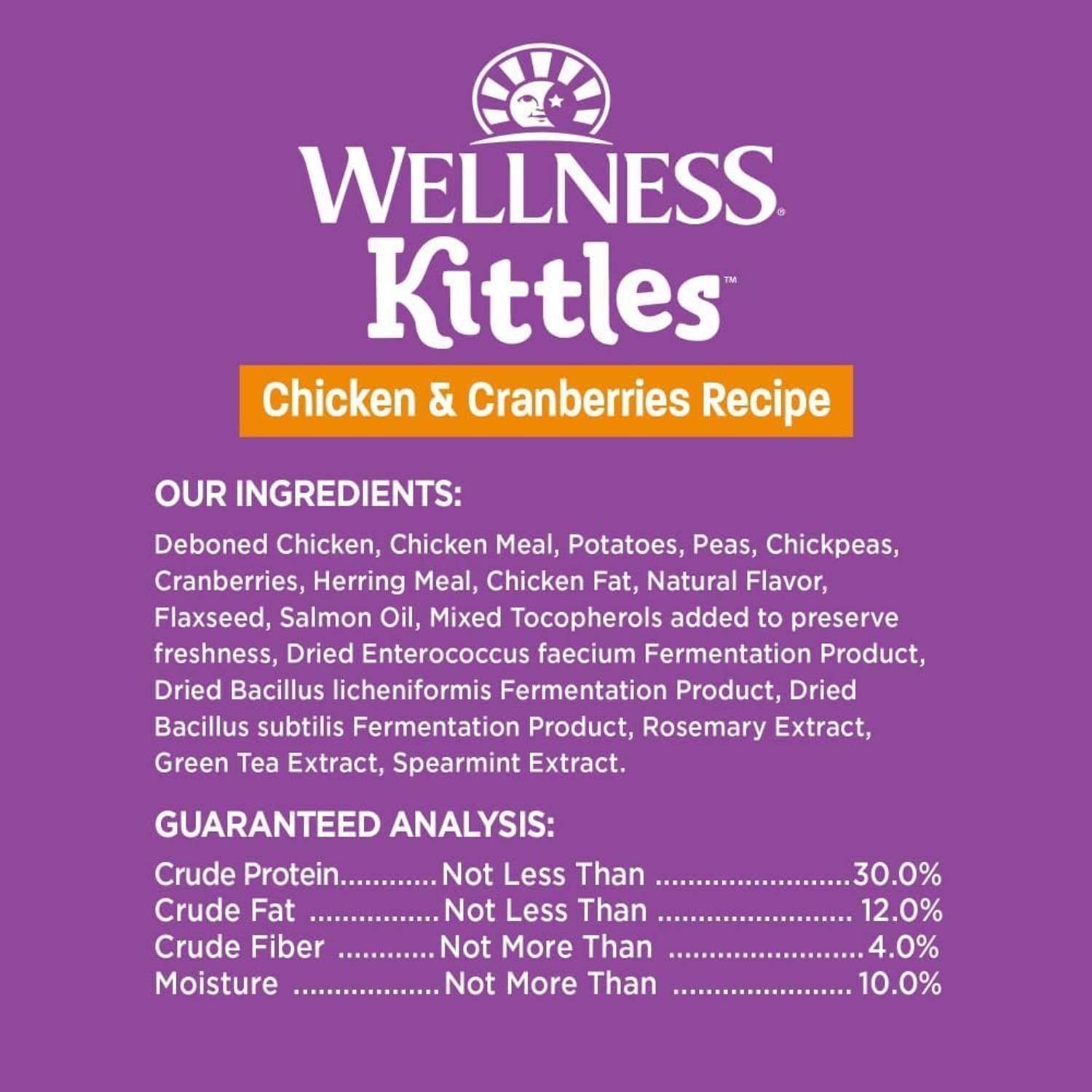
Ingredient lists are ordered by weight before cooking, so the first few entries tell you the most. On this recipe the order runs deboned chicken, chicken meal, potatoes, peas, chickpeas, cranberries. After that come herring meal, chicken fat, natural flavour, flaxseed and salmon oil, then mixed tocopherols that the maker adds to preserve freshness, three dried fermentation products, rosemary extract, green tea extract and spearmint.
Two useful takeaways from that. First, chicken leads, so if you are screening for the best chicken cat treats this one qualifies on the panel rather than just the front of the bag. Second, there is fish in it, via herring meal and salmon oil. That is easy to miss on a product named after chicken, and it genuinely matters if your cat reacts to fish.
The maker also lists the recipe as grain free, with soy free and wheat free noted in the allergen information. Grain free is a preference for some households rather than a requirement for most cats. If you are choosing it because of a suspected food sensitivity, that is a conversation to have with your vet rather than a decision to make from a bag.
Treats are not meals
This is the part worth being blunt about. Wellness states that the Kittles Chicken and Cranberries Recipe is intended for intermittent or supplemental feeding only. That phrasing is standard and it means the product is not formulated to be a cat's whole diet. Treats go on top of regular food, not instead of it.
How much is sensible depends on your cat's size, age, activity and what else they eat. We are not going to put a number on that, because the right number for a lean young cat and a sedentary older one are not the same. Your vet can give you a figure that actually fits your cat, and it is a two-minute question at a routine visit.
If you are the sort of household where several people hand out treats during the day, the practical fix is to count a day's worth into a small dish each morning. When the dish is empty, that is it. It stops the quiet over-feeding that happens when nobody is tracking.
Pack size and buying sensibly
A 56.7 g bag is a trial size, and that is a feature rather than a shortcoming. Buying a large bag of something your cat has never tasted is how treat drawers fill up. Start small, see whether the cat comes back for a second one the following day, and only then think about volume.
Small packs also stay fresh more easily. Dry treats lose their crunch once air gets at them, and a bag you finish in a few weeks will taste better at the end than one you work through for six months. Keep it sealed between uses, out of sunlight, somewhere cool. The best-before date is printed on the pack, so check it when the bag arrives.
Matching the treat to the cat
A few quick scenarios.
If you have a kitten and an older cat in the same house, a product listed for all life stages saves you buying two. This one is listed that way, and for all breed sizes.
If your cat has a diagnosed sensitivity or is on a vet-prescribed diet, do not improvise. Take the ingredient list to your vet and let them tell you what is safe to add.
If your cat has strong preferences and a short attention span, buy small and buy a couple of different textures rather than one big bag of a single thing. Variety costs a little more up front and wastes a lot less.
Looking after the bag
Care here is simple. Close the top after each use, either by folding and clipping or by tipping the contents into an airtight container. Store somewhere cool and dry. Keep it out of reach, because a determined cat will find a bag left on a bench, and a chewed bag is a wasted bag.
Wash your hands after handling, as you would with any pet food. And keep an eye on the date printed on the pack.
The short version
Decide on texture first, because that is where most rejections happen. Check the first few ingredients and look past the product name for anything your cat reacts to, fish in this case. Favour small pieces if you want to hand treats out across a session. Buy a small bag to test rather than committing to volume.
Wellness Kittles Chicken & Cranberries Recipe is a 56.7 g bag of small crunchy dry kibble treats, chicken first on the ingredient list, listed by the maker as grain free, soy free and wheat free, suitable for all life stages and all breed sizes. The maker is clear that it is for intermittent or supplemental feeding only. Treat it as a top-up to your cat's normal food, keep the portions modest, and ask your vet about anything diet related.