
The complete guide
Wet Cat Food Pouches, A Buyer's Guide to Jelly, Flavour and Pack Size
The problem with cat dinners
Feeding a cat sounds simple until you actually do it every day. You open a tin, your cat eats a third of it, and the rest goes in the fridge under cling film where it hardens into something nobody wants to look at. Two days later you throw it out. Multiply that by a year and you have wasted a fair bit of food and money.
Then there is the other problem. Cats get bored. A cat who devoured one flavour for six months will suddenly sit by the bowl and stare at you like you have insulted her. Owners end up with a cupboard of half-used tins, each one rejected for reasons the cat has not explained.
Single-serve pouches solve one of those problems outright and help with the other. A 70g pouch is one sitting. Open it, tip it out, done. Nothing goes back in the fridge to go sad and crusty. And because pouches come in multipacks and in a range of flavours, rotating is easy.
What jelly actually is, and why it matters
Wet cat food usually comes in one of three textures. Pate is smooth and uniform, almost like a mousse. Gravy is chunks swimming in a thickened sauce. Jelly is somewhere else entirely, with pieces of meat or fish set in a clear, wobbly gel that holds its shape when you tip it into a bowl.
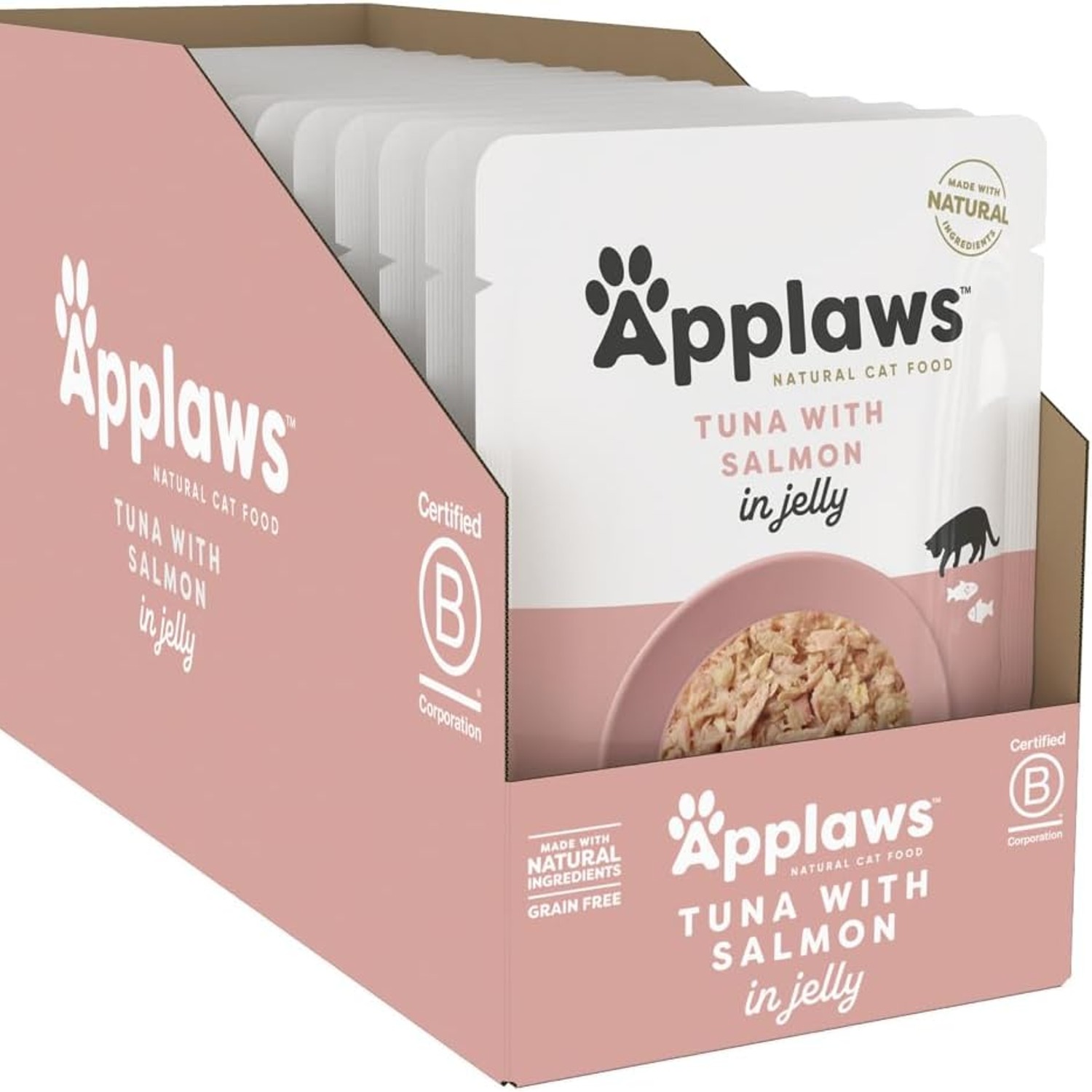
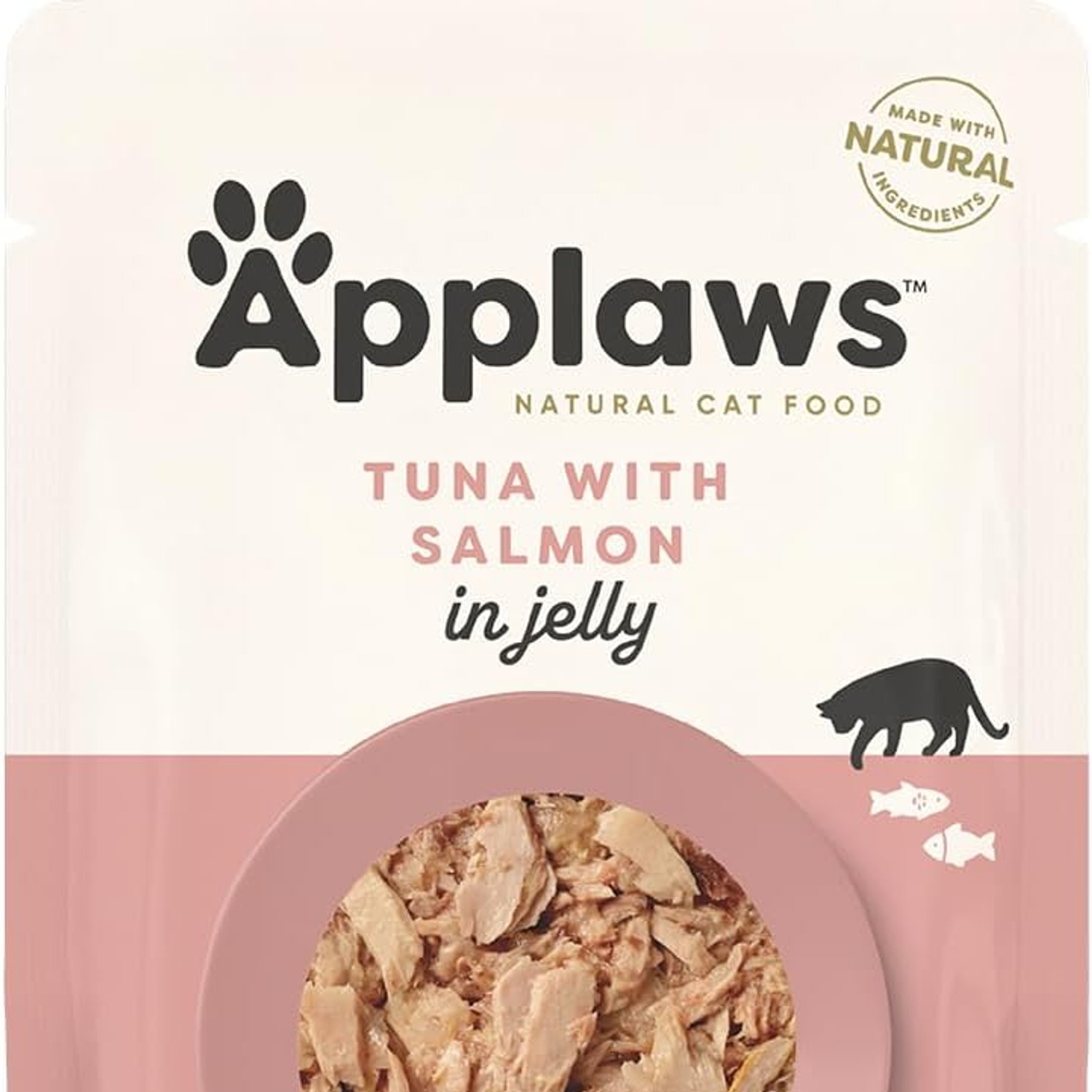
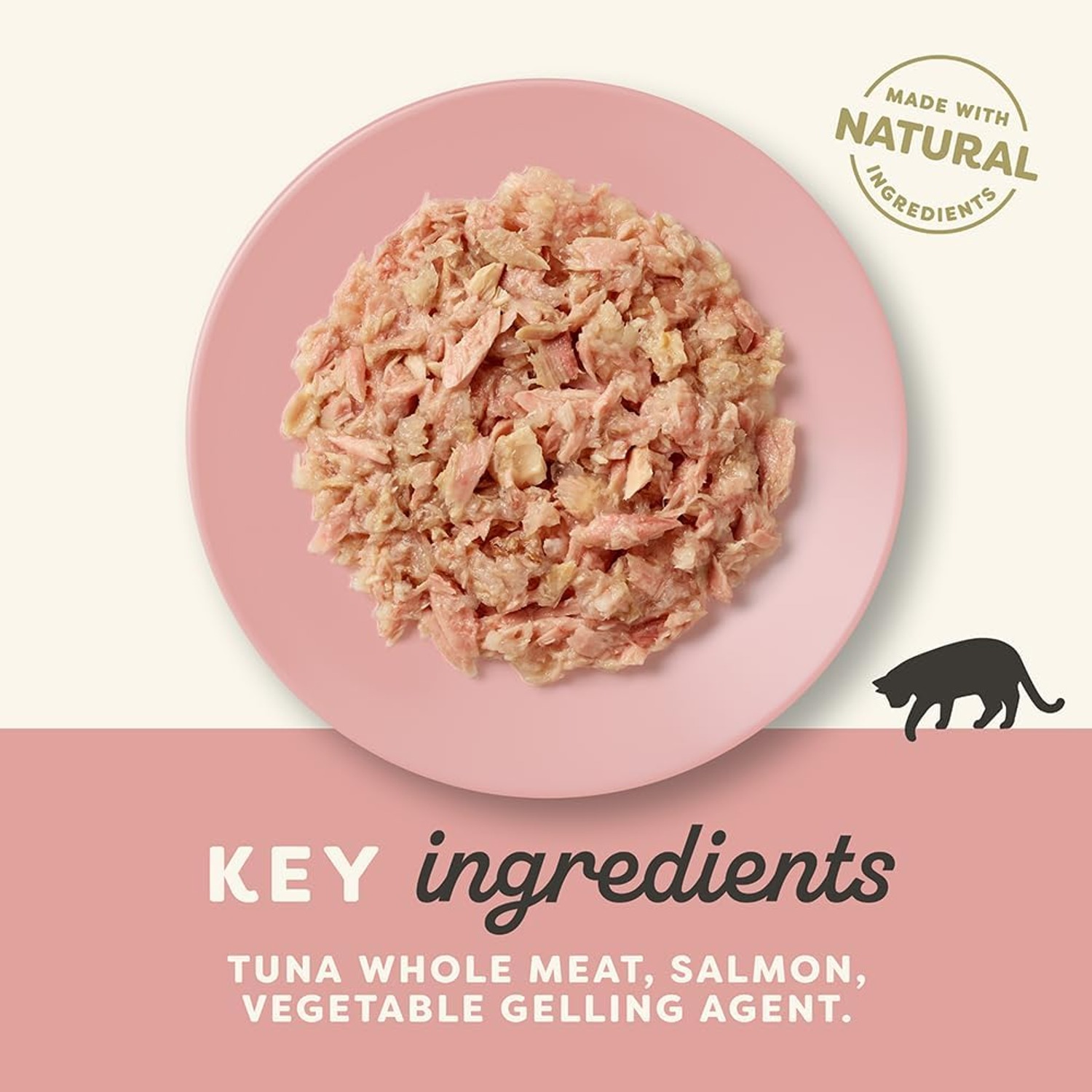
Applaws Tuna and Salmon in Jelly is the third kind. The item form is listed as flaked tuna fillets in jelly, so you can see the fish rather than a blended paste. For a lot of cats, that visible texture is the draw. They can pick at pieces rather than lick a flat surface.
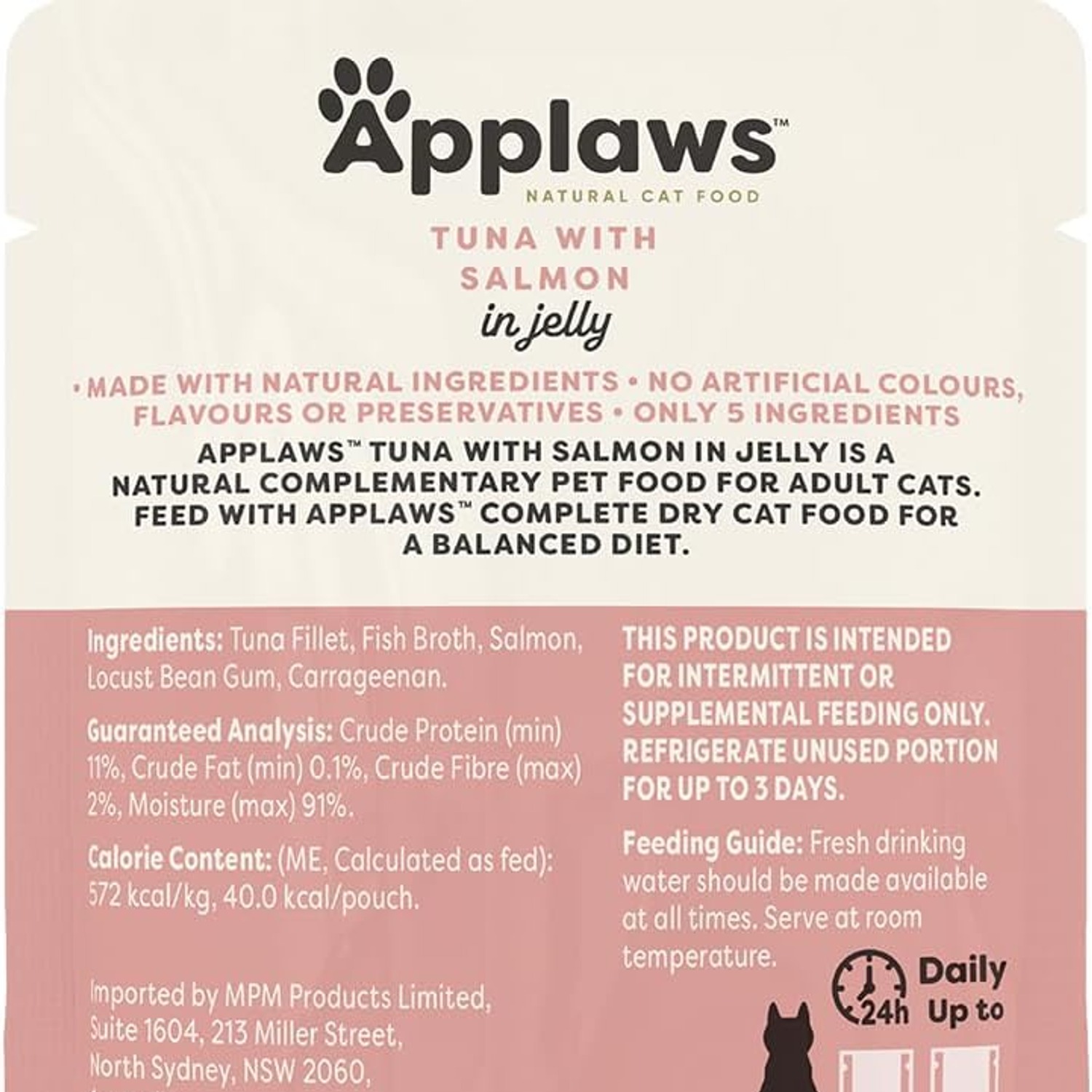
The jelly itself is made with locust bean gum and carrageenan. Both are setting agents, and both appear on the ingredient list alongside tuna, fish broth and salmon. That is the entire list, five items. If you have ever squinted at a cat food label trying to work out what half the words mean, a five item list is a relief.
Whether jelly or pate suits your cat is mostly down to your cat. Some will only eat smooth food. Some flatly refuse it. If you have never tried a jelly recipe, a multipack is a reasonable way to test it without committing to a whole case of one thing.
Complementary food versus complete food
This is the part worth reading carefully, because it changes how you use the product.
Applaws lists this food as a complementary wet food. In the maker's own feeding guide, the instruction is to mix the wet food portions with dry food to ensure a complete and balanced diet, and Applaws recommends serving it alongside their complete dry cat food. So these pouches are not designed to be the whole of your cat's diet on their own.
That is not unusual for a limited ingredient recipe. A short list of five ingredients is appealing precisely because it is short, but a complete diet needs a wider range of nutrients than five items can carry. Food like this is built to sit next to a complete dry food, adding moisture, flavour and variety to the bowl.
What does that mean in practice? Most owners feed a measured amount of dry food and add a pouch once a day, or split a pouch across two meals. How much of each depends on your cat's size, age and how much she moves around. That part is a conversation with your vet, not something a product page can work out for you.
Who these pouches suit
The pack is listed for adult cats, across all breed sizes, including indoor cats. If you have a kitten or a cat on a prescribed diet, check with your vet before adding anything new.
Beyond that, a few types of household tend to get on well with wet cat food pouches.
Households with one cat, where tins never get finished. A pouch is portioned for a single meal, so nothing is left over.
Households with two or more cats, where everyone eats at a different speed. Separate pouches make it easier to give each cat their own portion in their own bowl.
Owners whose cats have gone off their usual food. A different texture and a fish flavour can get interest going again.
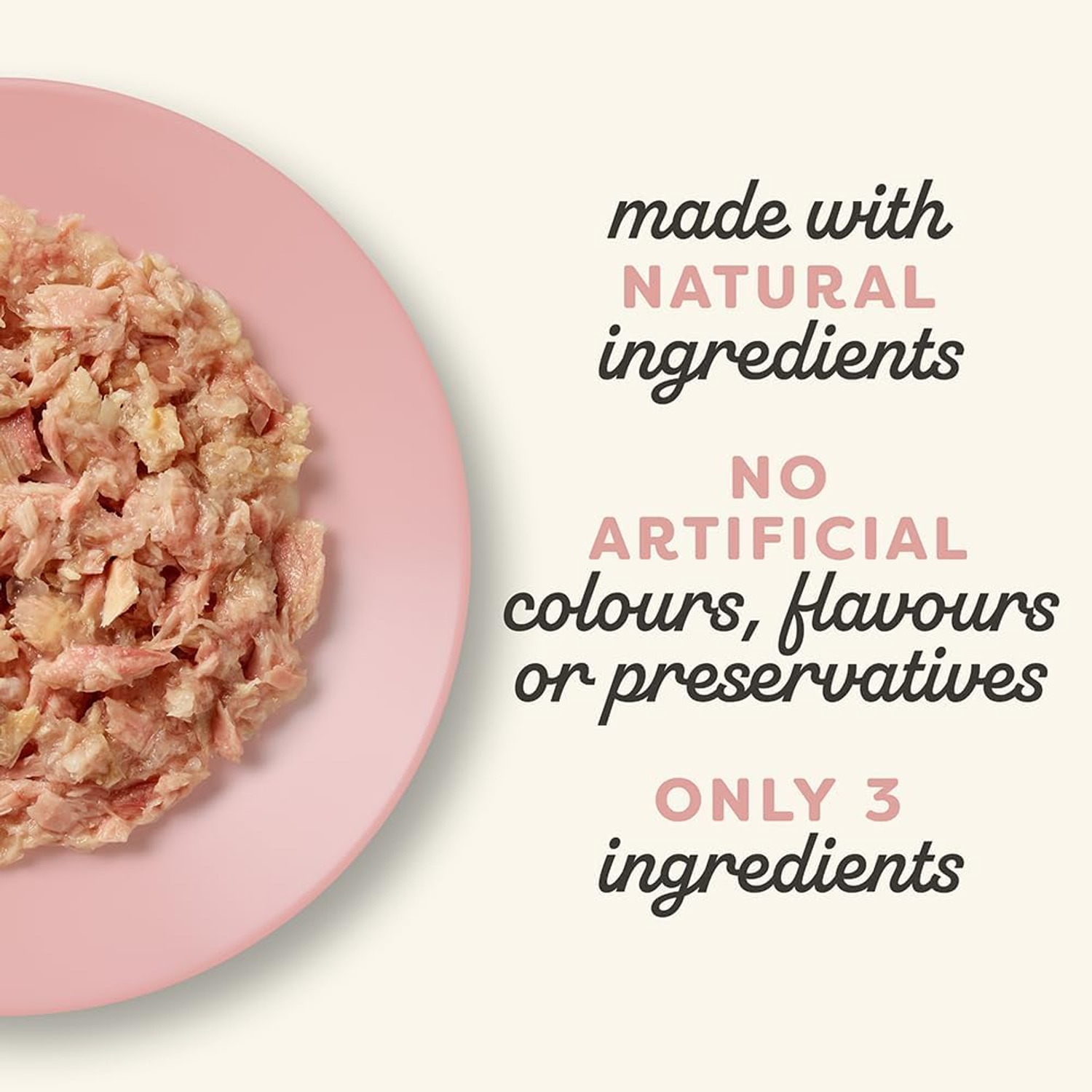
Anyone who reads labels. The five ingredient list, grain-free and preservative-free as described by the maker, makes this an easy product to understand at a glance.
How to choose a pack
A few things to weigh up before you buy.
Pouch size. These are 70g, which is a standard single serve for an adult cat. If your cat is small or you split meals, you may find one pouch covers two sittings on the same day. Anything left over goes in the fridge covered and gets used within 24 hours.
Pack count. Sixteen pouches is a sensible middle ground. For one cat on a daily pouch, that is a bit over two weeks. For two cats, roughly a week. Big cases of 40 or more are cheaper per pouch, but only if your cat actually likes the flavour, which is why a mid-size multipack is a safer first buy.
Flavour. Tuna and salmon is a fish combination, and fish is usually the easy sell with cats. If your cat has shown a clear preference for chicken or meat recipes, you may want to introduce this one alongside their usual food rather than swapping outright.
Storage space. Pouches stack flat and take up far less cupboard room than tins. The whole 16 pouch box weighs 1.12 kg, so it is easy to move around and easy to post.
Storage, serving and care
Unopened pouches sit happily in a cupboard. Keep them cool, dry and out of direct sunlight, and there is no need to refrigerate anything until it is opened. Check the best-before date printed on the pack when the box arrives and work through them in date order.
The pouches are designed for single use. If your cat does not finish a portion, put the remainder in a covered container in the fridge and use it within 24 hours. Food that has sat out in the bowl should be thrown away rather than returned to the fridge.
Serve at room temperature where you can. Food straight out of the fridge is less appealing to most cats, and letting it stand for a short while usually does the trick. Avoid heating it in a microwave, which creates hot spots.
Fresh water should be available at all times, whether your cat is eating wet food, dry food or both. Wash bowls daily like you would your own plates.
Delivery and change of mind
Orders are dispatched within two working days and then travel by tracked courier, usually arriving within seven working days. Delivery is free on orders over $99, and $12 below that.
If you change your mind, unopened and sealed packs can come back within 14 days of delivery, with return postage paid by you. Opened food cannot be returned for change of mind, which is standard for anything an animal eats. The Australian Consumer Law applies in full, so if something arrives damaged or faulty, get in touch and we will put it right.
A note on health questions
We keep product pages to what the maker states. Flavour, pack size, ingredients, life stage, format and the feeding guide are all here. What is not here is advice about digestion, weight, coats, teeth or anything else medical, because that properly belongs with your vet, who can actually examine your cat.
If your cat has a diagnosed condition, is on a prescribed diet, or has a history of reacting to certain foods, ask your vet before you change anything. A phone call is quicker than a problem.
The short version
Applaws Tuna and Salmon in Jelly gives you 16 single-serve pouches of 70g each, filled with flaked tuna fillets and salmon set in jelly. The ingredient list runs to five items, and the maker describes the recipe as grain-free and preservative-free, with no artificial colours or flavours.
It is listed by Applaws as a complementary wet food, so the maker's guidance is to serve it with their complete dry cat food for a balanced diet. It is suitable for adult cats of all breed sizes, including indoor cats.
If you want fish flavoured wet cat food pouches with a short label, portioned so nothing gets wasted, this multipack does the job. For how much to feed and anything to do with your cat's health, your vet is the one to ask.