
The complete guide
How to Choose Dry Cat Food (and Make the Bowl Work for Your Cat)
The problem with the cat food cupboard
Feeding a cat should be simple. In practice, it turns into a small ongoing project. You find something they will eat, you learn the exact spot in the supermarket where it lives, and then one Sunday you reach for the bag and it is empty. The cat is already shouting. The shops are shut. You end up opening something from the back of the shelf that they sniff once and walk away from.
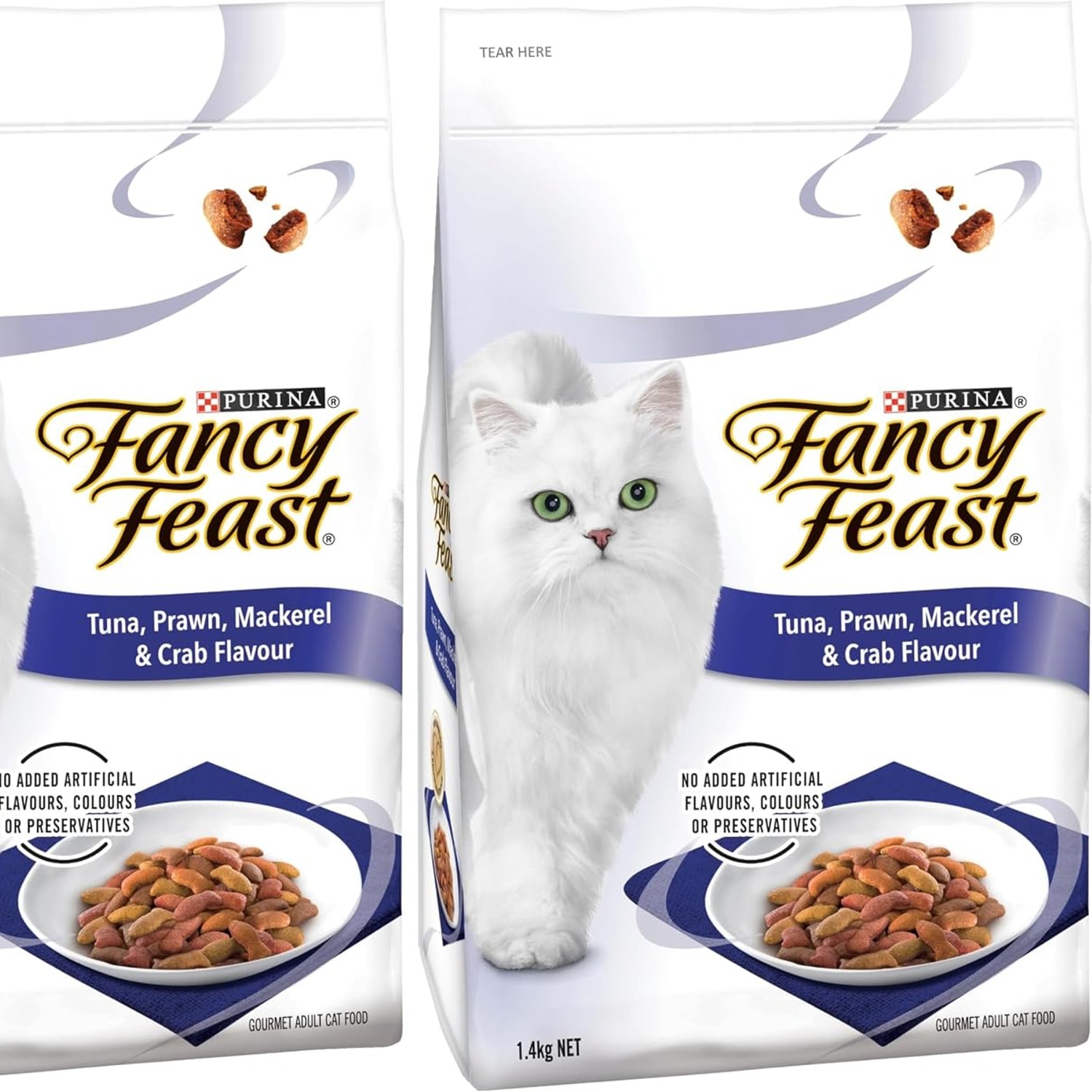
That is the problem a twin pack solves, and it is not a glamorous one. Two bags of Fancy Feast seafood flavour dry cat food, 2.8 kg in total, means there is a second bag sitting behind the first. You open one, and the other waits. It is a boring benefit, and it is probably the main reason people buy multipacks.
The second problem is palatability, which is a long word for whether the cat will actually eat it. Cats are selective in a way dogs are not. They pay attention to smell first, then texture, then taste, roughly in that order. A food can be nutritionally sound and still get ignored if the biscuit is the wrong shape or the smell is wrong on the day.
What this food actually is
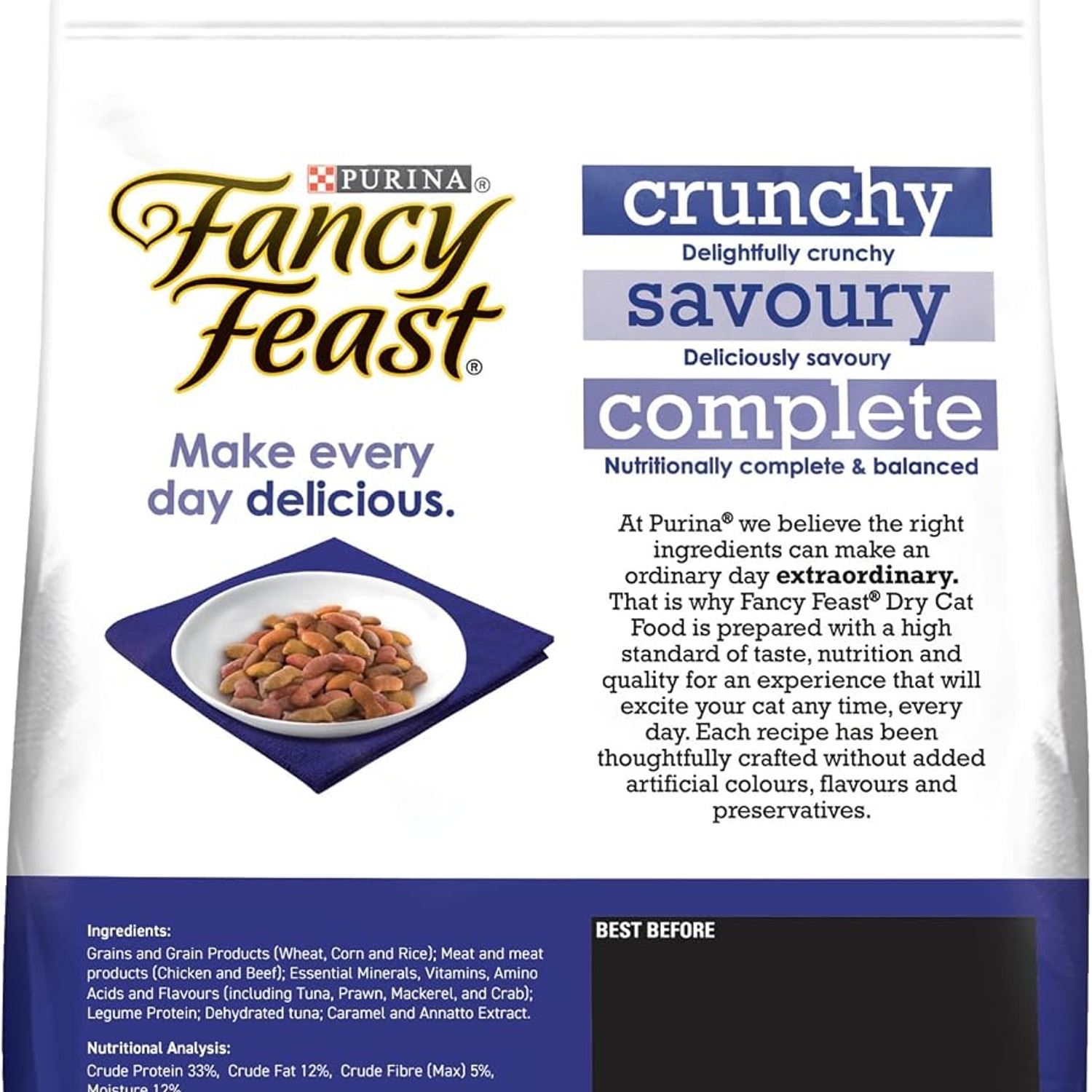
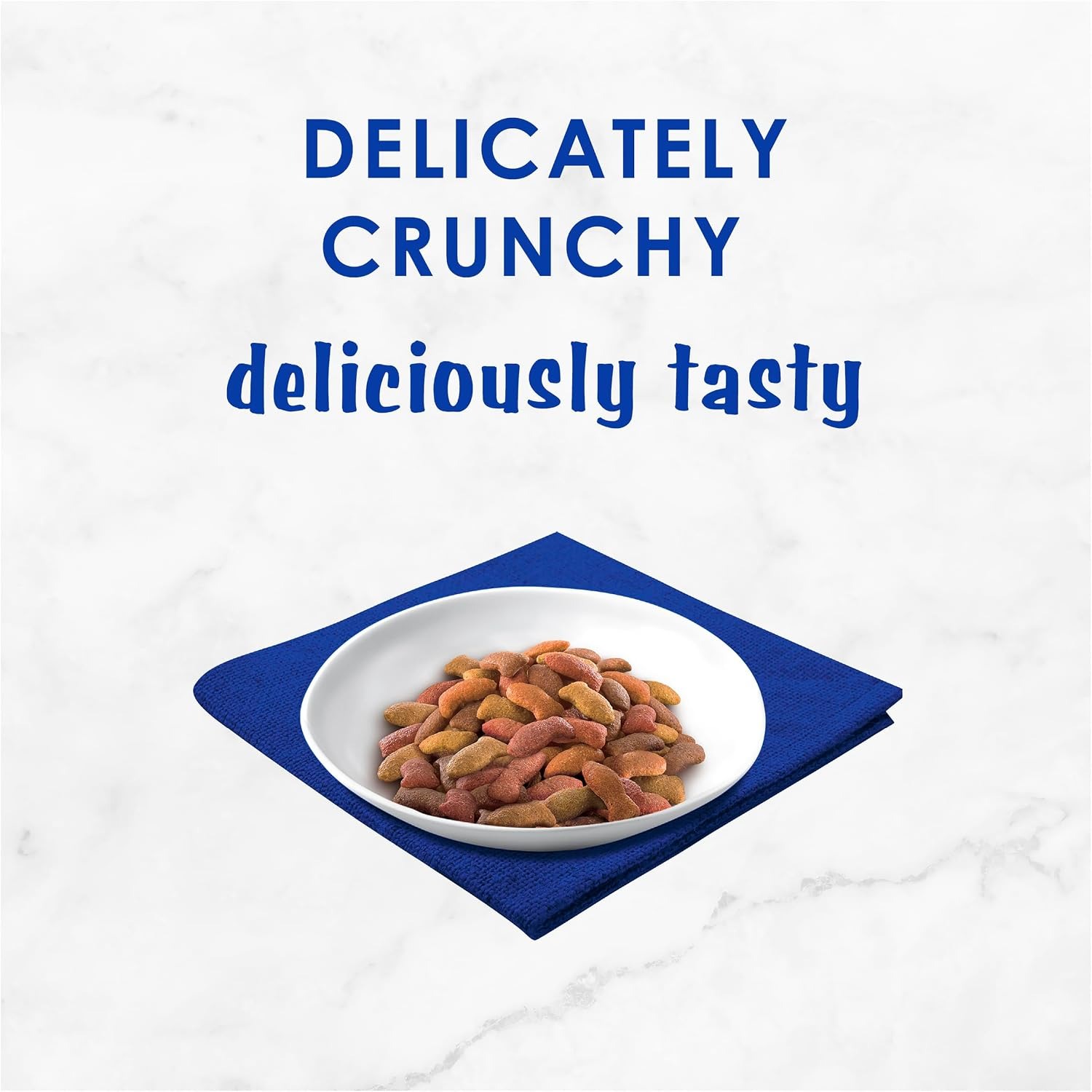
Keep the facts simple. This is dry cat food in a seafood flavour, sold by Fancy Feast in a pack of two bags totalling 2.8 kg. The maker lists mackerel among the special ingredients and describes the product as having a unique flavour combination and a crunchy texture. Fancy Feast describes the kibble as delightfully crunchy and deliciously savoury, and states that the food is nutritionally complete and balanced.
It is recommended for all breed sizes, and the maker suggests it for breakfast, dinner or snacktime. The manufacturer part number and model number are both 12372744.
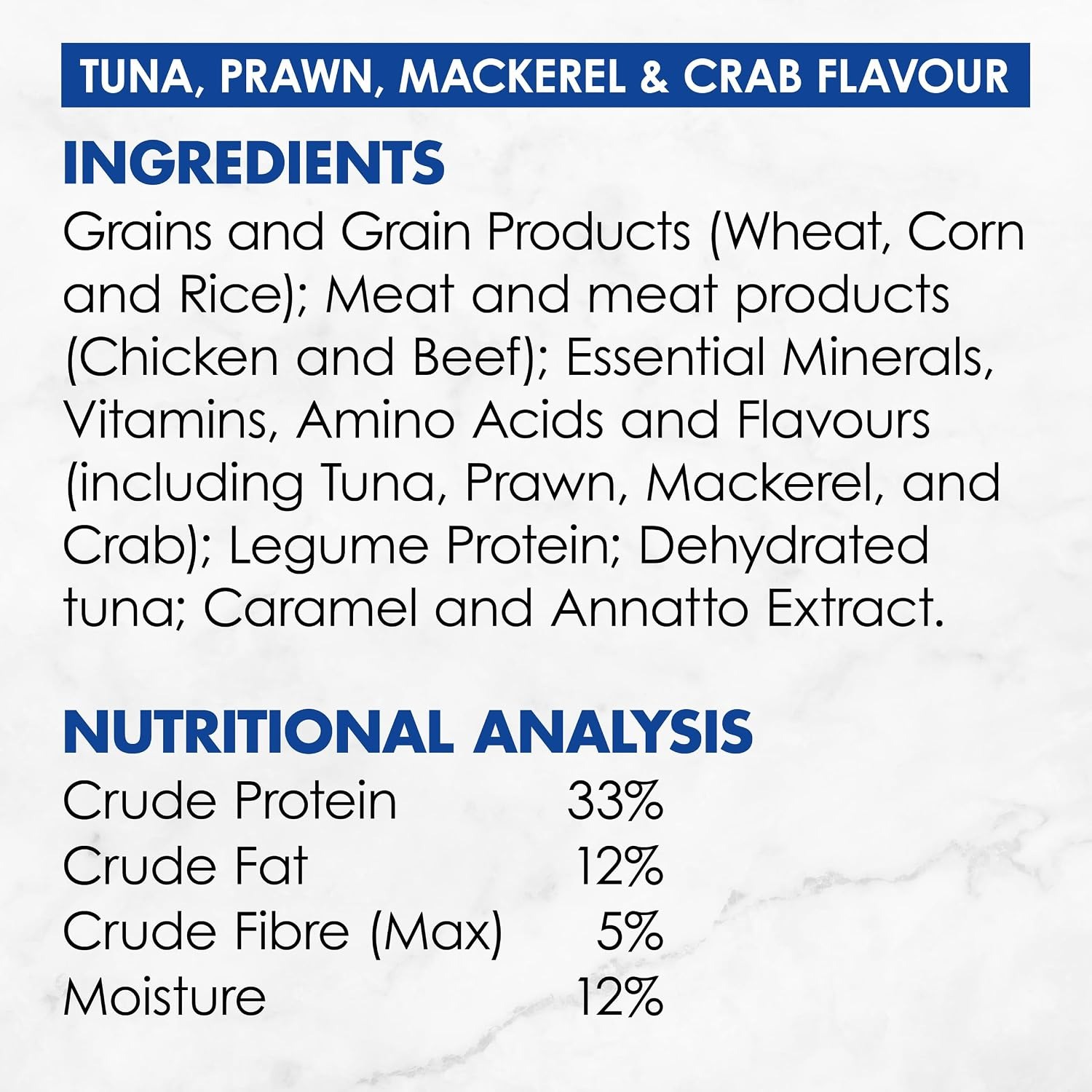
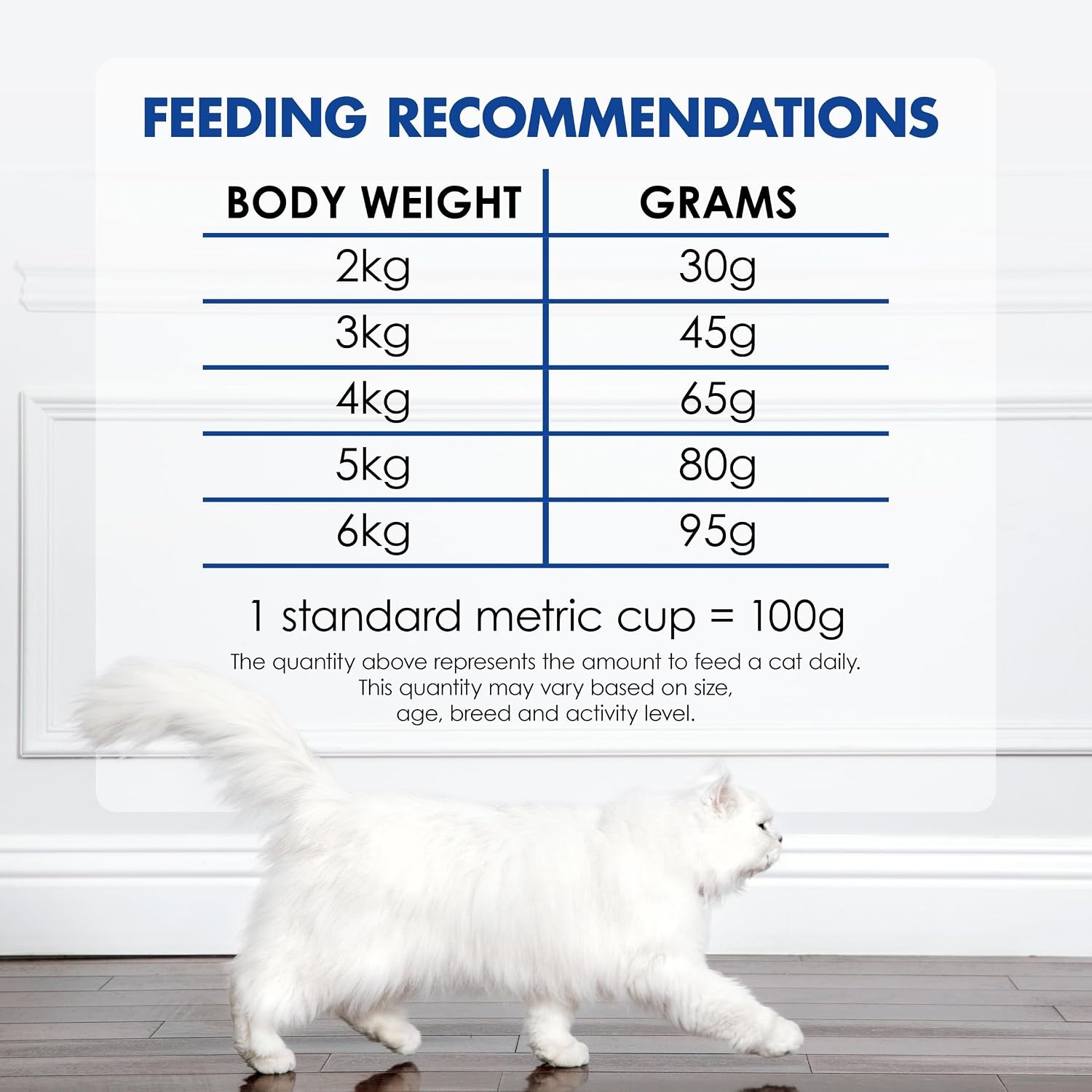
Everything else, the full ingredient list, the guaranteed analysis, the feeding amounts and the best-before date, is printed on the pack. That is deliberate. Food labelling is the place those details belong, and it is the version you can trust because it matches the batch in your hands.
How dry food works in a cat's day
Dry food earns its place in most households because it is practical. It can sit in a bowl for hours without spoiling the way wet food does, which suits cats who graze rather than eat in two big sittings. It is easy to portion. It stores without refrigeration. And the crunch gives cats something to work at, which some cats clearly enjoy.
The trade-off is moisture. Wet food carries a lot of water, dry food carries very little, so cats on a mostly dry diet need to drink more. That is why fresh water should always be available, ideally in more than one spot around the house. Some cats drink more from a wide shallow bowl than a deep one. Some prefer a fountain. It is worth experimenting if your cat seems uninterested in their water.
Plenty of people run a mixed routine, which is often the easiest compromise. Dry food in the morning, wet food at night, or dry left out for grazing with a wet meal as the main event. If you do this, reduce the dry portion so the total daily amount still lines up with the feeding guide. It is very easy to accidentally feed one and a half cats' worth of food to one cat.
Who this pack suits
Households with two cats are the obvious fit. Two bags disappear faster than you think when there are two bowls, and buying in a multipack cuts down the reorder cycle. Single cat households buying for the best everyday cat food routine also do well out of it, just with a longer gap between purchases.
It suits cats who already like fish flavours. If your cat consistently picks the tuna or salmon varieties out of a mixed wet food box, a seafood flavour kibble is a reasonable bet. If your cat has a known fish sensitivity, this is not the food for them, and that is a question for your vet rather than a product page.
It is less suited to kittens, who have different nutritional needs, and to cats on a vet-prescribed diet. If your cat is on a specific food for a medical reason, do not change it without talking to the vet who prescribed it.
How to choose between dry foods
Start with what your cat already eats. If the current food is working, look for something close to it in flavour family and biscuit size rather than jumping to something completely different. Cats notice.
Then think about pack size honestly. A big bag only saves money if the cat eats it before it goes stale. For a single cat, two medium bags that stay sealed until needed often beat one enormous bag that sits open for six weeks. That is the quiet argument for the best cat food bag size being smaller than you think.
Look at format next. Some cats struggle with large kibble, particularly older cats or those with dental issues. If you are unsure about biscuit size for your cat, tip a small amount out and watch them eat the first few pieces. Cats who chew properly are usually fine. Cats who swallow kibble whole and then cough it back up may do better with a smaller biscuit or wet food.
Finally, factor in your own routine. If you are out of the house for long stretches, a dry food that holds up in the bowl matters more than it would for someone home all day. If you use a timed feeder, check that the kibble flows through the hopper before you commit to a multipack.
Introducing a new food without drama
Go slowly. Mix a small amount of the new kibble into the current food for a few days, then increase the proportion gradually over about a week. Abrupt changes are the most common cause of an upset stomach after a food switch.
If your cat eats around the new pieces and leaves them in the bowl, that is information rather than failure. Try a smaller ratio. Try warming a little wet food nearby so the smell is stronger at mealtime. Some cats simply need a fortnight to accept something new, and some never will.
Do not starve a cat into accepting a food. Cats who stop eating entirely can become unwell quickly, and that is a vet matter, not a stubbornness matter.
Storage and care
Dry food is forgiving, but not infinitely so. Keep bags cool, dry and out of sunlight. Heat and humidity are what dull the crunch and flatten the smell, and smell is what gets the cat to the bowl.
Once a bag is open, seal it properly. Roll the top down and clip it, or tip the contents into an airtight container. If you decant, keep the original bag or cut out the panel with the best-before date and batch code, because you will want it if there is ever a problem. The best-before date is printed on the pack.
Wash food bowls regularly with hot soapy water. Dry food leaves an oily residue that builds up over time, and some cats become reluctant to eat from a bowl that smells stale. Ceramic and stainless steel are easier to keep properly clean than plastic.
The short version
This is a two bag pack of Fancy Feast seafood flavour dry cat food, 2.8 kg in total, with mackerel listed by the maker as a special ingredient. The maker describes it as crunchy and savoury, and states it is nutritionally complete and balanced. It is recommended for all breed sizes and intended for breakfast, dinner or snacktime.
Buy it if your cat already likes fish flavours and you are tired of running out mid-week. Follow the feeding guide on the pack, keep fresh water available, store the bags sealed, and switch over gradually if you are coming from another food. For anything to do with your cat's health, diet or allergies, ask your vet. They know your cat. We know the pack size.