
The complete guide
Choosing Dry Kitten Food, A Plain Buyer's Guide
The problem with feeding a kitten
Kittens are small, loud and surprisingly opinionated about food. One week they will eat anything put in front of them. The next week they walk past a full bowl like it personally offended them. On top of that, you are standing in front of a wall of bags with words like grain free, complete, natural and formula on them, and almost none of it tells you what is actually inside.
The result is that a lot of people buy on the picture on the front and work out the rest later. That is a slow and expensive way to learn. Reading the ingredient list and the life stage on the label gets you most of the way there in about thirty seconds, once you know what you are looking at.
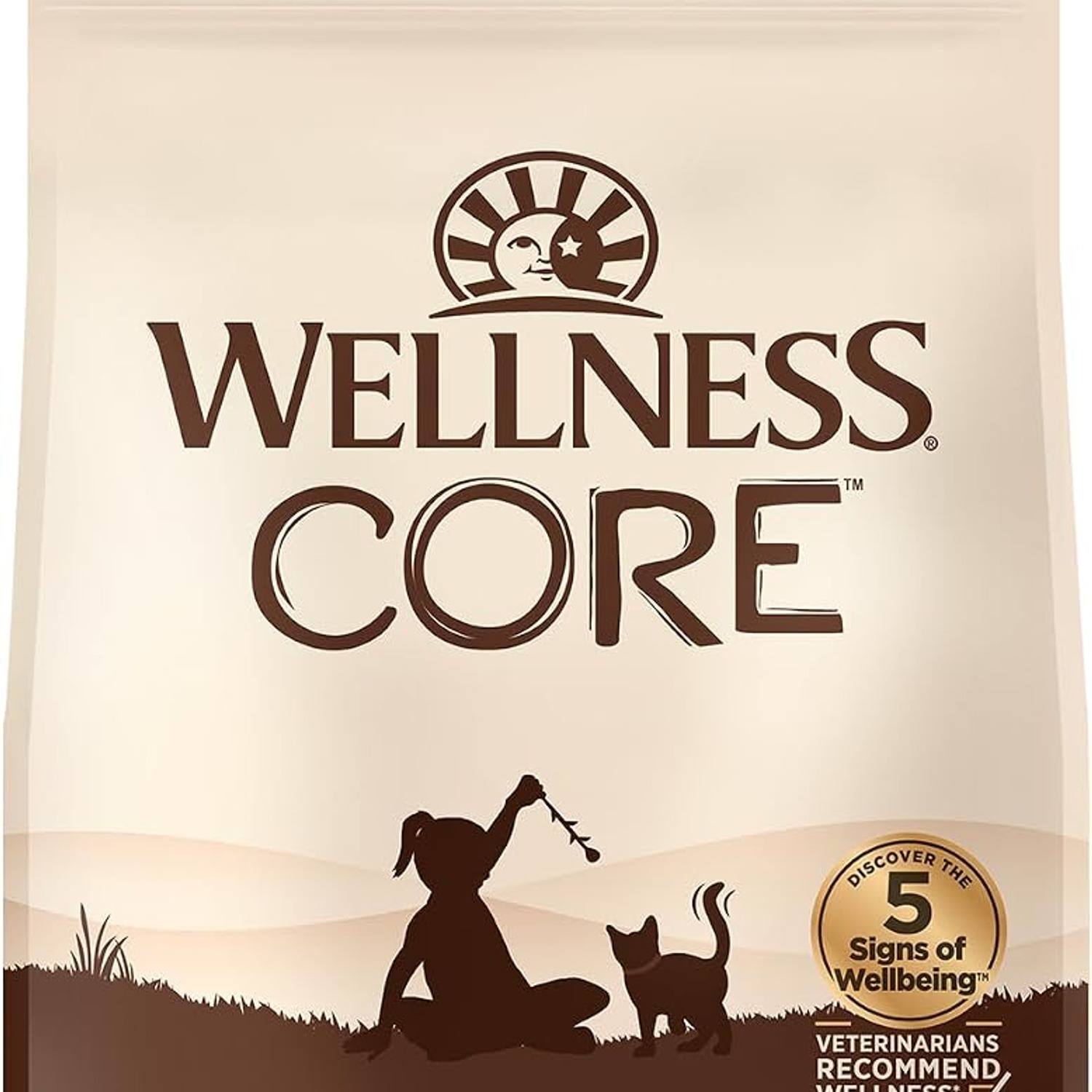
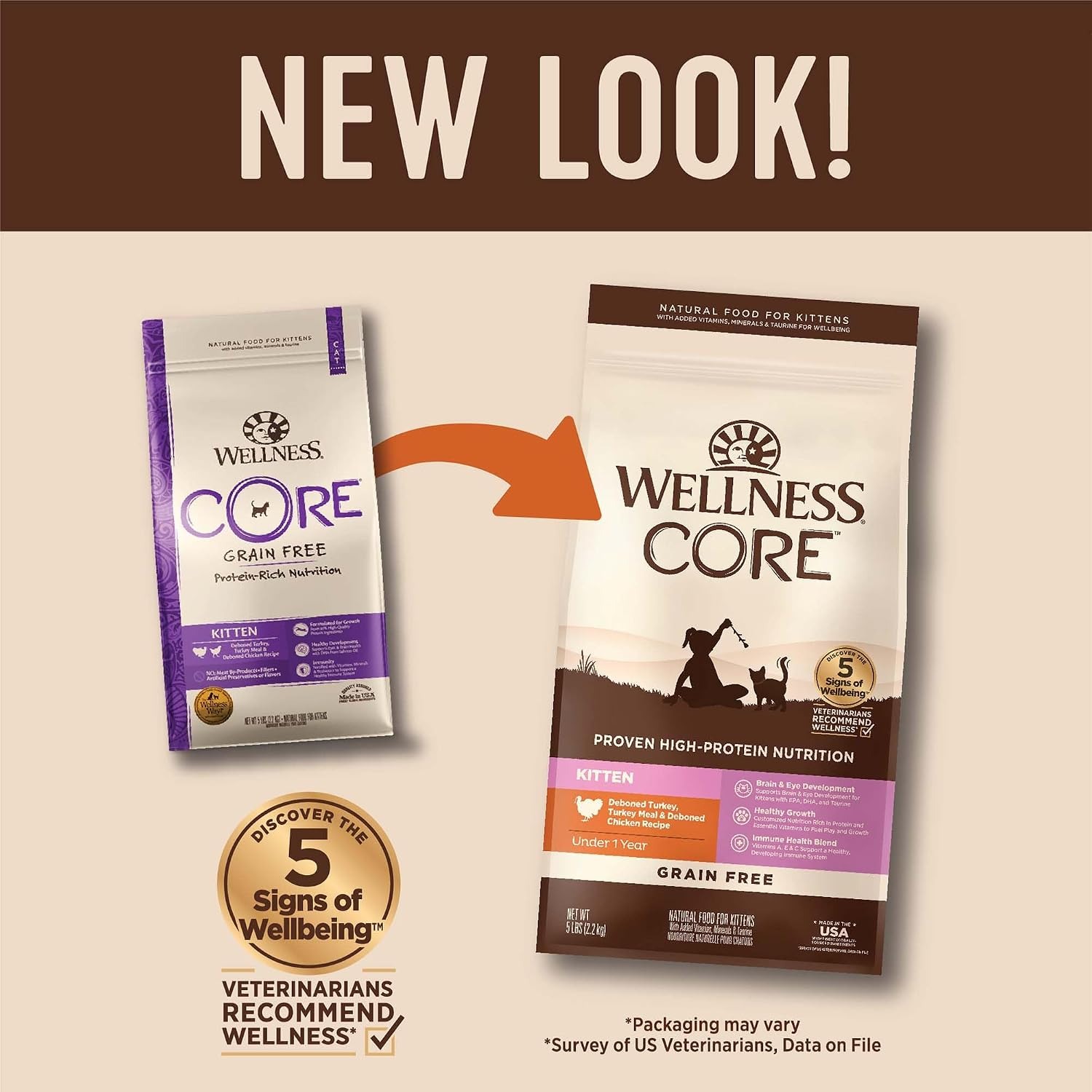
This guide covers how dry kitten food works, who it suits, how to read a bag properly, and how to store it so the last scoop is as good as the first. Wellness CORE Kitten is used as the worked example, because the maker publishes a full ingredient list and a clear life stage, which makes it easy to show the method.
How dry kitten food works
Dry food is kibble, made by cooking and shaping a mixture of meat, meat meals, binders, fats, vitamins and minerals, then drying it down so it keeps. The low moisture is the point. It means the bag sits in your cupboard without refrigeration, and a bowl can stay out for a few hours without going off.
That convenience is the main reason dry food is so common in kitten households. Kittens eat little and often. Being able to leave a measured portion down while you are at work, rather than opening a fresh pouch every two hours, makes the whole thing workable.
The trade off is water. Kibble carries far less moisture than wet food, so a cat on a dry-only diet needs easy access to fresh water, and plenty of it. A wide, shallow bowl away from the food, or a fountain if your kitten likes moving water, both help. Many owners split the day between dry and wet for this reason.
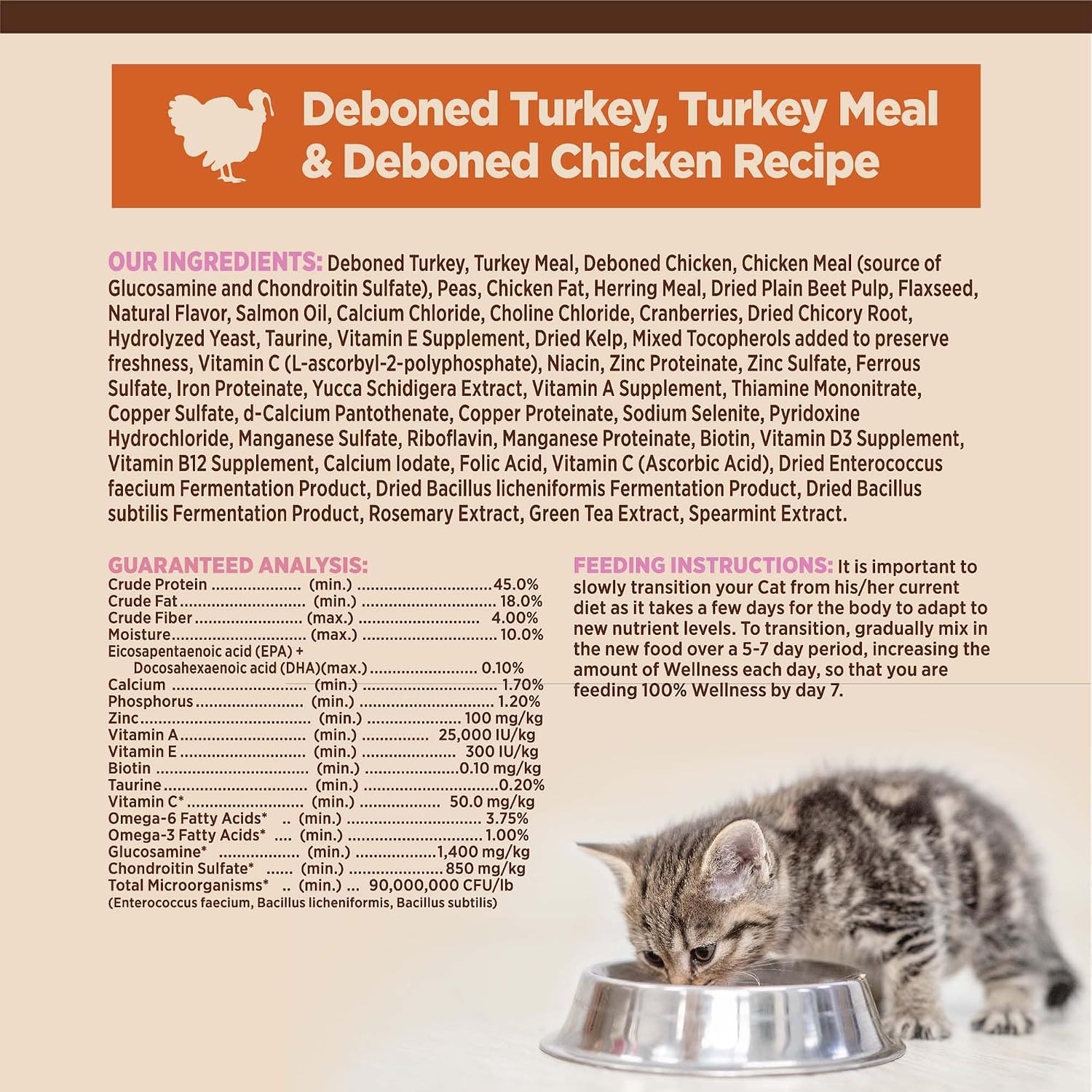
With Wellness CORE Kitten, the recipe leads with deboned turkey, turkey meal, deboned chicken and chicken meal. Meat meals are rendered and dried, so they carry more protein by weight than fresh meat does once the fresh meat has been cooked down. Seeing both fresh meat and meat meals near the top of a list is normal and not a red flag.
What grain free actually means
Grain free means the recipe is made without wheat, corn, rice, barley and similar grains. In this food the carbohydrate comes mainly from peas, with dried plain beet pulp and flaxseed also on the list. The maker lists the allergen information as gluten free.
It is worth being clear about what that does and does not tell you. Grain free is a formulation choice, not a health claim, and we are not going to pretend otherwise. Some owners choose it because their cat has had trouble with a particular grain. Others just prefer the ingredient profile. If you are buying specifically because of a suspected sensitivity, two things matter. First, read the whole list, because a cat can react to a protein as easily as a grain. Second, note the maker's own statement that the food is manufactured in a facility that also processes grains. If that matters for your cat, speak to your vet before you buy.
People searching for the best grain free kitten food often assume it is automatically a higher tier of food. It is not a tier, it is a category. A well made grain-inclusive food and a well made grain free food can both be fine. Judge the bag, not the label on the front.
Who this kind of food suits
A dry kitten food like this suits a household where someone is out during the day, where there is more than one cat feeding at different speeds, or where you simply want a bag that does not need refrigerating. It also suits owners who want to see named meats at the top of the list rather than a vague meat derivative.
It suits less well if your kitten barely drinks, or if your vet has put them on a specific therapeutic diet. In those cases, follow the vet's plan. The same goes if your kitten has a diagnosed health issue. Food is not the place to freelance.
There is also the practical question of pack size. This is a 2.27 kg bag, sold as a single unit. For one kitten, that is a decent run of meals without the bag sitting open for half a year. For three growing kittens, you will be reordering more often. Buying a size you will finish within a reasonable window is better than buying the biggest bag on the shelf and watching the last third go stale.
How to read a bag before you buy
Work through four things, in this order.
Start with the life stage. If it says kitten, it is formulated for growth. If it says adult, it is not. This bag lists the age range description as kitten and the breed recommendation as all breed sizes, so it is not narrowed to one breed.
Next, read the first five or six ingredients. Those make up the bulk of the recipe. Here that is deboned turkey, turkey meal, deboned chicken, chicken meal, peas and chicken fat. If the first named item is a grain, a by-product or something generic, you know what you are buying.
Then scan for the extras that tell you how much thought went in. On this list, taurine, salmon oil, flaxseed, cranberries, dried chicory root, hydrolysed yeast, dried kelp, green tea extract and spearmint extract all appear, along with a long run of vitamins and minerals and three dried fermentation products. The maker describes the food as naturally preserved, with mixed tocopherols and rosemary extract rather than synthetic preservatives.
Finally, check the manufacturer details and the pack weight so you know exactly what is arriving. This one is made by Wellness Pet LLC, model number 8842, UPC 076344088424, made in the USA using globally sourced ingredients.
Feeding amounts, and why we will not guess
The maker's feeding guidance is to serve as directed by a veterinarian, based on your cat's weight, age and health status. That is the line we stick to. A twelve week old kitten and a seven month old adolescent have very different needs, and so do a lean kitten and a heavier one.
The pack carries the maker's own feeding chart, which is the right starting point. Your vet can then adjust it at check-ups, which you will be having anyway during the first year. If you are mixing dry and wet, ask them how to split the daily total so you are not accidentally feeding one and a half dinners.
Transitions are the other place people trip up. Swapping food overnight upsets a lot of kittens. A slow changeover across several days, mixing more of the new food in each time, is kinder on their digestion.
Storing it properly
Kibble goes stale, and stale kibble is the quiet reason a cat suddenly stops eating a food they liked last month. Fat on the surface of the kibble oxidises once it meets air and warmth, and the smell changes long before you would notice anything looking wrong.
Keep the bag in a cool, dry cupboard, out of sunlight and away from the stove. Seal or roll the top closed every single time. If you prefer a storage bin, put the whole bag inside the bin rather than tipping the kibble in loose. That keeps the liner doing its job and keeps the batch code and best-before date with the food, which is printed on the pack and worth hanging on to.
Wash the bowl properly, not just a rinse. Dry food leaves a fine greasy film that builds up, and some cats are fussier about a grubby bowl than about the food in it.
Delivery and returns, briefly
Orders are dispatched within 2 working days and then take up to 7 working days by tracked courier. Delivery is free over $99 and $12 under that. Unopened, sealed packs can be returned within 14 days of delivery, with return postage paid by you. Opened food cannot be returned for change of mind, which is standard for food. Your rights under the Australian Consumer Law apply in full, regardless.
The short version
Dry kitten food is the practical option for most households, as long as fresh water is always available. Read the life stage first, then the top few ingredients, then the pack size. Wellness CORE Kitten leads with deboned turkey, turkey meal, deboned chicken and chicken meal, is grain free and listed as gluten free, comes in a 2.27 kg bag, and is made in the USA by Wellness Pet LLC in a facility that also handles grains.
Feed it as the pack and your vet direct, store it sealed and cool, and change foods slowly rather than overnight. If your kitten turns their nose up at it, that is information, not failure. Try a different protein next and keep the rest for a friend's cat.