

The complete guide
How to Choose a Wet Cat Food Multipack
The problem with buying cat food one tray at a time
Anyone who has owned a cat knows the routine. You think there is plenty in the cupboard, you open the door on a Tuesday night, and there is one lonely tray behind the rice. The cat is already on the bench. You end up at the shops in slippers buying whatever flavour is left on the shelf, which is usually the one your cat has already rejected twice.
A 28 pack is a boring fix for a very common annoyance. One carton, one purchase, about a month of single daily servings for a 5 kg cat going by the maker's feeding guide. It is not exciting, but it means the cupboard is stocked and the decision is made.
The second problem a mixed carton solves is boredom. Cats are creatures of habit right up until the moment they are not. A bowl that was perfectly acceptable on Monday can be beneath contempt by Thursday. Having chicken, lamb and beef in one box gives you somewhere to go when that happens, without committing to a whole new carton of something untested.
What you are actually buying
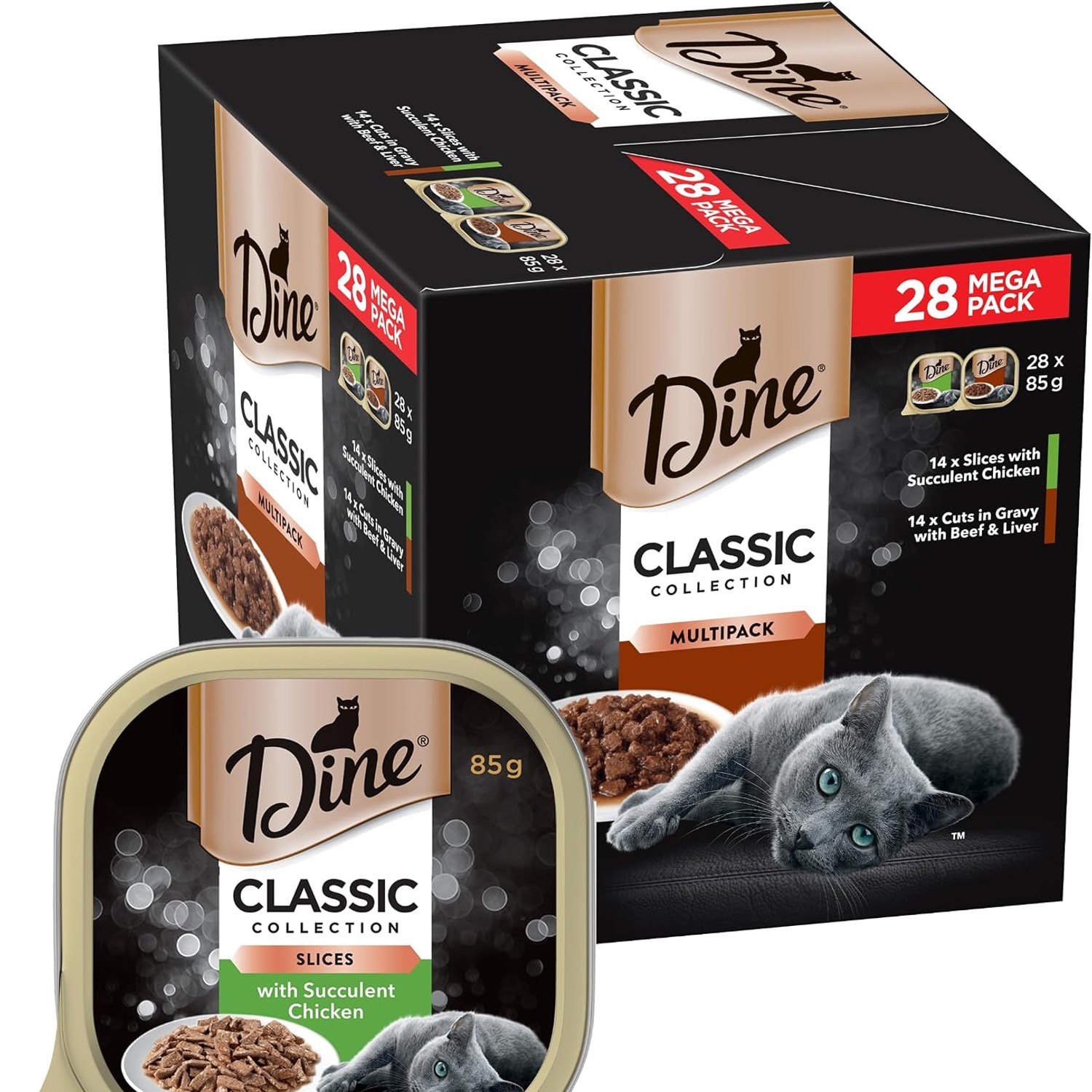
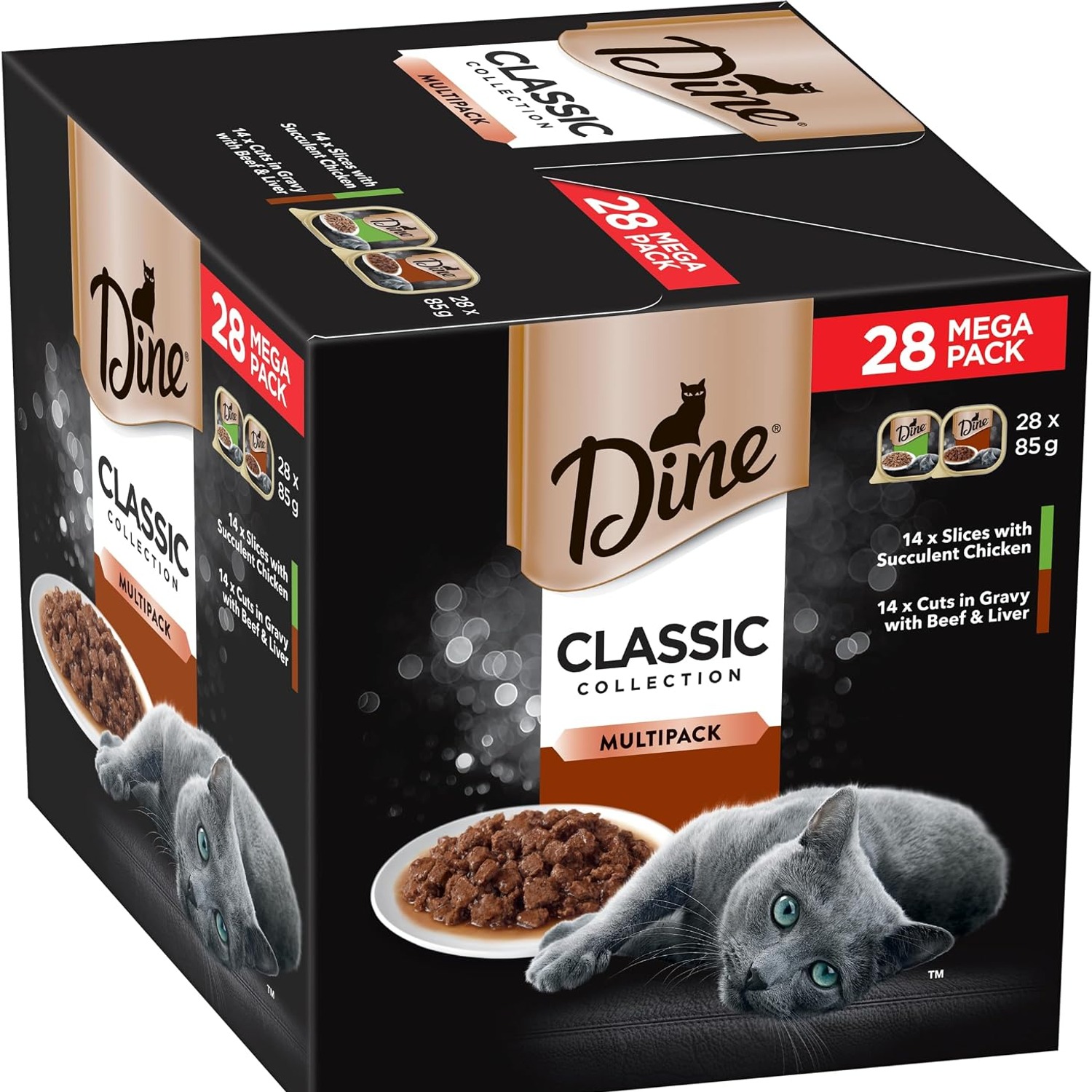
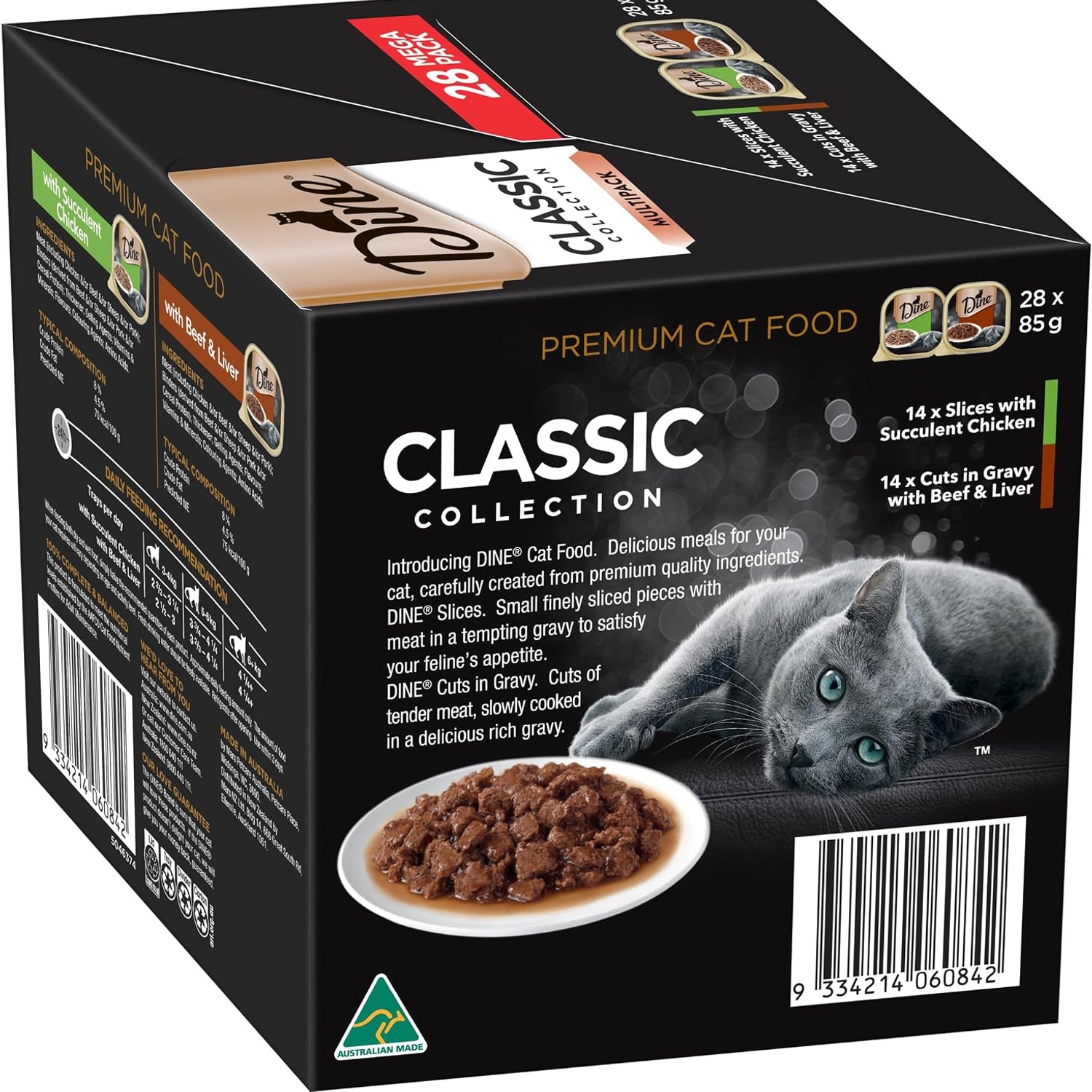
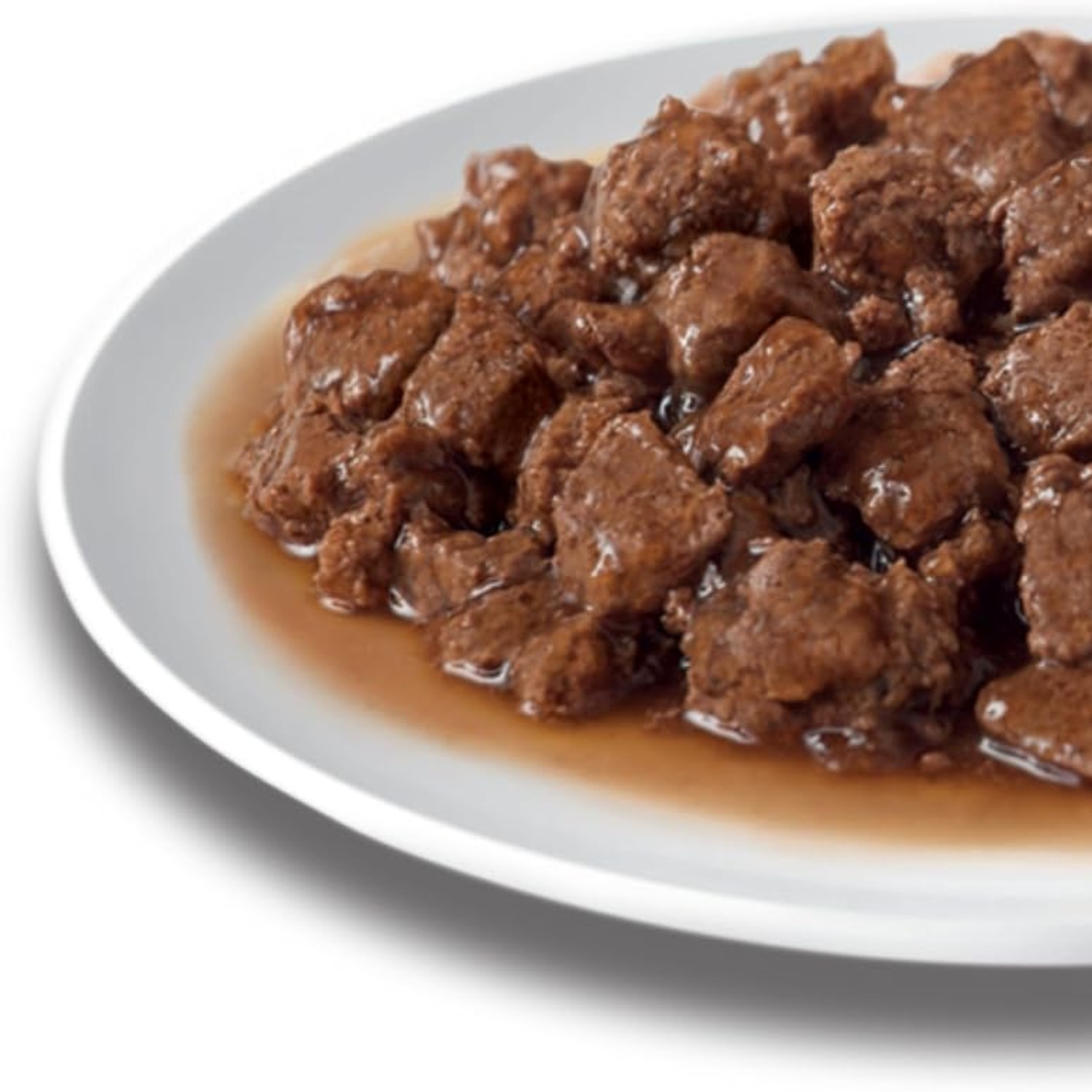
This is a DINE mixed multipack with 28 single-serve trays, weighing 2.38 kg in total. The listed flavour on the maker's description is beef, within a mixed pack that also covers chicken and lamb. The maker lists the ingredients as chicken, lamb and beef, gelling agents, colours, flavours, taurine, minerals and vitamins.
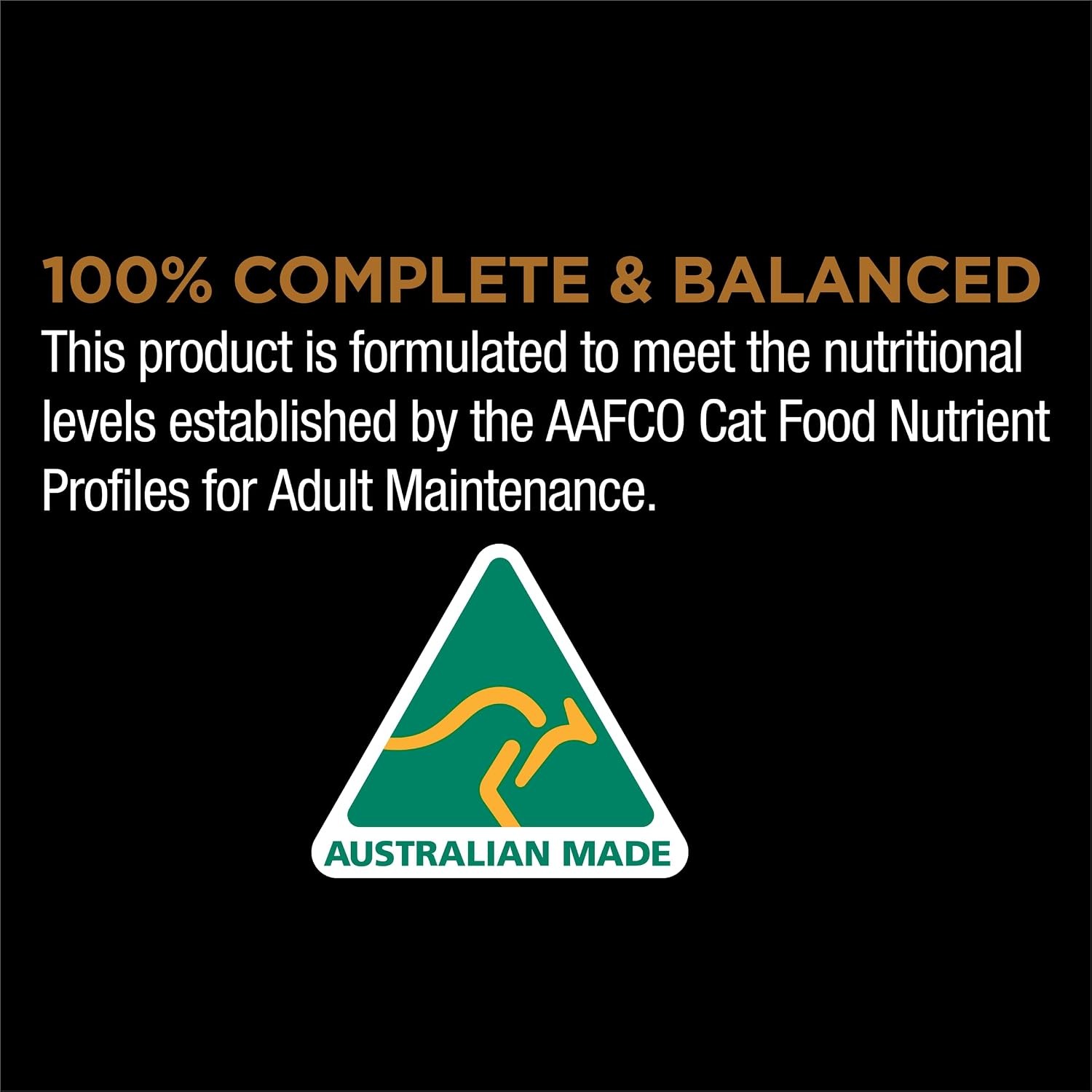
The maker describes the range as suitable for all life stages and all breed sizes, and describes its meals as complete and balanced. That is the maker's own description, and it is worth taking at face value rather than reading extra meaning into it. The feeding guide the maker gives is simple: a 5 kg cat requires one tray daily, as part of normal feeding.
The manufacturer listed is Mars or Affiliates. Country of origin is not specified by the maker, and neither are the carton dimensions. If either matters to you before ordering, send us a message and we will check.
Why the tray format is worth paying attention to
Single-serve trays are one of those small conveniences that quietly improve your week. There is no half-finished tin sweating in the fridge, no cling film, no scraping the edges of a can that has gone slightly dry at the rim. You peel the lid, tip it into the bowl, rinse the tray and put it in the recycling.
For a single-cat household this matters most. A standard tin is often more than one cat needs in a sitting, which means you either overfeed or you store leftovers. Trays take that decision away. For two cats, you simply open two.
There is also a hygiene angle. Food that has not been opened and resealed and reopened tends to smell fresher at serving time, and cats are far more sensitive to that than we are. A cat that sniffs and walks away is often reacting to the food being cold or slightly stale rather than the flavour itself.
Who this suits
A mixed multipack like this works well in a few situations.
If you have more than one cat with different preferences, a mixed carton stops you running two separate supply chains in the pantry. One cat gets the beef, the other gets the chicken, and nobody sulks.
If you have a cat who has started refusing a long-standing favourite, having two other flavours in the same box gives you an immediate alternative. That is often enough to get through a patch of fussiness without a trip to the shops.
If you are simply tired of running out, the size is the point. Twenty-eight trays is a month of daily servings for one average-sized cat, based on the maker's own figure.
Where it suits less well is when your cat is on a diet prescribed by a vet, or when there is a known sensitivity to a listed ingredient. In those cases the ingredient list above is your starting point, and your vet is the one to confirm whether this is appropriate. Nothing on this page is veterinary advice.
Working out how much to order
Start with the maker's figure. One tray daily for a 5 kg cat, as part of normal feeding. That is the only portion guidance the maker gives, and we are not going to invent more.
From there, the arithmetic is straightforward. One cat at one tray a day gets roughly four weeks out of a carton. Two cats halve that to about a fortnight. If you want a buffer so you are never caught short, order two cartons and keep one unopened at the back of the shelf.
What you should not do is guess a portion size for a cat that weighs noticeably more or less than 5 kg, or for a kitten. Growing kittens, senior cats and cats being managed for weight all have different needs, and your vet can give you a number that fits your animal rather than an average one.
Storage and handling
Keep unopened trays in a cool, dry cupboard away from direct sunlight. No refrigeration is needed until a tray has been opened. The carton is 2.38 kg, so it will happily live on a normal pantry shelf without taking over.
Once a tray is open, cover any leftovers, refrigerate them and use them up reasonably quickly. Serve at room temperature where you can. Food straight from the fridge is less appealing and plenty of cats will leave it, which gets blamed on the flavour when the real problem is the temperature.
Wash the bowl after every meal. Wet food leaves residue that dries fast and puts cats off the next serving. Fresh drinking water should always be available alongside, regardless of what you are feeding.
Check the best-before date printed on the pack when the carton arrives, and use the older stock first if you have more than one carton going.
Delivery, returns and the practical bits
Orders are dispatched within two working days, then travel by tracked courier with delivery taking up to seven working days. Delivery is free on orders over $99 and $12 on orders under that.
Returns on food work differently to returns on most products, for obvious reasons. Unopened, sealed packs can be returned within 14 days of delivery, with return postage paid by the customer. Opened food cannot be returned for change of mind. Your rights under the Australian Consumer Law apply in full and are not affected by any of that, so if there is a genuine fault with the product, get in touch and we will sort it out.
If the carton turns up damaged, photograph it before you do anything else and message us. That makes the replacement process much faster.
The short version
This is a 28 tray carton of DINE wet cat food, 2.38 kg total, mixing chicken, lamb and beef. The maker lists it as suitable for all life stages and all breed sizes, and gives a feeding guide of one tray daily for a 5 kg cat as part of normal feeding.
It suits households that want a month of meals in one purchase and a bit of flavour variety for a cat who gets bored. Single-serve trays keep things simple and cut down on fridge clutter. Store it cool and dry, check the best-before date on the pack, and talk to your vet about anything diet or health related.
If your cat ends up loving one flavour in particular, you will at least know which one to look for next time.