


The complete guide
How To Choose An Everyday Dry Cat Food For An Adult Cat
The problem with the cat food aisle
Buying cat food should be a two minute job. In practice it is a wall of bags with fish on the front, a dozen life stages, and no obvious way to compare one to another. Most people end up picking by habit, by price, or by whatever the cat did not turn its nose up at last time.
That is not a terrible system. Cats are honest reviewers. But it helps to know what you are actually looking at, so that when you do change brands or pack sizes you are making the choice rather than guessing.
This guide walks through how to read a bag of adult dry cat food, how to work out the right pack size for your household, how to store it so it stays good, and when the question belongs with your vet instead of a product page.
What dry food actually is
Dry cat food is kibble, cooked and dried into small pieces so it keeps at room temperature without refrigeration. That is its main practical advantage. You can buy a few kilos at once, keep it in a cupboard, and portion it out with a cup each day. Compared with wet food it is cheaper per serve, less messy, and far easier to leave out if your cat grazes rather than eating in one sitting.
The trade-off is moisture. Wet food carries a lot of water, dry food carries very little. So a cat on dry food needs water available constantly, in a clean bowl, topped up more than once a day. Some cats drink more readily from a wide shallow bowl or a fountain than from a deep narrow one. If your cat seems uninterested in water, that is worth raising with your vet, because drinking habits can tell you something.
Plenty of households run a mix, dry in the morning and a pouch at night, or dry available all day with wet as the evening meal. There is no single right answer, and what works usually comes down to your cat and your schedule.
How to read the bag
Four things matter on the front and back of any bag.
Life stage. Kitten, adult, senior. The Purina ONE Adult Salmon & Tuna is listed by the maker as adult, which means it is formulated for cats past the growth stage and not yet into the older years where needs often change. Feeding a kitten an adult food, or vice versa, is one of the more common mix-ups in the aisle.
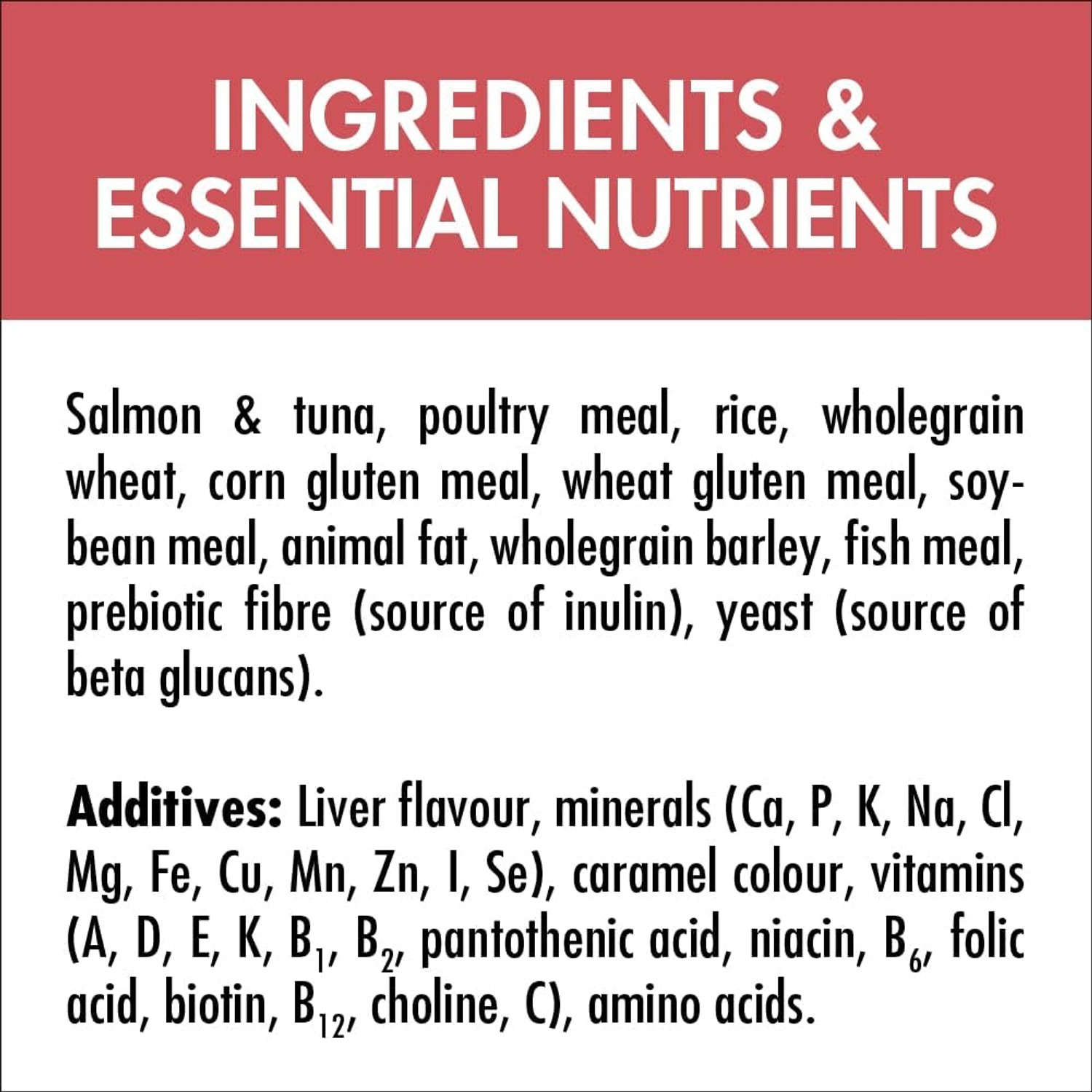
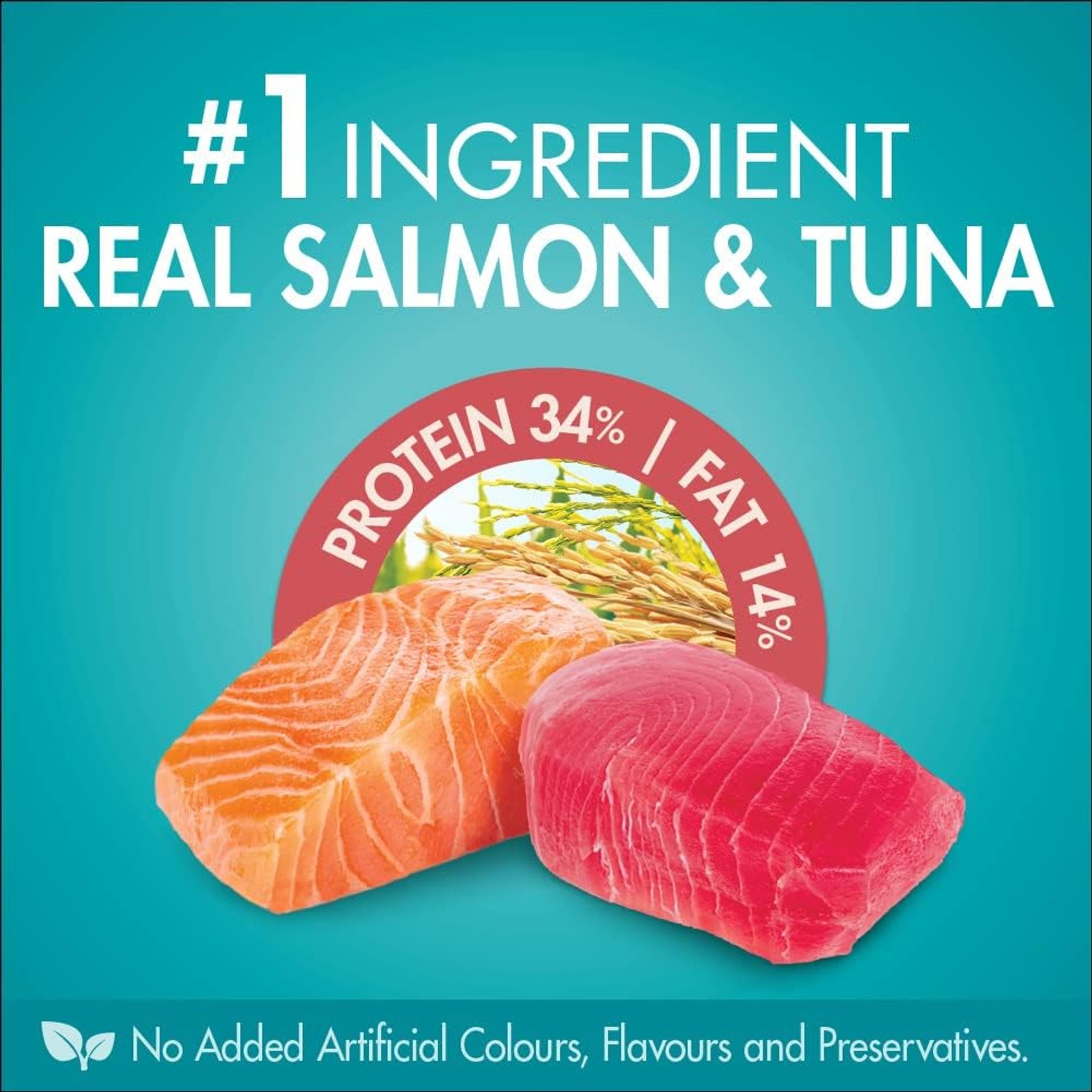
Flavour and what sits behind it. The name on the front tells you the headline flavour, in this case salmon and tuna. The ingredient list tells you the whole story. On this product, chicken (poultry meal and chicken) is first on the list, with salmon and tuna listed further down alongside wholegrain wheat, corn protein, animal fat, wholegrain corn, barley, brewers rice, wheat protein, sorghum, and meat meal and meat by-products. That is normal for a fish flavour dry cat food, and it is exactly why reading past the front of the bag is worth the thirty seconds.
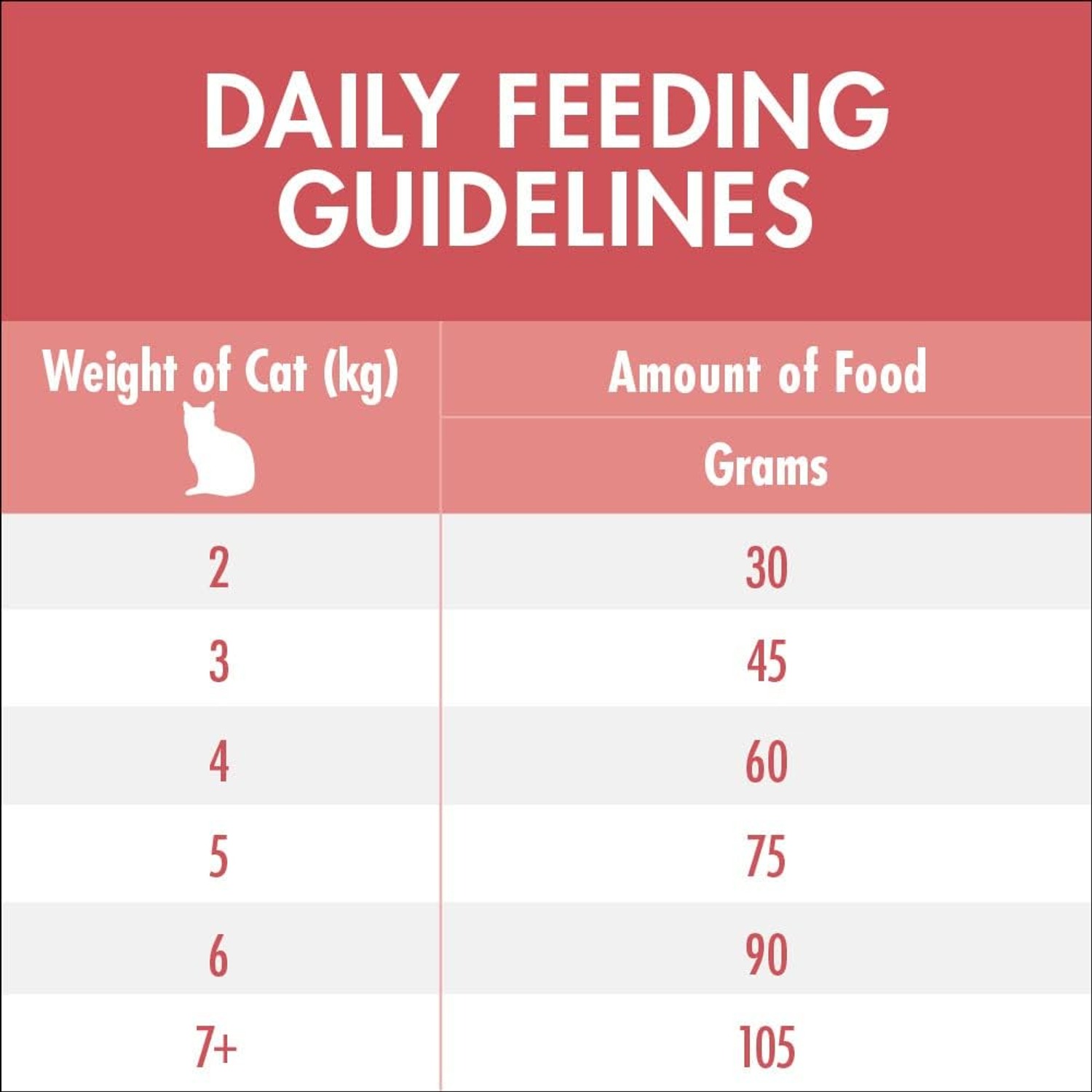
The feeding guide. Every bag carries one, printed on the back, giving daily amounts by body weight. This is the number to work from. Not a handful, not "until the bowl looks right". If you want to be accurate, weigh your cat at the vet and use a kitchen scale on the food for a few days until you know what the correct scoop looks like.
Pack size. More on that below.
Picking the right pack size
A 3.05 kg cat food bag sits in the middle of the range. It is bigger than the small trial bags, smaller than the bulk sacks, and for a single adult cat it typically lasts several weeks depending on the daily amount from the feeding guide.
Here is how to think about it. Work out your cat's daily amount from the back of pack guide, multiply by the number of cats, and divide the bag weight by that figure. That gives you roughly how many days a bag covers. In a multi-cat home it will go faster, which is why some owners order two at a time and keep one sealed in reserve.
Bigger is not automatically better value either. A very large sack is cheaper per kilo but sits open for longer, and kibble that has been exposed to air and humidity for weeks loses its crunch and its smell. Cats notice. Buying a size you will finish in a reasonable window is usually the better call.
Switching food without drama
Cats are creatures of routine, and their digestive systems are no different. If you are moving from another brand, the standard approach is to change over gradually rather than all at once.
Start with a small amount of the new food mixed into the familiar one, then shift the ratio a little each day across about a week until you are fully on the new bag. Some cats take the change without blinking. Others will pick the new pieces out and leave them, or eat around them entirely. Both are normal.
If your cat has a sensitive stomach, an existing health condition, or is on a diet your vet has set, talk to the vet before you change anything. The same applies if your cat is pregnant, nursing, elderly, or recovering from illness. A product page is not the place to work out a medical diet.
Storing it properly
This part gets skipped and it matters more than people think. Dry food keeps well, but only if you keep air and moisture out of it.
Store the bag somewhere cool and dry, out of direct sunlight. A pantry shelf is ideal. The laundry next to a dryer, or a garage that bakes in summer, is not. Close the bag firmly after every scoop. If the closure is not up to much, a bag clip costs almost nothing, or you can tip the kibble into an airtight tub.
If you do decant, a useful habit is to put the whole bag inside the container rather than pouring loose kibble in. That way the best-before date and the batch details stay with the food, which is handy if you ever need to check them. Speaking of which, the best-before date is printed on the pack, so check it when the bag arrives and again before you open a reserve bag you have had sitting around.
Wash the food bowl regularly. Dry food leaves an oily residue that builds up over time, and a greasy bowl can put a cat off its dinner for reasons you will never guess at.
When to ask your vet instead
There is a line between choosing a food and treating a problem, and it is worth respecting.
Ask your vet if your cat is losing or gaining weight, eating much less or much more than usual, drinking noticeably more, vomiting regularly, or showing any change in litter tray habits. Ask them too about allergies, suspected food intolerances, dental issues, and anything to do with kidneys or urinary health. Those are clinical questions with clinical answers, and the right food in those cases is the one your vet specifies, not the one with the nicest bag.
What a product page can tell you is what is in the bag, how big the bag is, and what the maker says about feeding it. That is the honest boundary of what we know about your cat, which is nothing.
The short version
Purina ONE Adult Salmon & Tuna Dry Cat Food comes as one 3.05 kg bag of small dry kibble, made by Nestlé Australia for adult cats. The recipe lists chicken first, with salmon and tuna also included, plus grains, animal fat, and a vitamin, mineral and amino acid blend that includes taurine. The full list is in the specifications above and on the pack.
Feed by the guide printed on the back of the pack, using your cat's body weight as the reference. Keep fresh water down at all times. Store the bag sealed, cool and dry, and check the best-before date printed on the pack.
If your cat is already happy on a fish flavour and you want a mid-size bag for everyday feeding, this is a straightforward choice. If you have any question about your cat's diet or health, ask your vet first.