
The complete guide
Lickable Cat Treats, A Practical Buyer's Guide
The problem a tube solves
Most cat treats have the same flaw. You put them in a bowl, the cat eats them, and you have nothing to do with your hands. The treat does not bring the cat closer to you. It just makes the bowl more interesting.
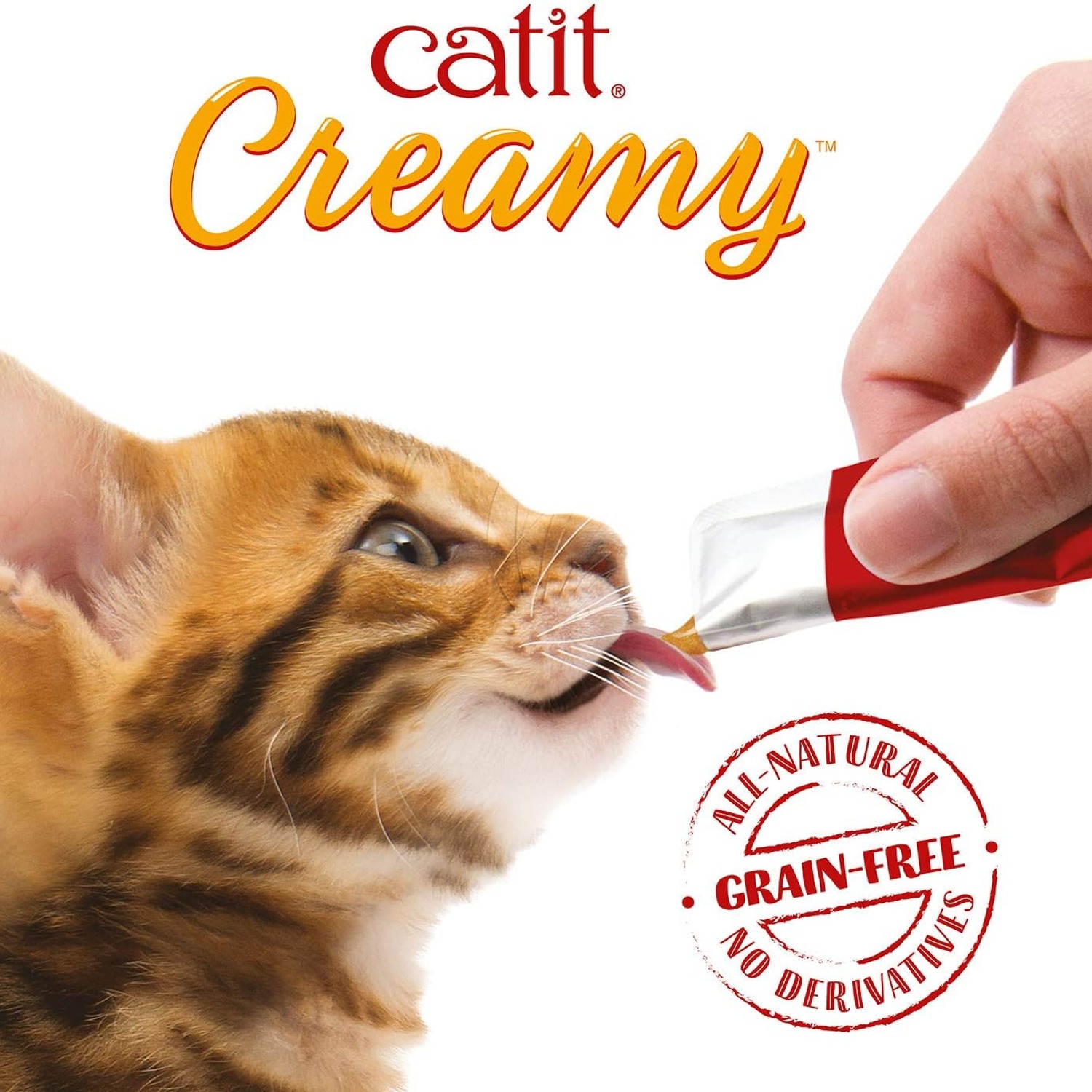
Lickable cat treats work differently. The cat has to stay next to the tube to keep eating, and the tube is in your hand. That changes the whole exchange. You get twenty or thirty seconds where the cat is willingly beside you, focused and still. If you have ever tried to clip a back claw on a cat who does not want their back claw clipped, you will understand why that matters.
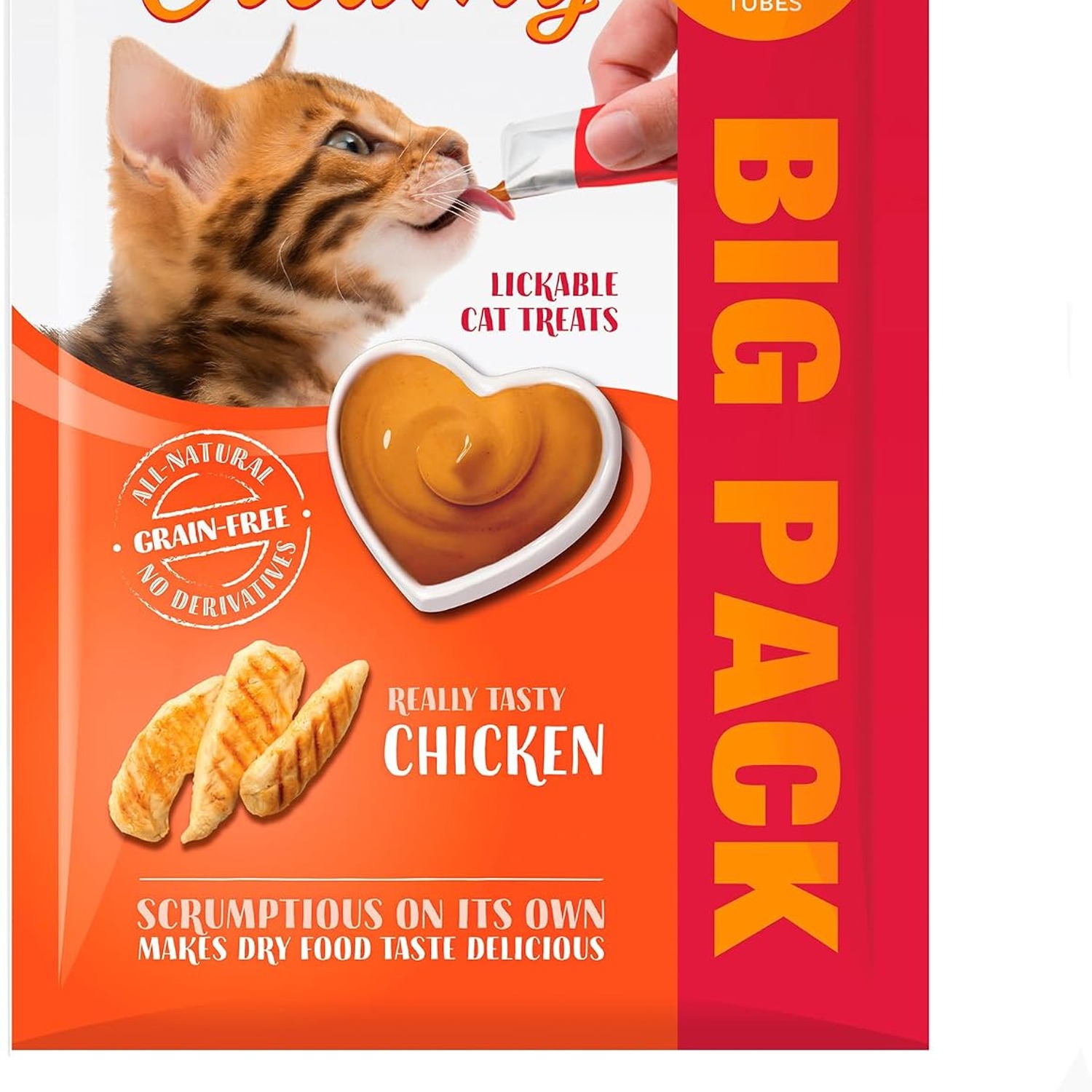
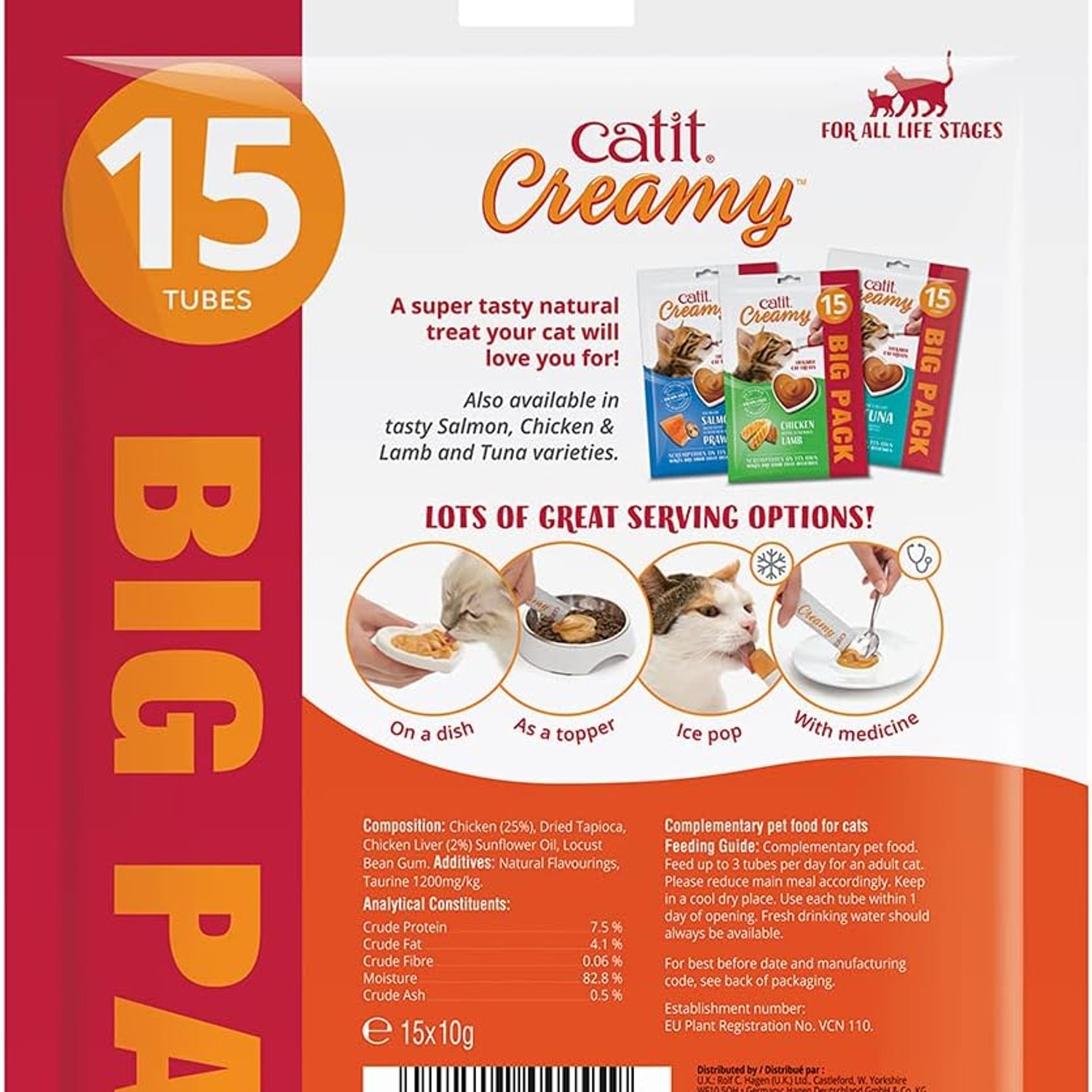
Catit Creamy Chicken is a straightforward version of this. Fifteen tubes, 10g each, chicken flavour, a cream texture. Nothing complicated about it.
What is actually in it
The ingredient list is short. Chicken is 50%. Then there is dried chicken and chicken liver, and Catit states those three together come to 92% of the recipe. Bacon is 5%. The rest is additives in the form of natural flavourings.
That is the whole list. Catit calls it a limited ingredient diet, and the allergen information lists it as corn-free, soy free, wheat free and preservative-free. It is also listed as grain free.
If your cat has a diagnosed food allergy, read that list against what your vet told you to avoid, and ask them before you offer anything new. A short ingredient list is easier to check than a long one, but it is not a substitute for advice from someone who has seen your cat.
The four ways to serve it
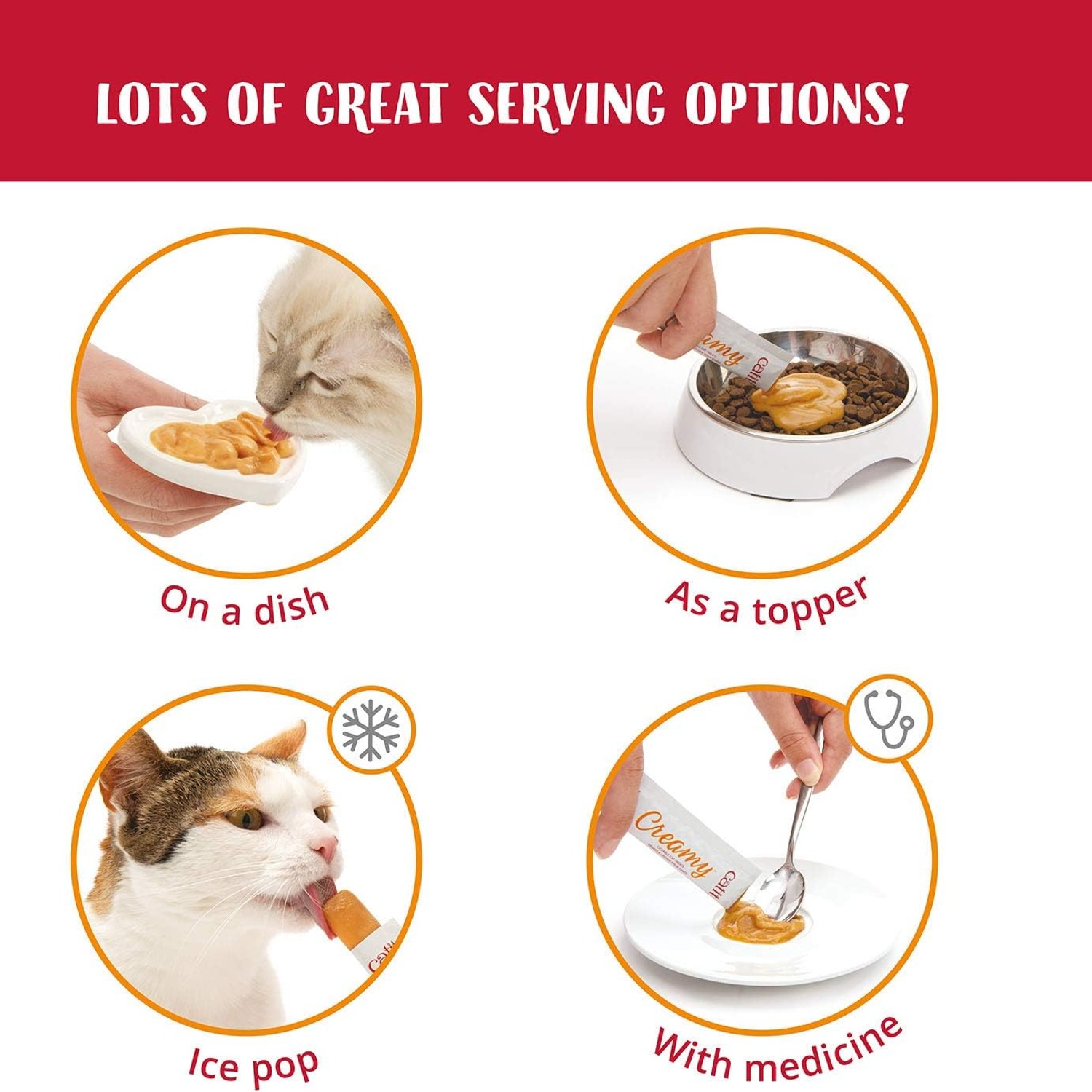
Catit lists four uses, and each one suits a different situation.
Straight as a treat. Squeeze a tube onto a small dish, or hold it and let the cat lick directly. This is the default, and it is the one that builds the association between you and something good.
As a topper. Run a line of cream over dry biscuits and mix it a little. The smell changes, the texture changes, and a bowl the cat walked past an hour ago suddenly looks worth a second visit. Owners of fussy eaters do this constantly, and a cat food topper is probably the single most practical use of the whole pack.
As an ice pop. Put a tube in the freezer, then serve it cold. On a hot afternoon this is a reasonable way to get a bit of moisture and interest into a cat who is lying flat on the tiles doing nothing.
With medicine. Catit lists medicine administration as a recommended use. The cream is thick enough to hold a powder or a crushed tablet. Before you do this, check with your vet or pharmacist, because not every medication can be mixed with food and some lose effect when they are.
Who it suits
Catit lists these as suitable for all life stages and all breed sizes. In practice, a few households get more out of them than others.
Multi-cat homes do well with a pack of 15 because you can serve everyone at once on separate dishes without one cat hogging a shared bowl. Households with a cat who hates the carrier find tubes useful for carrier practice, because you can lead a cat in with something they want rather than carrying them in against their will. Owners of older cats who have gone off their food sometimes use a topper to get interest back in the bowl, though if a cat stops eating properly that is a vet conversation, not a treat conversation.
Kittens can have them too, since all life stages is the stated range. Go light with a kitten. A full 10g tube is a lot for a very small animal, and treats should stay a small slice of what they eat.
How to choose between treat formats
If you are weighing a cream against the alternatives, think about what you want the treat to do.
Dry crunchy treats are the cheapest per serve and the easiest to carry in a pocket. They are good for scattering and for a quick reward. They do not hold a cat's attention for long and they do nothing for hydration.
Freeze dried meat pieces are a single ingredient and very high value for most cats. They are brilliant for training. They are also drier than a cream, and some cats with dental wear find them hard work.
Creamy cat treat tubes like this one sit in the middle. They take longer to eat, which is the point, and the wet texture suits cats who prefer wet food. They cost more per gram than a biscuit treat. They also need refrigerating here, where a bag of dry treats lives happily in a cupboard.
There is no single best answer. A lot of households keep two formats, something dry for quick rewards and something lickable for the moments that need a cat to stay still.
Pack size and how long it lasts
Fifteen tubes sounds like a lot until you start using them. One tube for nail day, one for the weekly brush, one as a topper when someone is sulking about dinner, one frozen on a hot Sunday. A single cat household might stretch a pack to a month. A three cat household will not.
The single serve format is the real advantage over a tub. Nothing is exposed to air between uses, nothing goes off in the back of the fridge, and you know exactly how much you have handed out. If you are tracking treats because your cat is on a controlled diet, 10g per tube is an easy number to count.
Storage and handling
The feeding guide on this product says to store in the refrigerator, so give it a shelf rather than a cupboard. Keep tubes sealed until you are ready, and use a whole tube in one go rather than saving half of it for tomorrow.
Wash any dish you serve it on. If you are freezing a tube, let it soften for a minute before serving so your cat is not licking something rock hard.
The best-before date is printed on the pack. Check it when the box arrives and use the oldest stock first if you buy more than one pack at a time.
A note on what treats are for
Treats are not food. They are a complementary extra that sits beside a cat's normal meals. Whatever you are feeding as the main diet should stay the main diet, and the tubes should be a small addition on top.
If your cat's appetite changes, if they lose weight, or if they start refusing food they used to like, that is a reason to call a vet rather than a reason to buy more toppers. Questions about allergies, diet changes and how much to feed all belong with someone who can examine your cat.
The short version
Catit Creamy Chicken is a pack of 15 lickable chicken tubes at 10g each, with chicken at 50% and combined chicken content at 92%. Catit lists it grain free, corn-free, soy free, wheat free and preservative-free, and suitable for all life stages and all breed sizes. Store it in the fridge.
Buy it if you want a treat that keeps your cat next to you for a minute, if you have a fussy eater who needs something over their biscuits, or if medicine time has become a two person job. Skip it if you only want something to scatter on the floor, because a dry treat does that job for less money. The best-before date is on the pack, and anything to do with your cat's health belongs with your vet.