
The complete guide
Choosing Wet Food For A Senior Cat, Without The Guesswork
When dinner stops being easy
There is a moment most cat owners hit somewhere around year eight or nine. The cat who used to appear at the sound of a tin opening now takes their time. They sniff. They sit back. They look at you as if the bowl has personally offended them. Then they walk off and sleep on the washing.
It is frustrating, and it is common. Older cats change. Their sense of smell shifts, their teeth are not what they were, and their appetite can swing from one week to the next. None of that means something is wrong, but it does mean the food that worked for years might not work now.
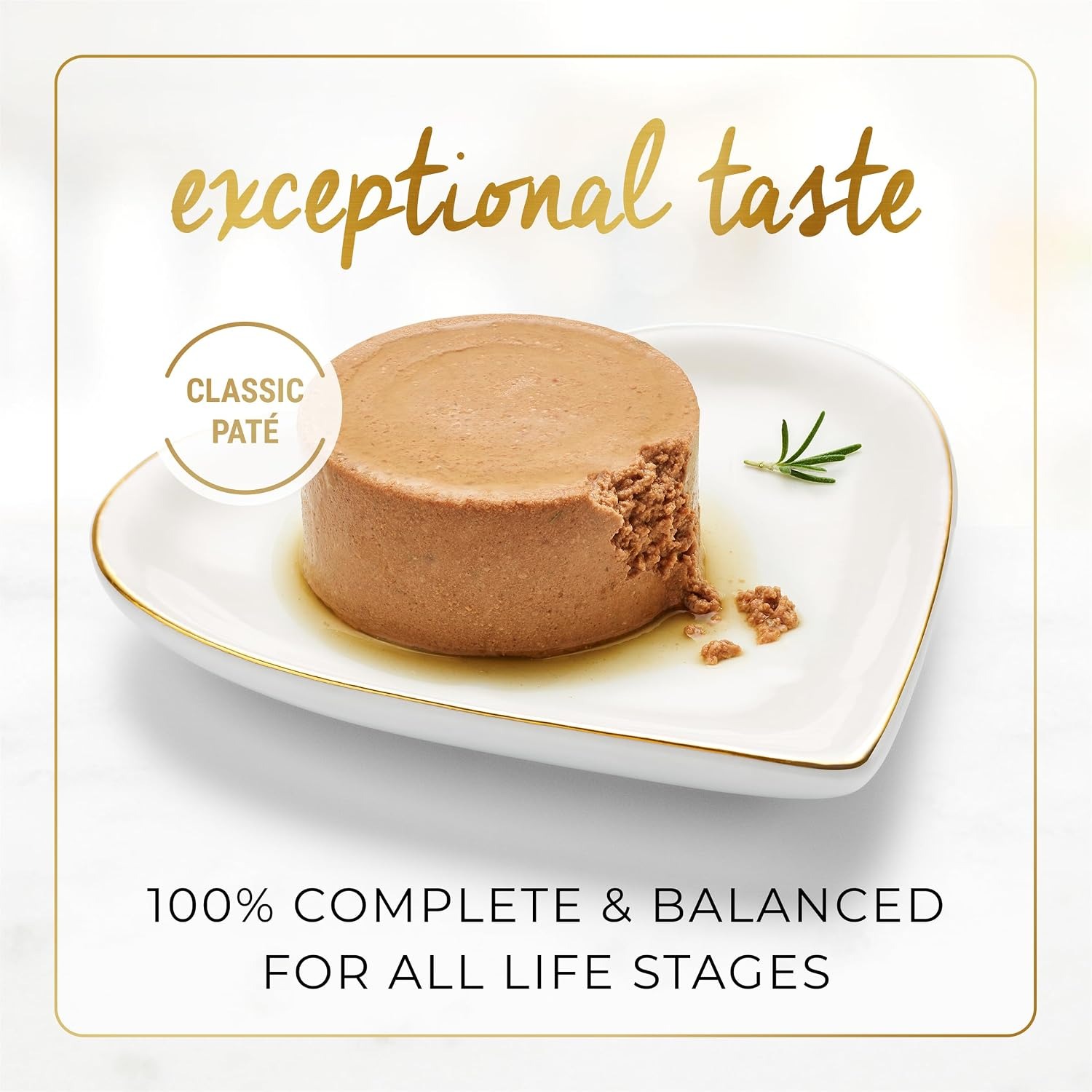
Texture is usually the first thing worth changing. A chunky food in gravy asks a cat to chew, separate and swallow. A paté asks far less. It is soft, uniform, and can be lapped off the surface of a bowl rather than worked through. That single difference is why so many households with an ageing cat end up searching for the best senior wet cat food in a paté format.
What a senior formula actually means
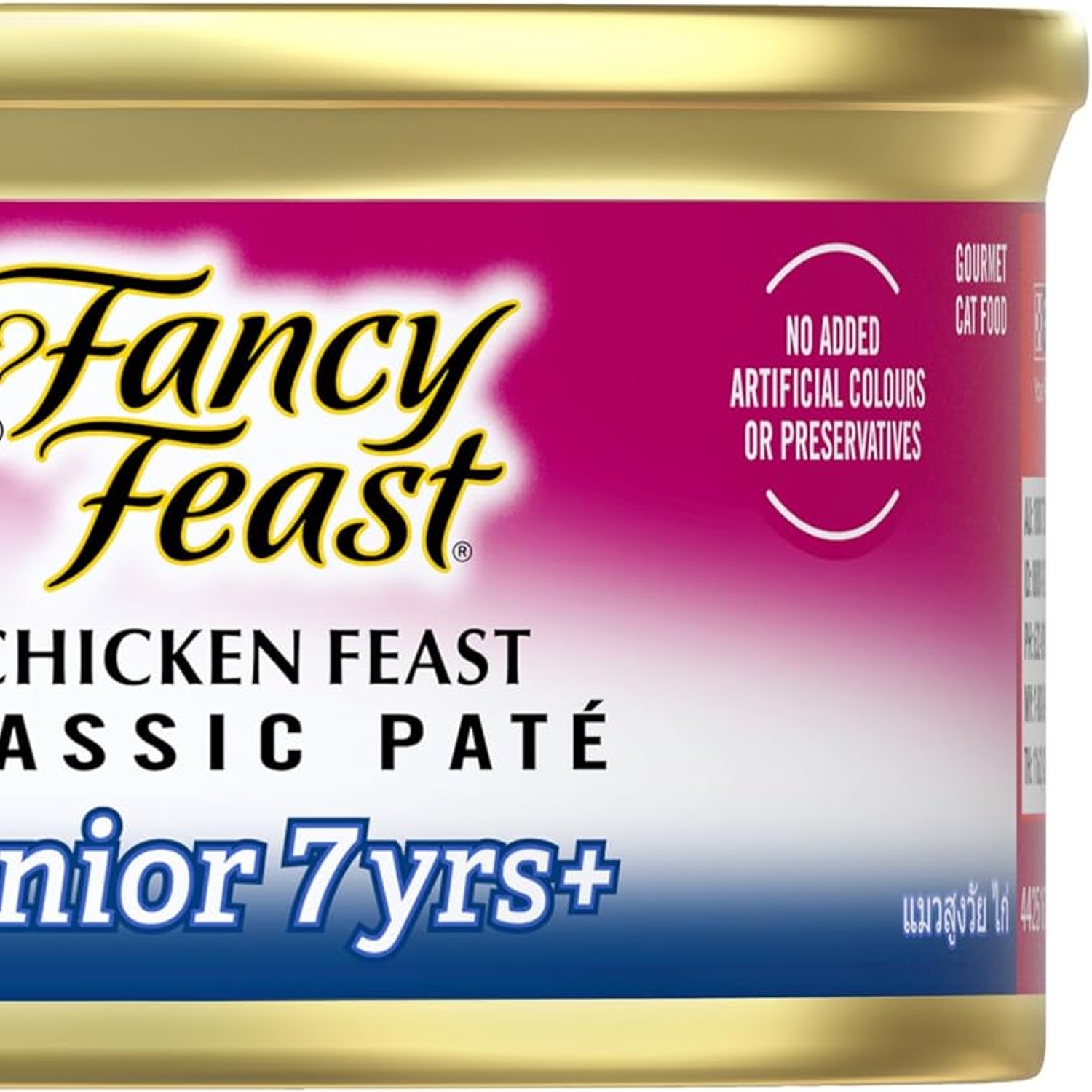
Pet food is labelled by life stage. Kitten, adult, senior. A senior food is formulated for cats in the later part of their life, generally from around seven years. This product is listed with an age range description of senior and a specific use of senior care.
What matters practically is that you match the food to the stage rather than guessing. A senior cat eating a kitten food is getting a recipe built for a different animal. You do not need to overthink it: find the life stage on the pack and go from there.
The maker of this food describes it as 100% complete and balanced. That phrase means the recipe is designed to serve as a full diet rather than a supplement to something else. We repeat it as the maker states it, nothing more. If you want to know whether a complete food suits your cat's particular situation, that is a vet conversation, not a product page one.
What is in the tin
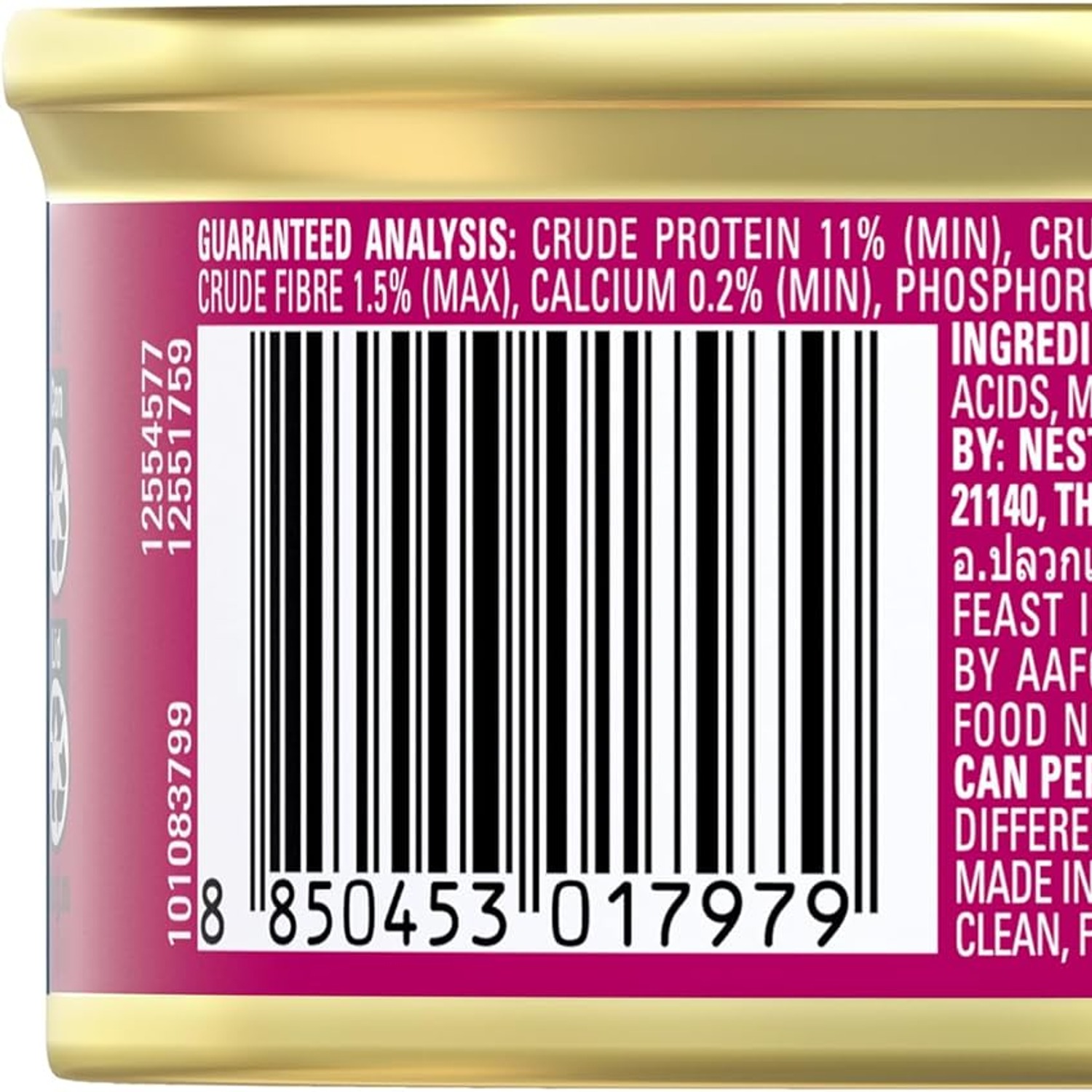
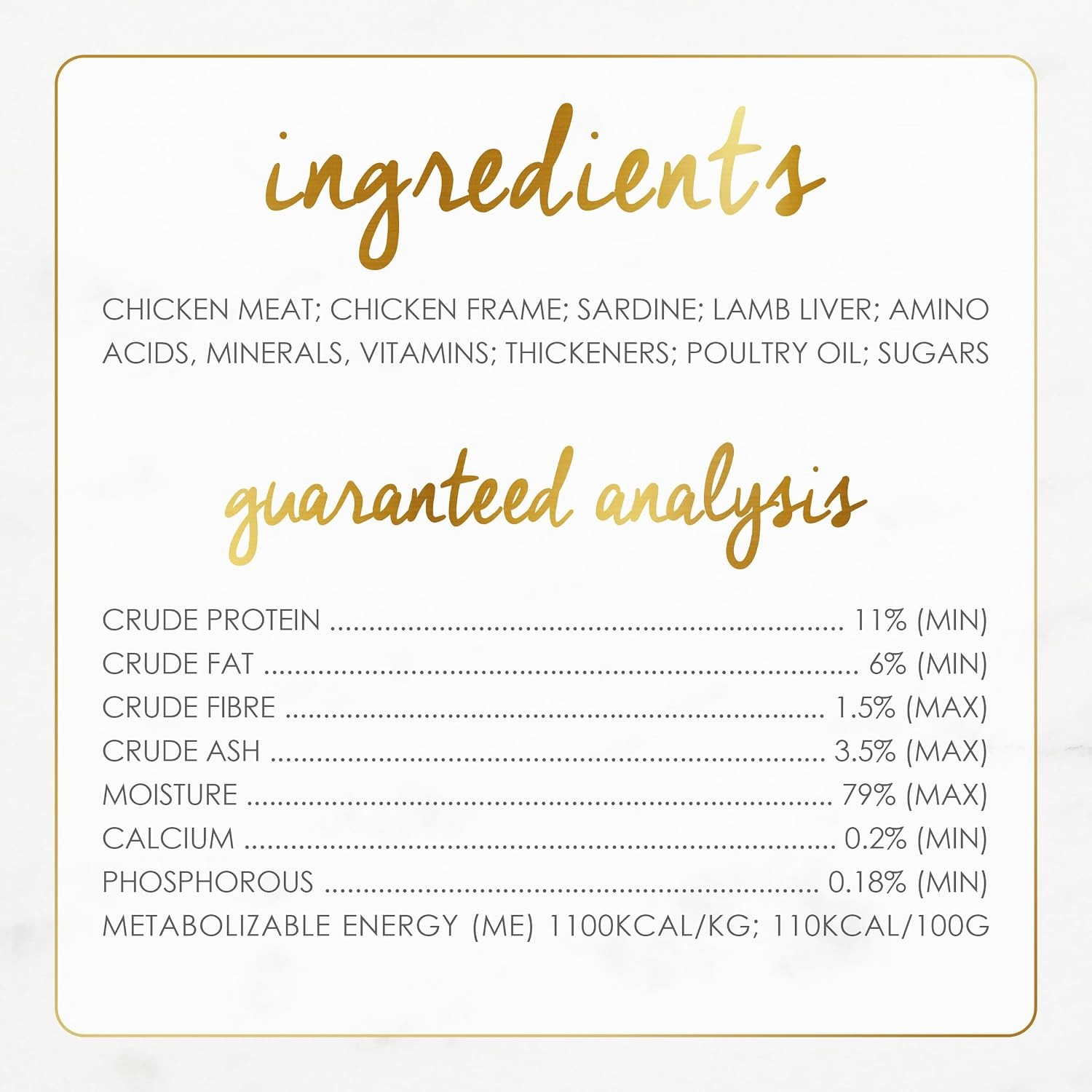
This is a chicken paté. The ingredient list runs chicken meat, chicken frame, sardine, lamb liver, then amino acids, minerals and vitamins, thickeners, poultry oil and sugars. Chicken sits at the front, which tells you the recipe is built around it rather than flavoured with it.
Two claims appear in the product details. No artificial flavours, and no added sugar. Both come from the maker. Sugars do appear in the ingredient list as part of the recipe, and the no added sugar claim refers to sugars not being added on top. If your cat has a known sensitivity to any ingredient, read the declaration on the tin and talk to your vet before switching foods.
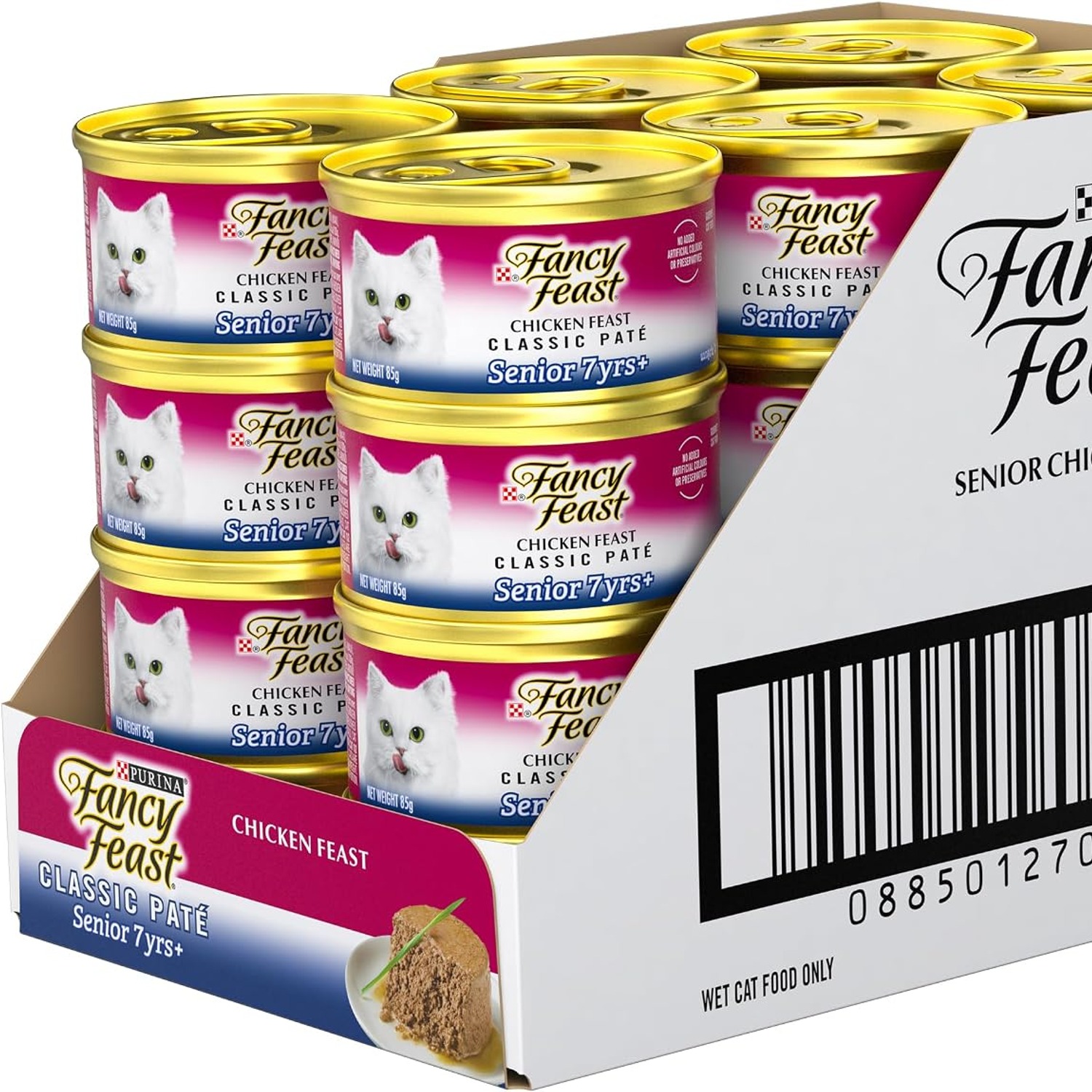
The pack is 24 tins, with a total unit count of 2040 grams and a shipping weight of 2.04 kg. It is suitable for all breed sizes. Country of origin is not specified by the maker we hold, though the maker lists Thailand under country of publication.
Working out how much to buy
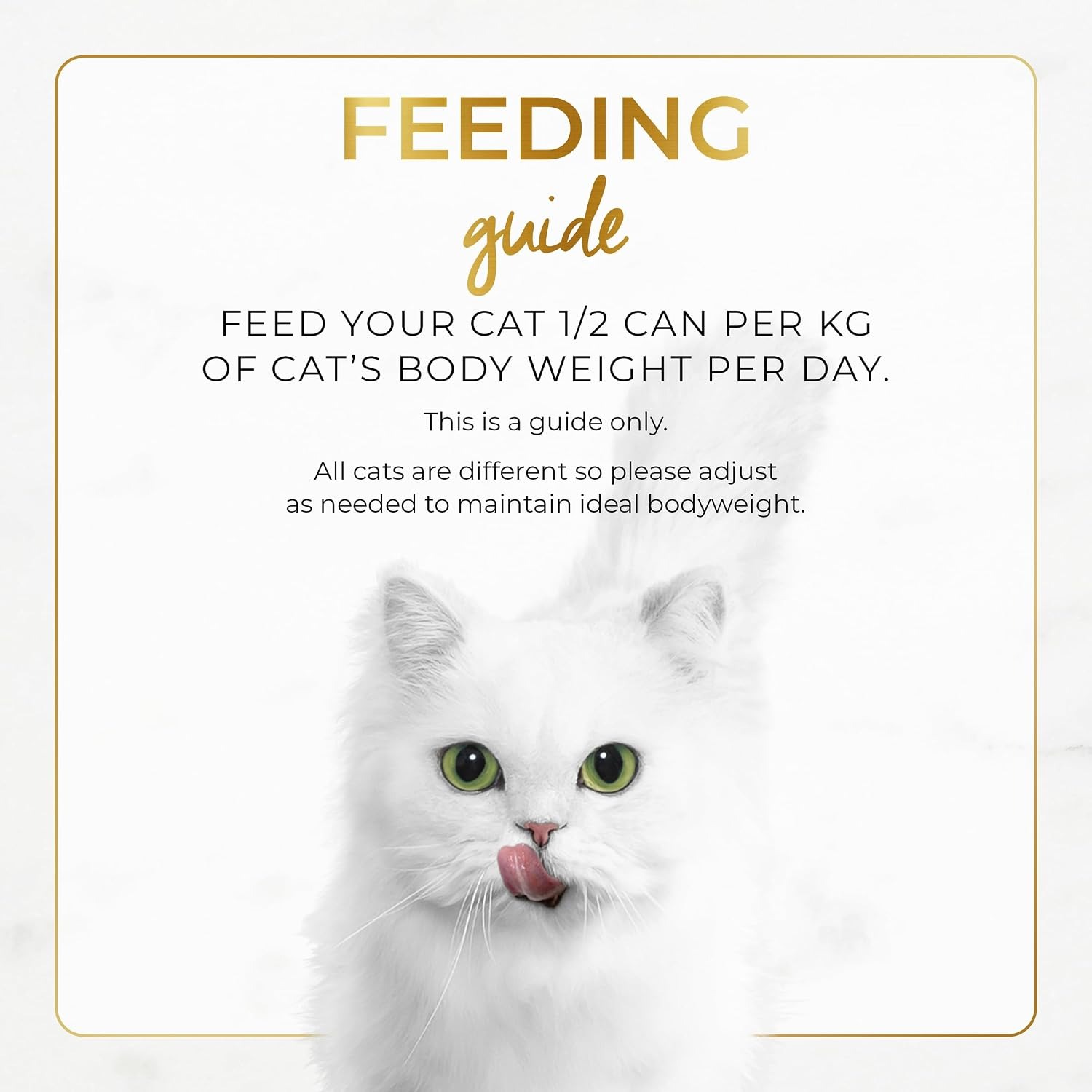
The maker feeding guide is half a can per kilogram of bodyweight per day, treated as a guide and adjusted to keep your cat at their ideal weight. That is the full extent of the feeding advice we will give, because anything beyond it should come from someone who has examined your cat.
Using that guide, you can do rough maths on how long a carton lasts. A smaller cat eating wet food only will get through it faster than a cat who also has dry food available. Households feeding two senior cats will obviously burn through a pack quicker than a single-cat home.
This is the practical argument for the best 24 pack cat food over grabbing tins as you go. You stop running out at awkward moments, you stop making special trips, and the per-tin cost usually comes down. The only real downside is cupboard space, and a carton of 24 tins is not exactly a wardrobe.
Switching foods without drama
Cats dislike sudden change. If your cat has been eating something else, do not swap the whole bowl overnight. Mix a small amount of the new food into the old and increase the proportion over several days. Most cats accept a gradual change far better than an abrupt one.
If your cat refuses the new food outright, try two things before you decide it is a failure. First, serve it at room temperature rather than cold from the fridge. Cold food loses its smell, and smell drives appetite in cats more than taste does. Second, use a shallow, wide bowl. Whiskers touching the sides of a deep dish bothers more cats than people realise.
Give it a few meals. A cat refusing something on day one is not the same as a cat refusing it on day five.
Storing and serving
Unopened tins live in a cupboard, somewhere cool and dry and out of direct sunlight. No refrigeration needed. Check the best-before date printed on the pack when the carton arrives, and put older tins at the front so they get used first.
Once a tin is open, cover it or decant the remainder into a sealed container and put it in the fridge. Use it within a day or two. Do not leave food sitting in the bowl for hours, especially in warm weather. Wash the bowl between meals rather than topping it up, since a crusted rim puts cats off faster than almost anything else.
If your cat only eats part of a tin at a sitting, splitting one tin across two smaller meals often works better than one large serve.
Who this suits, and who it does not
This is a good fit for a household with a cat aged roughly seven or older who prefers soft food, or who has started leaving chunks behind. It suits owners who want a single reliable everyday food rather than a rotation of different textures. The carton size suits people who would rather buy once than shop weekly.
It is less of a fit if your cat is young, if they are on a prescription diet from a vet, or if they have a known reaction to chicken, fish or lamb. It is also not the right choice if you want to try one tin before committing, since this is the full 24 pack.
Delivery and returns in plain terms
Orders go out within 2 working days, then take up to 7 working days by tracked courier. Delivery is free over $99 and $12 below that. You will get tracking when the carton ships.
Unopened, sealed packs can come back within 14 days of delivery, with return postage paid by you. Opened food cannot be returned for change of mind, which is standard for anything edible. Your rights under the Australian Consumer Law apply in full regardless. There is no separate warranty on food.
The short version
Fancy Feast senior chicken paté is a smooth wet food for cats in the senior life stage, sold here as a 24 tin carton totalling 2040 grams. Chicken meat and chicken frame lead the recipe, with sardine and lamb liver also included. The maker states no artificial flavours and no added sugar, and describes the food as 100% complete and balanced.
Feed half a can per kilogram of bodyweight per day as a starting point and adjust to keep your cat at a good weight. Store unopened tins somewhere cool and dry, refrigerate what is left after opening, and check the best-before date on the pack.
If you have questions about your cat's diet, a sensitivity, or anything health related, your vet is the one to ask. We can help with the pack size, the delivery and the returns.