
The complete guide
How to Choose a Wet Cat Food Multipack That Actually Gets Eaten
The problem with buying cat food
Feeding a cat is a small daily task that goes wrong in two predictable ways. Either you run out, which means a late-night trip to a shop that only stocks the one flavour your cat hates, or you buy in bulk and discover your cat will not touch it. A 24 pack sitting unopened in the laundry is money you cannot get back once the seal is broken.
Both problems come down to the same thing. Cats are specific. They have opinions about texture, aroma and temperature, and those opinions do not always line up with what the packaging promises. So the sensible approach is to understand what you are actually buying before the carton lands on your doorstep.
This guide covers what is in this particular pack, how wet food fits into a feeding routine, who it suits, and how to store it so nothing goes to waste. Where the maker states a fact, we quote it. Where we do not know, we say so.
What is in this pack
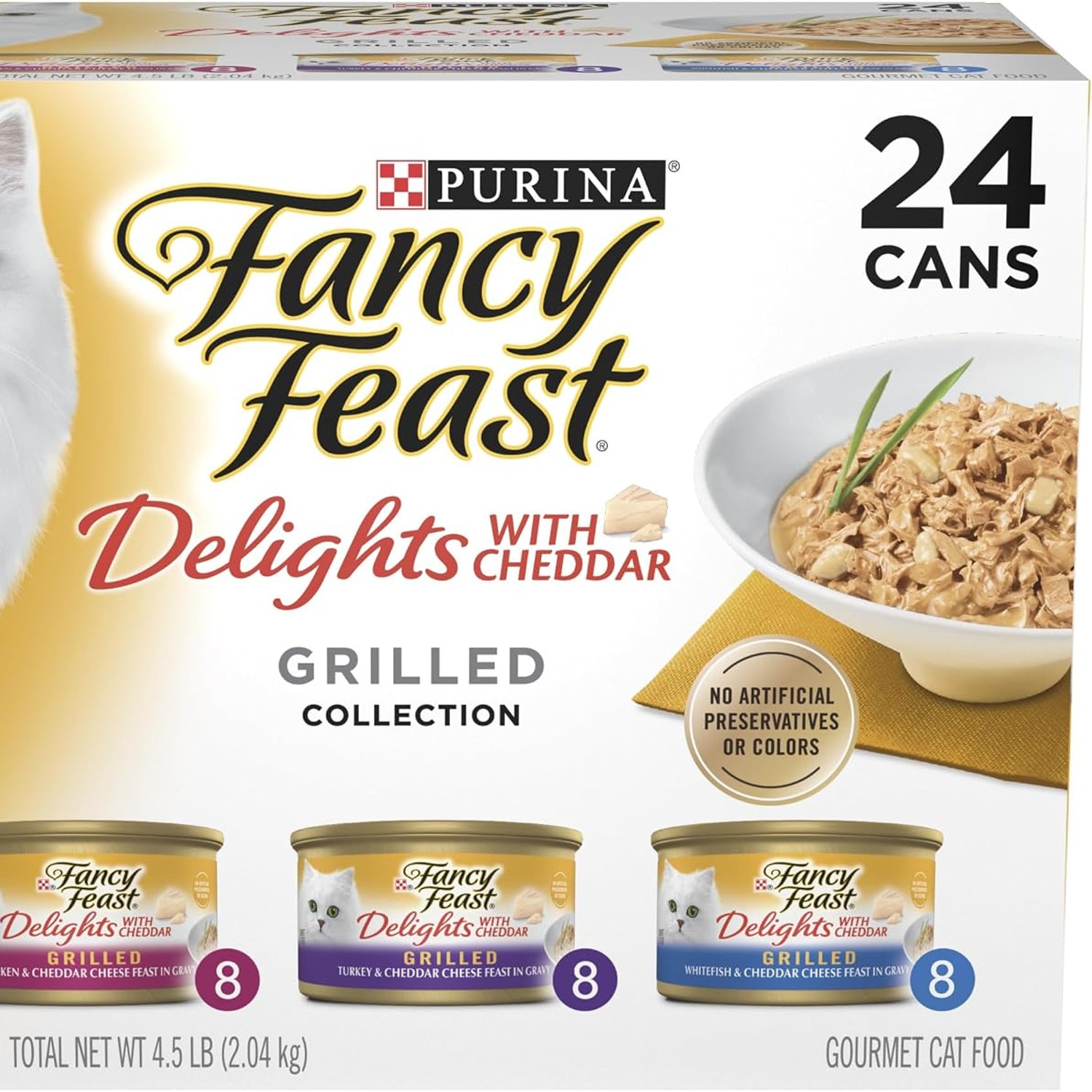
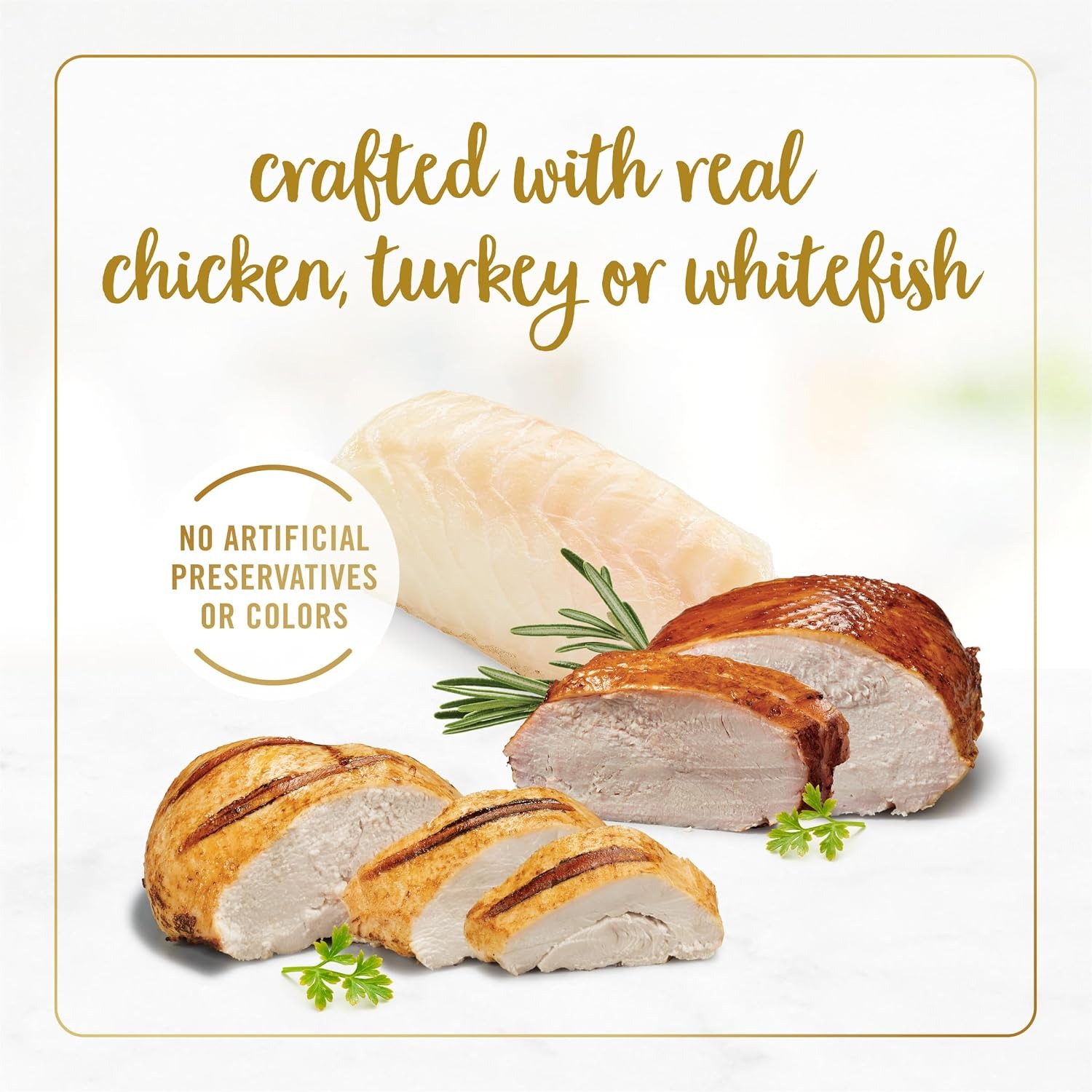
This is a 24 tin carton of Fancy Feast Delights With Cheddar Grilled wet cat food, made by Nestle Purina. Each tin weighs 84.9 g and the whole carton comes to 2040 g. The flavours listed across the assortment are chicken, turkey and whitefish, and all of the recipes in this collection are made with cheddar cheese.
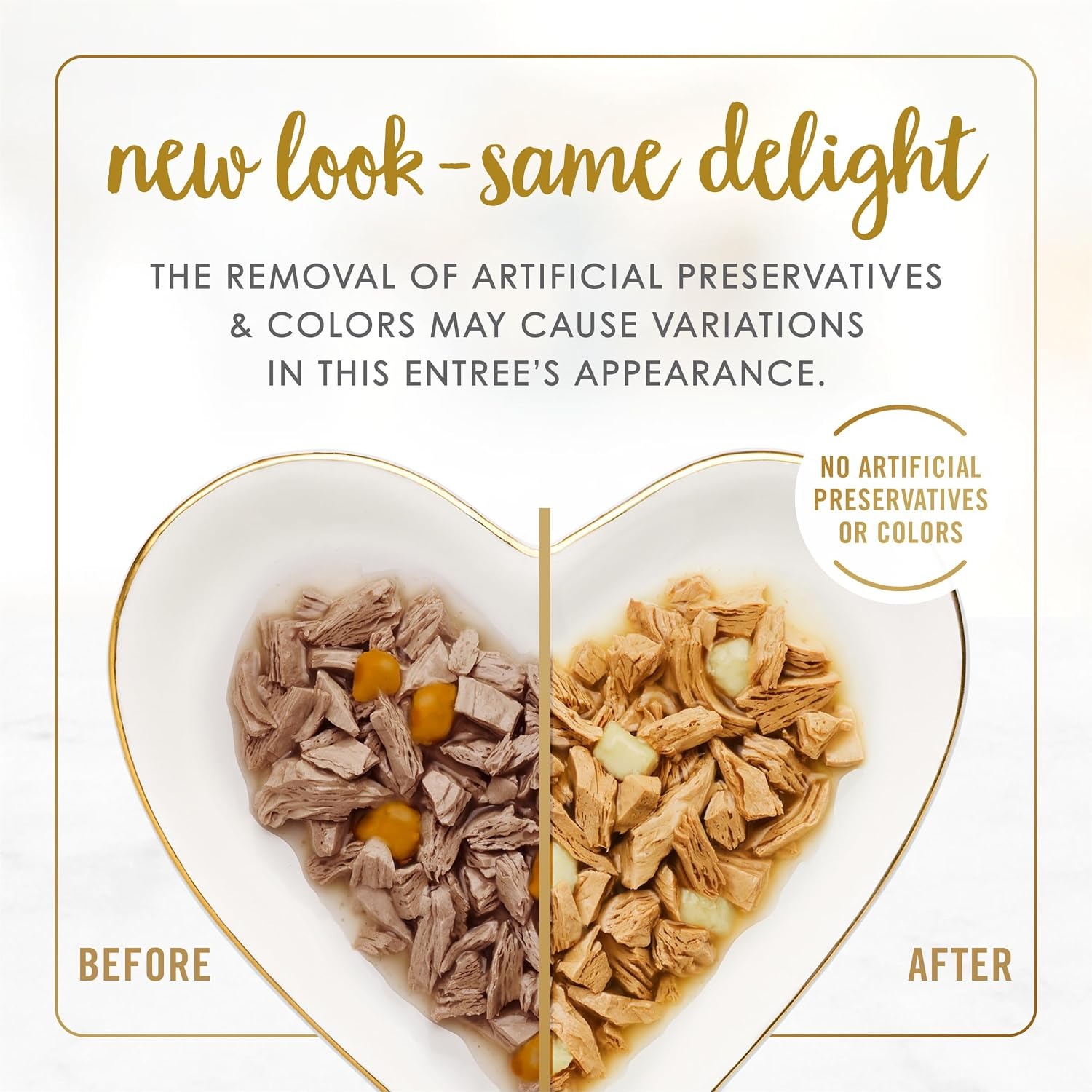
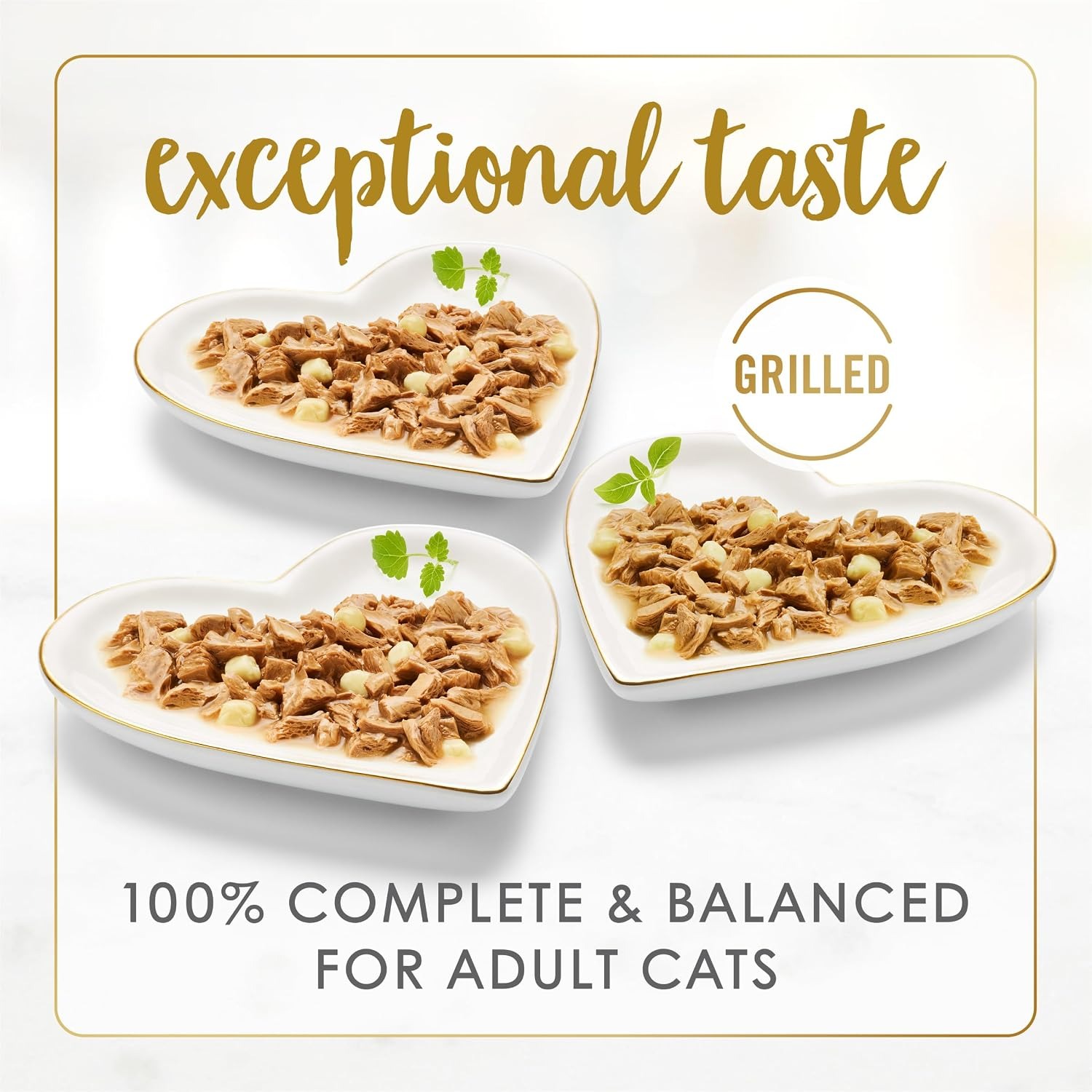
The food format is listed as chunk, served in gravy. That is worth pausing on, because texture is the single biggest reason a cat accepts or rejects a food. Chunk-in-gravy means visible pieces in a sauce. It is not a smooth pate, not a mousse, and not a jelly. If your cat currently licks the gravy off a bowl and leaves the solids, that is a sign to think carefully. If your cat digs into chunks and leaves the smooth stuff, this is your format.
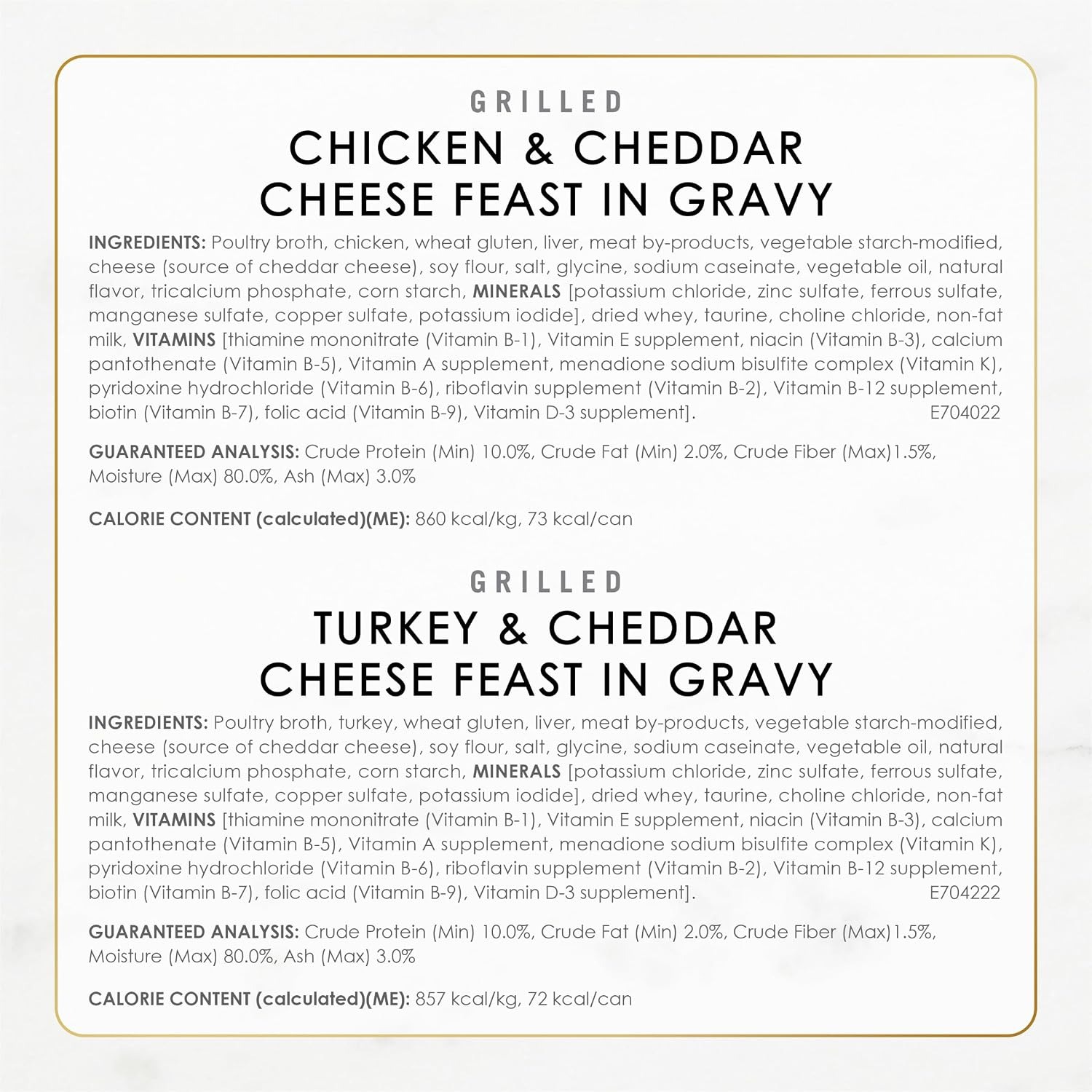
The chicken recipe lists poultry broth first, then chicken, liver, wheat gluten, meat by-products and modified vegetable starch, with cheese as a source of cheddar cheese. There is a long list of added vitamins and minerals after that, including taurine, which cats need in their diet. The turkey recipe follows the same structure with turkey in place of chicken. The complete ingredient list sits in the specifications on this page if you want to read it line by line.
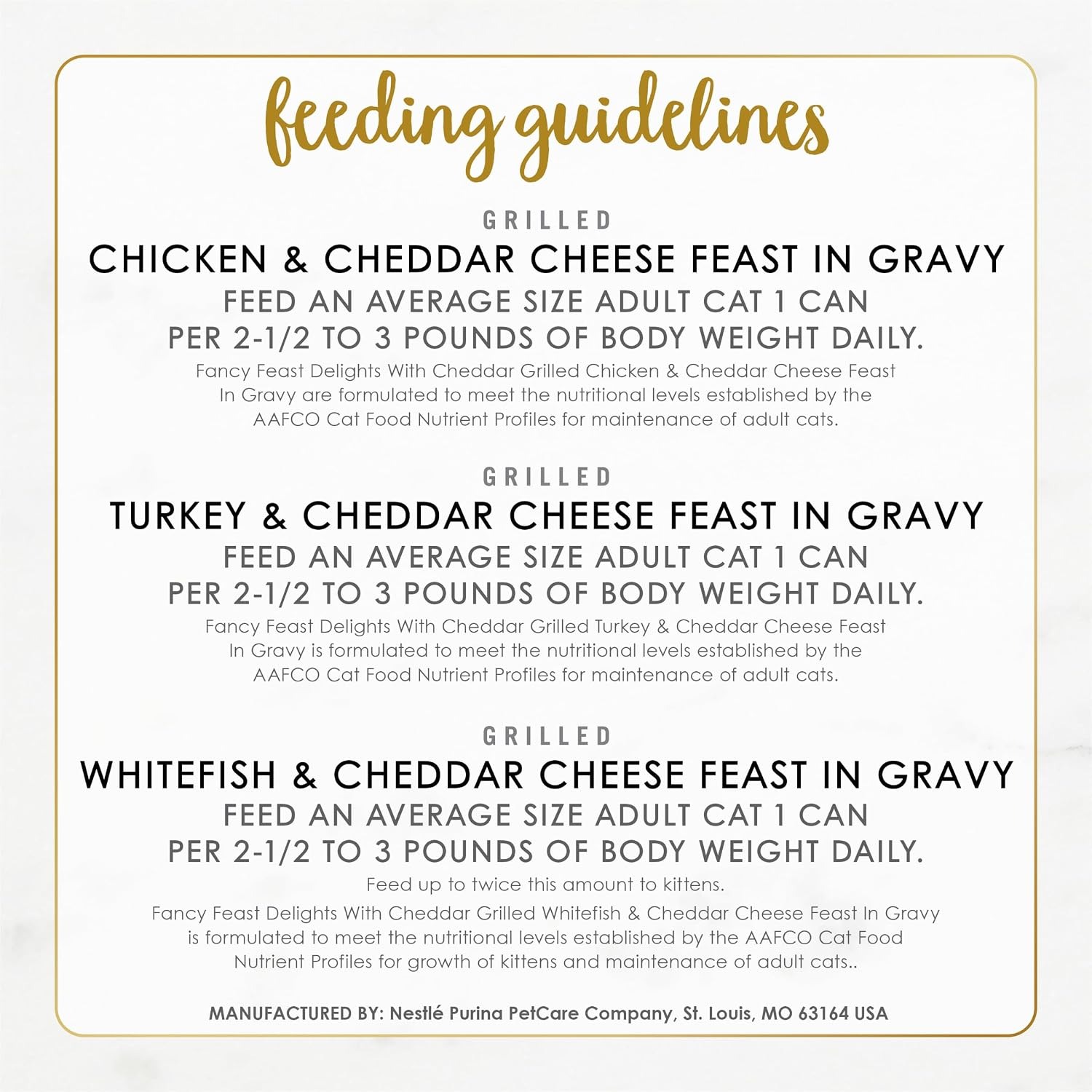
Purina describes the range as complete and balanced nutrition for adult cats. The feeding guide from the maker suggests one tin per day, adjusted for your cat's weight and activity level. For the grilled chicken and cheddar recipe, the stated calorie content is 844 kcal per kilogram, or 72 kcal per tin.
Who it suits
The age range for this product is adult, so it is not a kitten food and it is not labelled as a senior formula. Breed recommendation is given as all breed sizes, which for cats is a fairly broad statement. In practice, the deciding factors are life stage and your cat's individual needs rather than what breed they are.
A single-cat household feeding a tin a day will get a little over three weeks out of this carton. Two cats will burn through it in under a fortnight. Larger or more active cats may need more than one tin, which is exactly why the maker says to adjust the portion rather than giving a flat number.
This pack suits people who want the best everyday cat food routine sorted with one order, rather than picking up tins a few at a time. It also suits households where the cat gets bored easily, because three flavours in one carton gives you something to rotate.
It does not suit cats on a prescribed veterinary diet, cats with diagnosed food sensitivities to any listed ingredient, or anyone looking for a grain free recipe. Wheat gluten and corn starch both appear in the ingredient list. If your cat has a medical condition of any kind, the food choice is a conversation to have with your vet, not something to work out from a product page.
How wet food fits into a feeding routine
There is a simple, practical point about tinned food that gets lost in a lot of marketing. Food in gravy carries a lot more water than the same weight of dry biscuits. That is just what it is. Some owners build their routine around this and feed wet food at meal times with biscuits available during the day. Others feed wet only. Both are common.
If you are running a mixed routine, the thing to watch is total intake. It is easy to overfeed when food is coming from two sources and nobody is keeping track. Weigh your cat occasionally and adjust if the numbers creep. Your vet can give you a target body condition to aim for.
Single-serve tins help with portion control in a way large trays do not. One tin, one meal, done. If your cat only eats half, the rest goes into a container in the fridge rather than drying out in the bowl.
Storage and keeping it fresh
Unopened tins live in the pantry. Somewhere cool and dry, out of direct sunlight, away from the oven or a sunny window. Tins are tough but not indestructible, and a can that is dented along a seam or bulging should go in the bin rather than the bowl.
Once a tin is open, the feeding guide says to move leftovers into an airtight container, refrigerate, and use within five days. Do not store an opened tin in the fridge with foil over the top for a week and hope for the best. An airtight container is cheap and it works.
Cold food straight from the fridge is less appealing to most cats, because cold flattens aroma and aroma is most of what drives a cat to eat. Taking the container out a little before mealtime usually fixes a fussy reaction that has nothing to do with the food itself. Never heat tinned cat food until it is hot.
The best-before date is printed on the pack. Check it when the delivery arrives and use the oldest tins first if you are stacking a few orders.
Delivery, returns and the honest bit
Orders go out within two working days and then take up to seven working days by tracked courier. Delivery is free over $99 and $12 under that.
On returns, be realistic before you order. Unopened, sealed packs can come back within 14 days of delivery, with return postage paid by you. Opened food cannot be returned for change of mind, which is standard for anything edible. The Australian Consumer Law applies in full and nothing here reduces those rights.
The honest advice is this. If your cat has never eaten a chunk-in-gravy recipe, or has never eaten this brand, buy a single tin somewhere first and see what happens. A carton is the right move once you know the answer, not before. That is the difference between a smart bulk buy and 24 tins you end up donating.
The short version
This is 24 tins of adult wet cat food, 84.9 g each, chunks in gravy made with cheddar cheese, in chicken, turkey and whitefish. Purina calls it complete and balanced for adult cats and suggests one tin a day, adjusted to your cat.
Store unopened tins cool and dry, refrigerate leftovers in an airtight container for up to five days, and check the best-before date on the pack. Texture is the thing most likely to decide whether your cat eats it, so match the format to what already works in your house. For anything to do with health, diet changes or allergies, ask your vet.