
The complete guide
Choosing Wet Kitten Food, A Practical Buyer's Guide
The problem with feeding a brand new kitten
Nobody warns you how often a kitten wants to eat. They have tiny stomachs, they burn energy in short violent bursts, and they tend to eat small amounts many times a day rather than sitting down to two tidy meals. Then there is the pickiness. A kitten who hoovered down chicken on Tuesday can look at the same bowl on Thursday like you have insulted them personally.
That combination catches a lot of first-time owners out. You buy a big single-flavour pack because it looks like good value, your kitten decides after four tins that they are done with it, and the rest sits in the cupboard. Or you buy one tin at a time from the supermarket, which works until the week you forget, and suddenly you are improvising at nine at night.
A variety multipack solves both problems at once. You get enough food to stop the panic trips, and you get more than one recipe so there is always an alternative sitting on the shelf.
What paté actually means
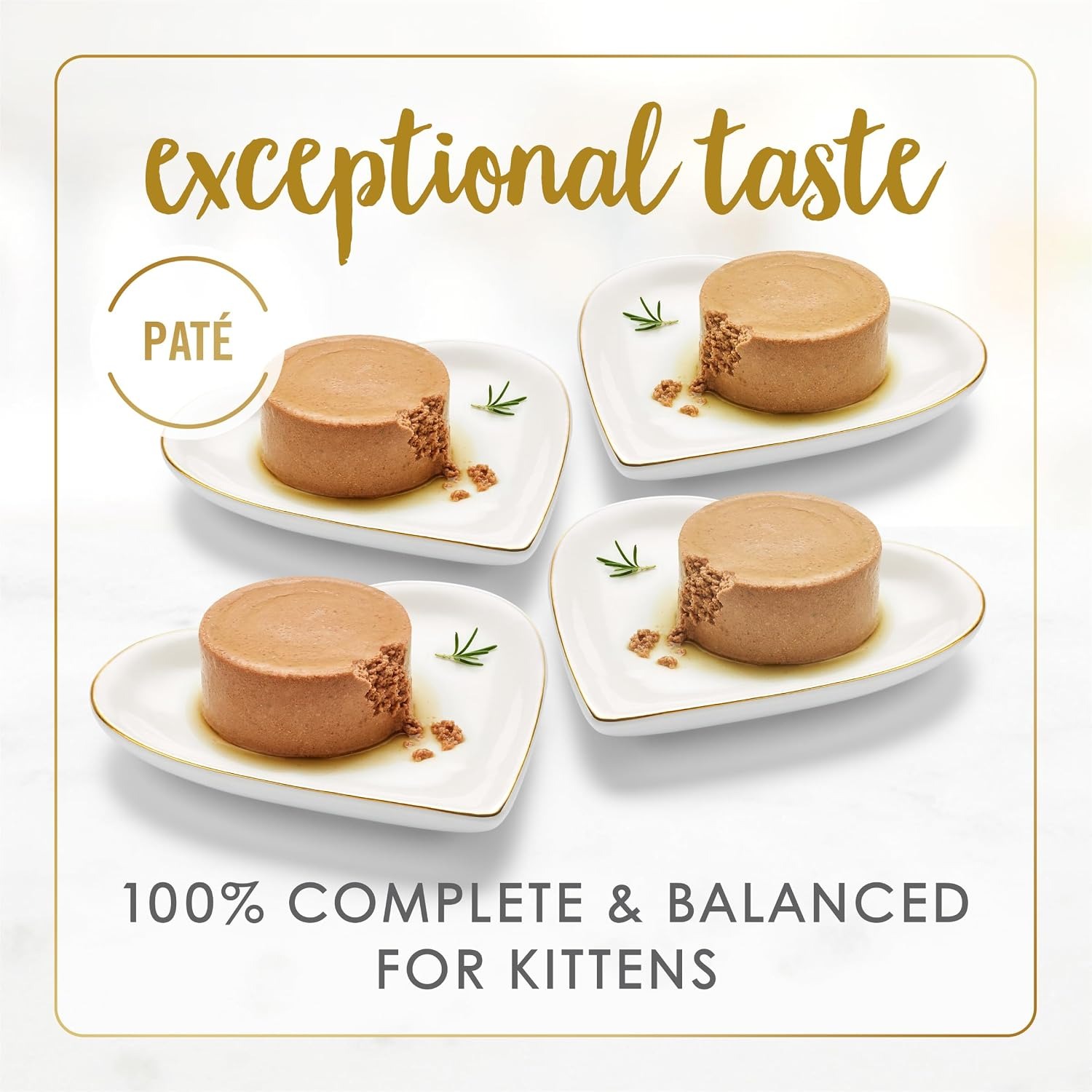
Wet cat food comes in a few textures. Chunks in gravy, shreds, mousse, and paté. Paté is the one that is finely ground into a single smooth block with nothing to chew around.
For a young kitten, that matters more than it sounds. Their teeth and jaws are still developing, and some kittens genuinely struggle to get hold of larger chunks. A smooth paté can be lapped, licked or pushed around without effort, which is why so many people searching for the best first wet food for kittens end up on a paté rather than a chunky recipe.
Paté also mashes easily, which helps if you want to mix a little water through it or combine it with something else. Chunks in gravy do not blend the same way.
This Fancy Feast pack is a paté across all four recipes, so the texture is consistent no matter which tin you open.
What is in this carton
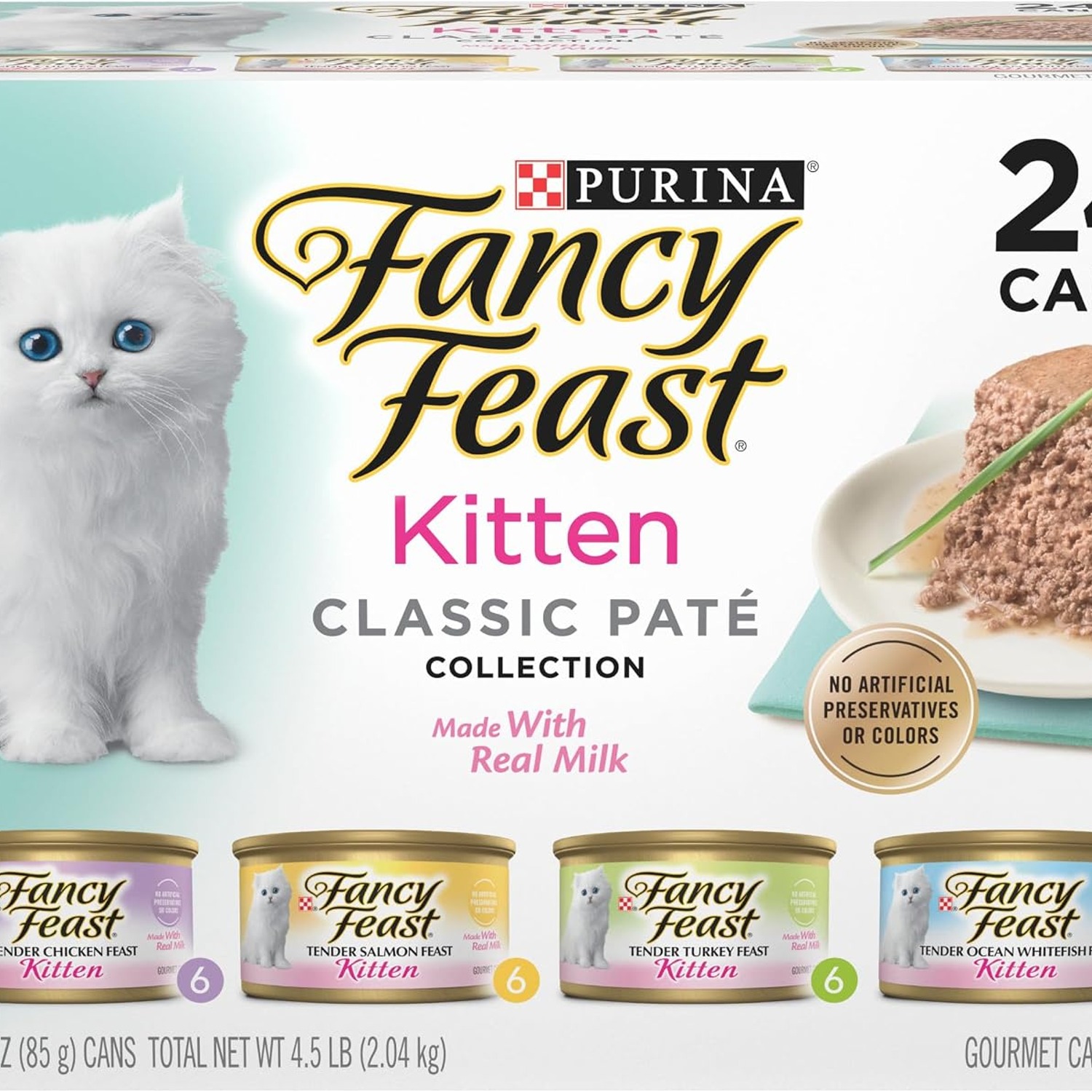
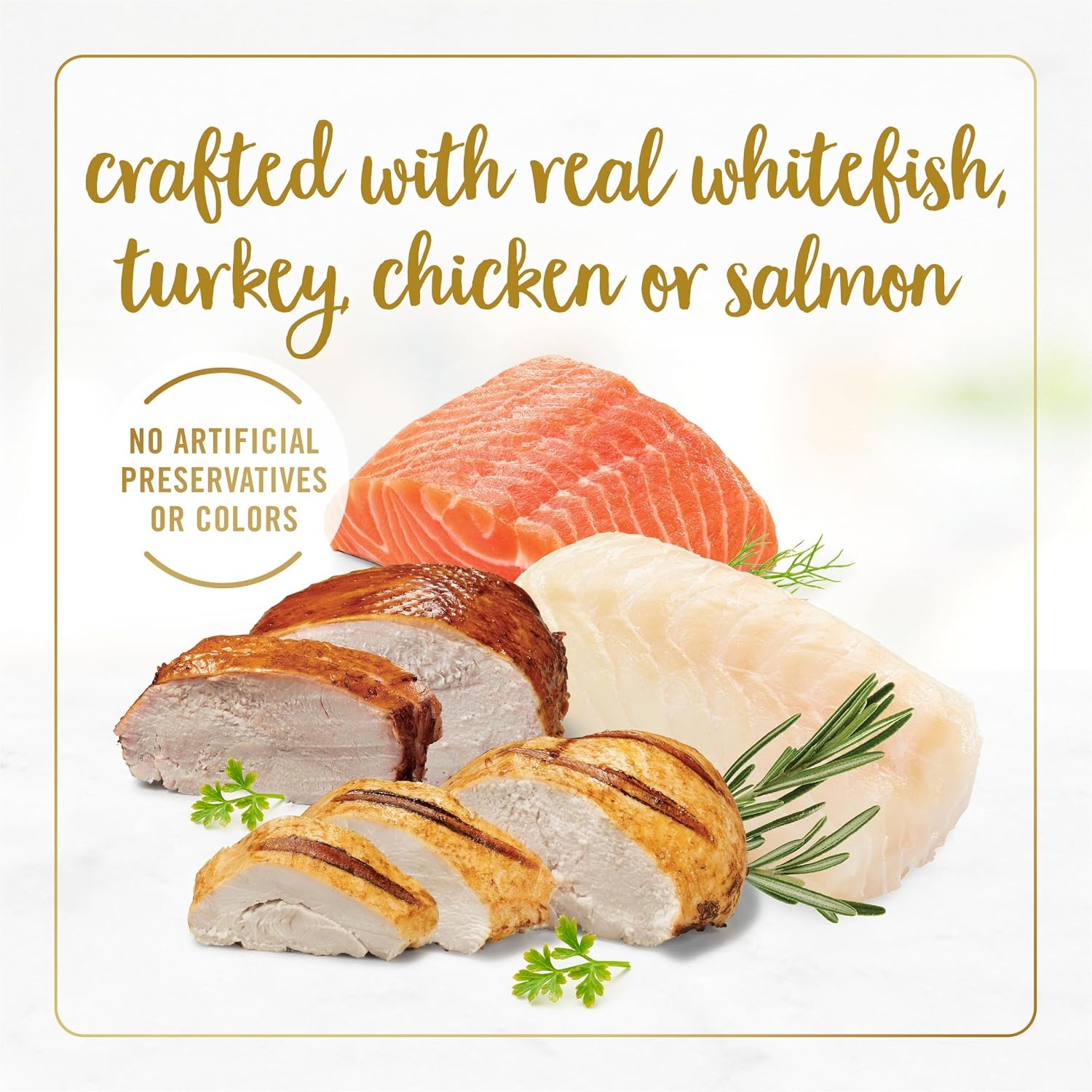
The pack holds 24 tins with a total weight of 2.04 kg, and it covers four recipes, tender chicken, tender salmon, tender turkey and ocean whitefish. Fancy Feast lists the range as grain free and made for the kitten life stage, and the allergen information supplied by the maker says macadamia nut free. The maker also lists it as suitable for all breed sizes.
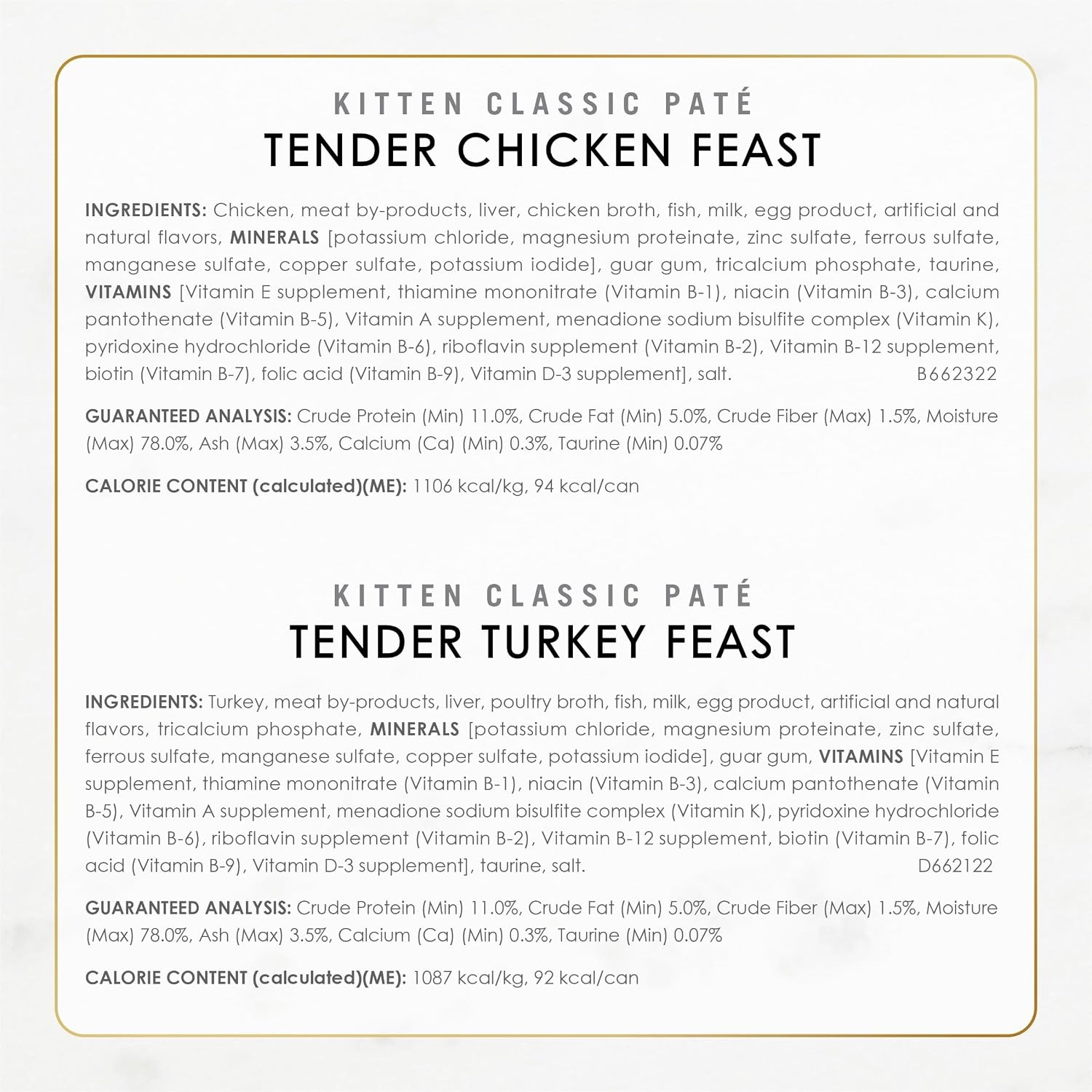
The full ingredient lists for the chicken, salmon and turkey recipes are reproduced in the specifications section on this page. They are worth reading before you buy rather than after. The chicken recipe, for example, leads with chicken, liver, meat by-products and chicken broth, and the lists also include added colour and both artificial and natural flavours. None of that is unusual for a supermarket wet food, but you should know what you are putting in the bowl.
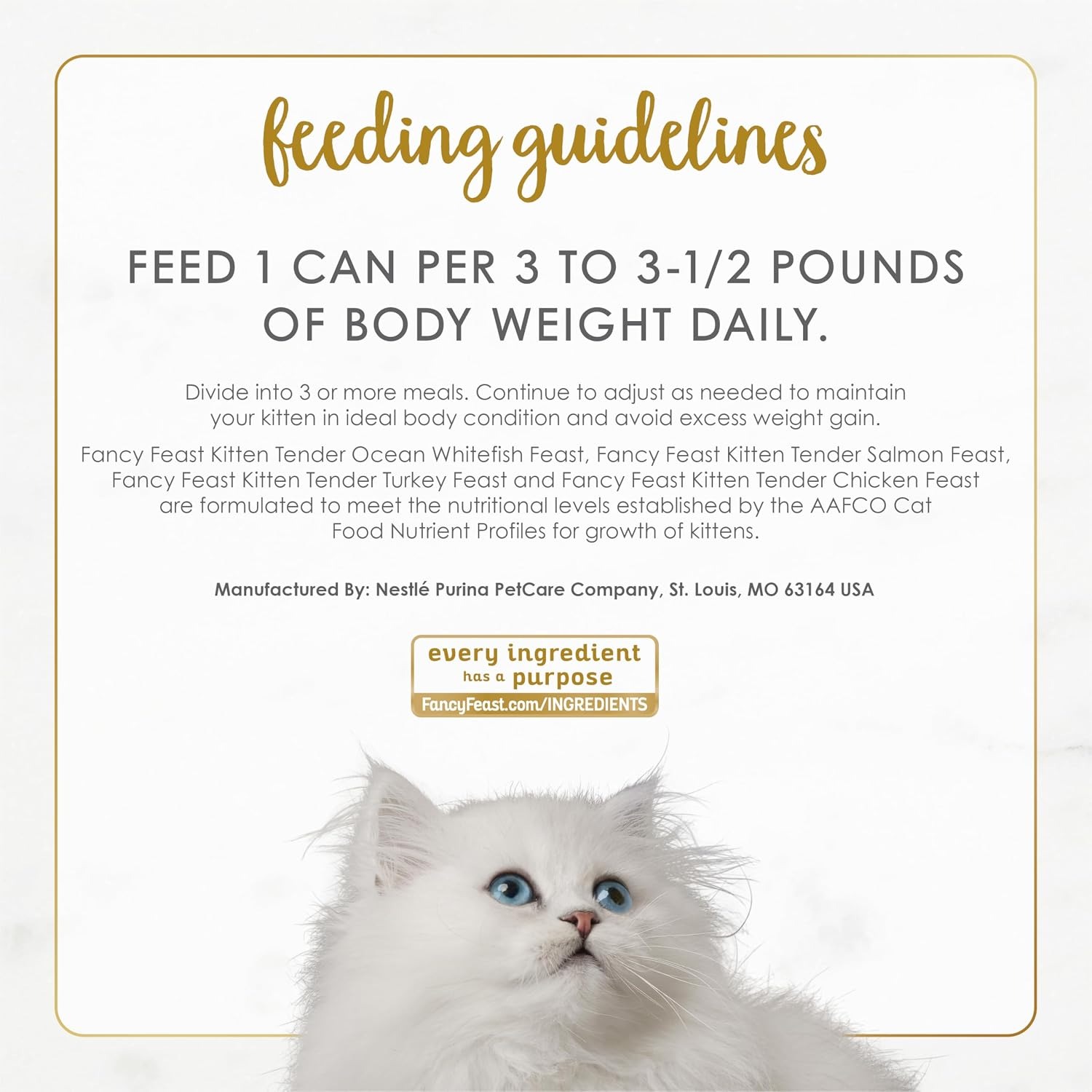
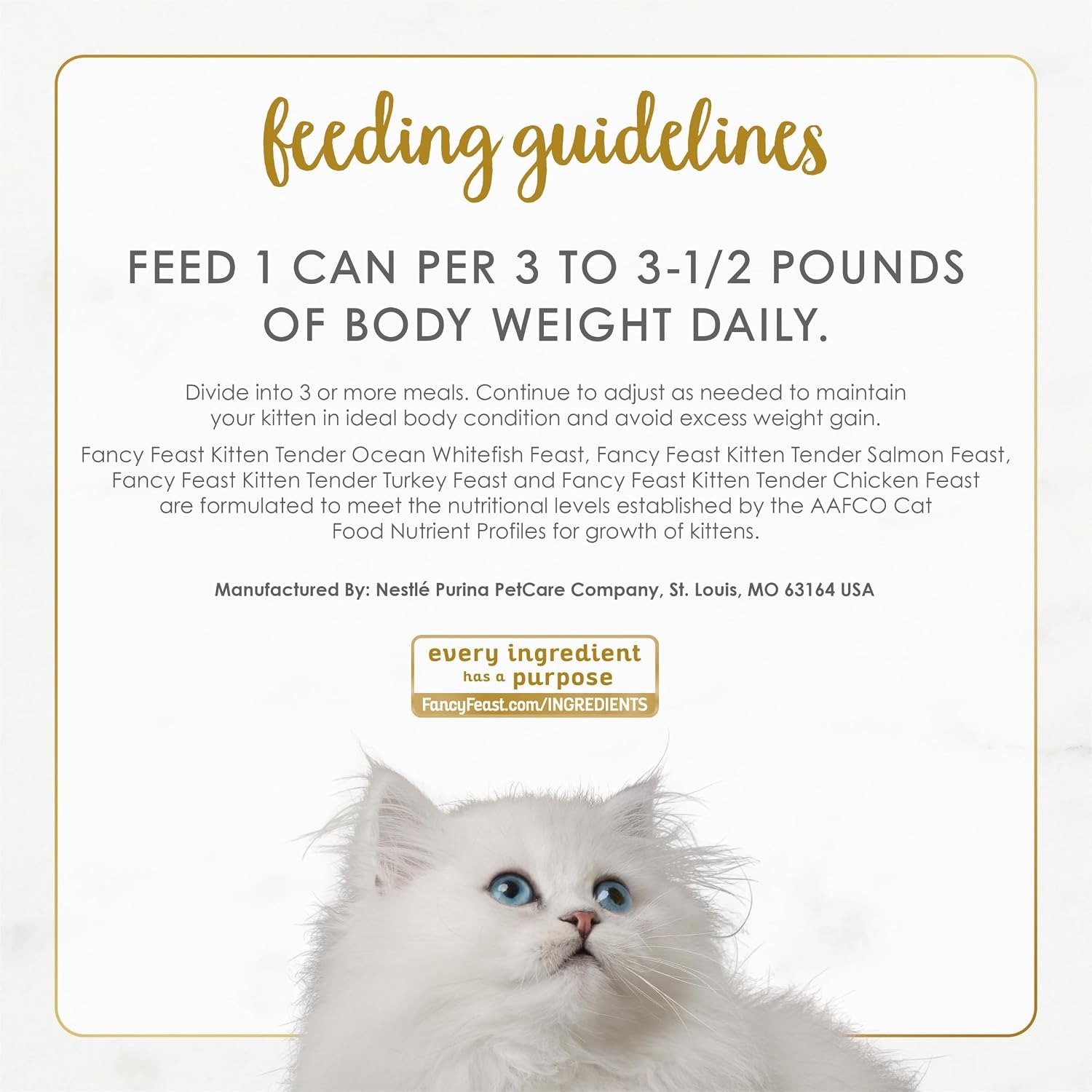
The maker's feeding guide is deliberately brief. Serve according to your kitten's needs, and refrigerate any unused portion. We are not going to invent daily gram amounts on top of that, because how much a kitten should eat depends on their age, weight and how fast they are growing. That is a question for your vet, and it is a quick one to ask at a routine visit.
Who this pack suits
It suits someone with a kitten in the house who wants wet food sorted for a few weeks at a time. One tin a day stretches a carton to around three and a half weeks. Two tins a day cuts that to roughly twelve days.
It also suits anyone still working out what their kitten likes. Four recipes in one box is a cheap experiment compared with buying four separate cartons. If salmon wins, you know what to order next time. If your kitten turns out to be a whitefish cat, same thing.
It is less suitable if you already know your kitten only eats one specific flavour, since you would be paying for three recipes they will ignore. In that case a single-flavour pack is the better buy.
It is also not the right choice for an adult or senior cat. The maker lists this product for the kitten life stage, and life stage is the main thing to match when you choose cat food.
How to choose between wet kitten foods
A few things are worth weighing up.
Texture first. If your kitten is very young or has struggled with chunky food before, start with a paté. If they are older, closer to the end of kittenhood and eating confidently, you have more options.
Pack size against appetite. Work out roughly how many tins a day you go through, then see how long a carton lasts. A 24 pack is a good middle ground. Big enough to stop constant reordering, small enough that you are not stuck with months of food your kitten may outgrow.
Single serve versus large tins. Smaller tins mean less leftover food going into the fridge. With a kitten eating modest amounts, single serve sizes genuinely cut waste.
Read the ingredients. Not because one list is automatically better than another, but because you should know what is in there. If your kitten has a known allergy, that list and your vet are the two things that matter.
Keep the routine stable. Kittens handle sudden food changes poorly. If you are switching from one food to another, do it gradually over several days. Your vet can tell you the right pace.
Storing and serving it
Unopened tins live happily in a cool, dry cupboard away from sunlight. They stack well, so a carton tucks into a pantry corner without much fuss. Check the best-before date printed on the pack when it arrives, and work through older tins first if you ever have two cartons on the go.
Once a tin is opened, cover any leftovers, put them in the fridge and use them within a day or two. Straight from the fridge, paté can be a bit cold and firm, and some kittens will walk away from it for that reason alone. Taking the portion out a little before mealtime usually fixes that. Do not heat food in the tin.
Wash the bowl after every meal. Wet food dries hard and goes off faster than dry kibble, and a clean bowl is one less reason for a fussy kitten to refuse dinner. Keep fresh water next to the food at all times, whatever they are eating.
Delivery and returns in plain terms
Orders go out within 2 working days, then allow up to 7 working days with a tracked courier. Delivery is free on orders over $99, otherwise it is a flat $12.
If you change your mind, sealed and unopened packs can come back within 14 days of delivery and you cover the return postage. Opened food cannot be returned for change of mind, which is standard for food products. If something is wrong with the goods themselves, the Australian Consumer Law applies in full and we will sort it out. There is no separate warranty on food.
Health questions go to your vet
We are a retailer, not a veterinary practice. Questions about digestion, allergies, weight, teeth, coat condition or any ongoing health issue should go to the person who can actually examine your kitten. The same goes for exact feeding amounts. Bring the ingredient list with you if that helps the conversation.
The short version
This is a 24 tin carton of smooth kitten paté in four recipes, chicken, salmon, turkey and ocean whitefish, weighing 2.04 kg in total. Fancy Feast lists it as grain free, macadamia nut free, suitable for all breed sizes and made for the kitten life stage.
The paté texture is easy for small mouths. The single serve tins cut down on fridge leftovers. The four recipes give you a simple way to learn what your kitten actually likes, which is the whole point of a variety pack. Store the tins cool and dry, refrigerate anything you open, check the best-before date on the pack, and ask your vet about amounts.