

The complete guide
Creamy Cat Treats, A Buyer's Guide To Lickable Sachets
The problem with most cat treats
Treat time is supposed to be a nice bit of the day. For a lot of households it is not. You shake the bag, your cat appears, eats three biscuits in four seconds and walks off. The whole thing lasts less time than it took to find the packet. If your cat is on the fussy side, it can be worse again, where you buy a bag, they try one, and the rest goes stale in the cupboard.
There is also the group of cats who are perfectly affectionate but not lap cats. They want to be in the room with you, just not on you. A dry treat does nothing to help with that, because it is over before it starts.
Creamy cat treats work differently. They are a smooth purée in a small sachet, and the cat licks rather than chews. That takes longer. It also puts your hand in the middle of the whole thing, which is the real point of the format.
How a lickable sachet actually works
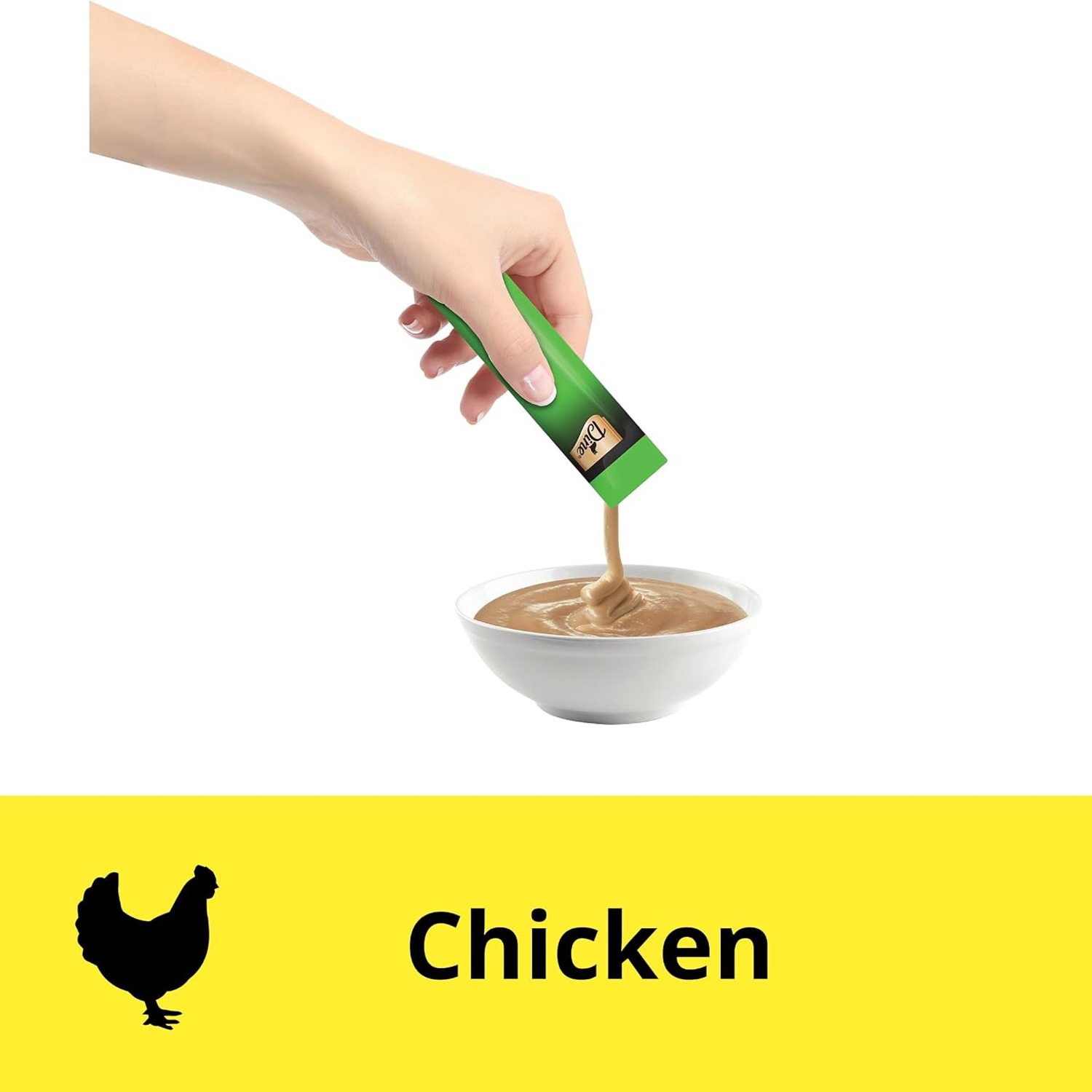
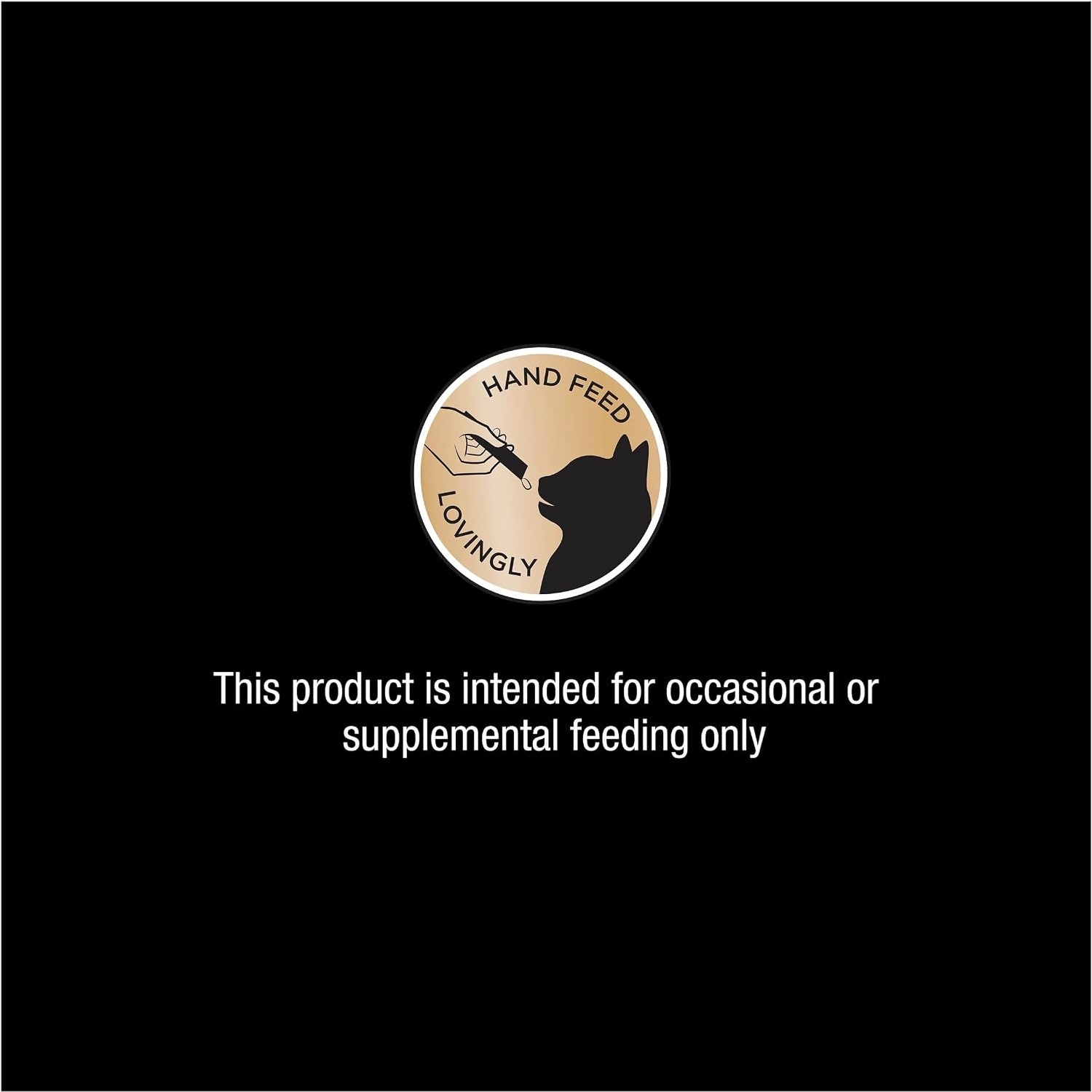
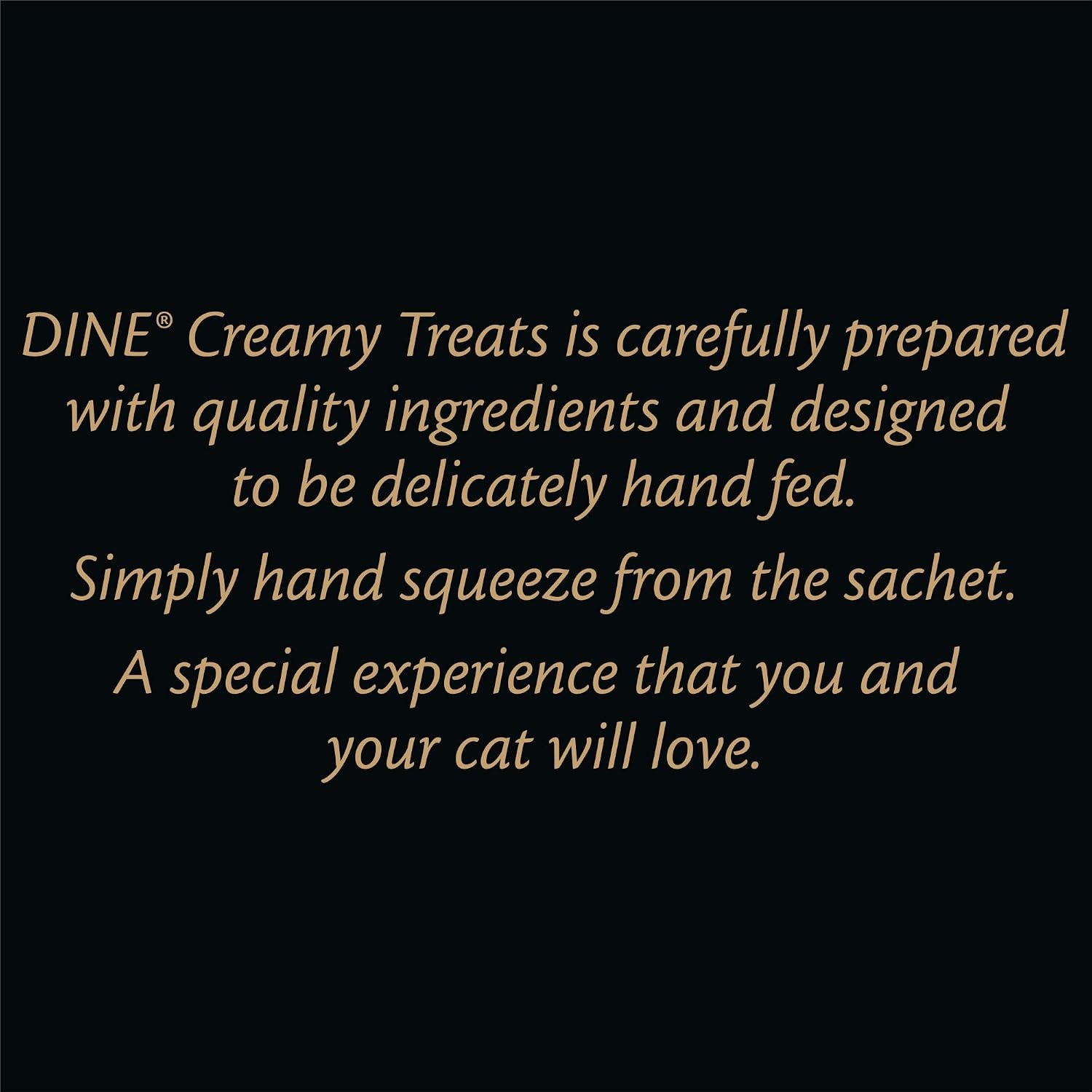
Each DINE Creamy Treats sachet holds 12g. You tear the top off, squeeze a small bead of purée to the opening, and hold it out. Your cat licks it clean, you squeeze a bit more, and so on until the sachet is empty. The maker's feeding guide is short and to the point. Hand feed lovingly, and simply hand squeeze from the sachet.
The 12g size is deliberate. It is enough for a proper few minutes and small enough that there is nothing left over to store. Every sachet is sealed on its own, which is why a box of 32 does not go stale the way an opened bag of biscuits does. You use one, the other 31 are untouched.
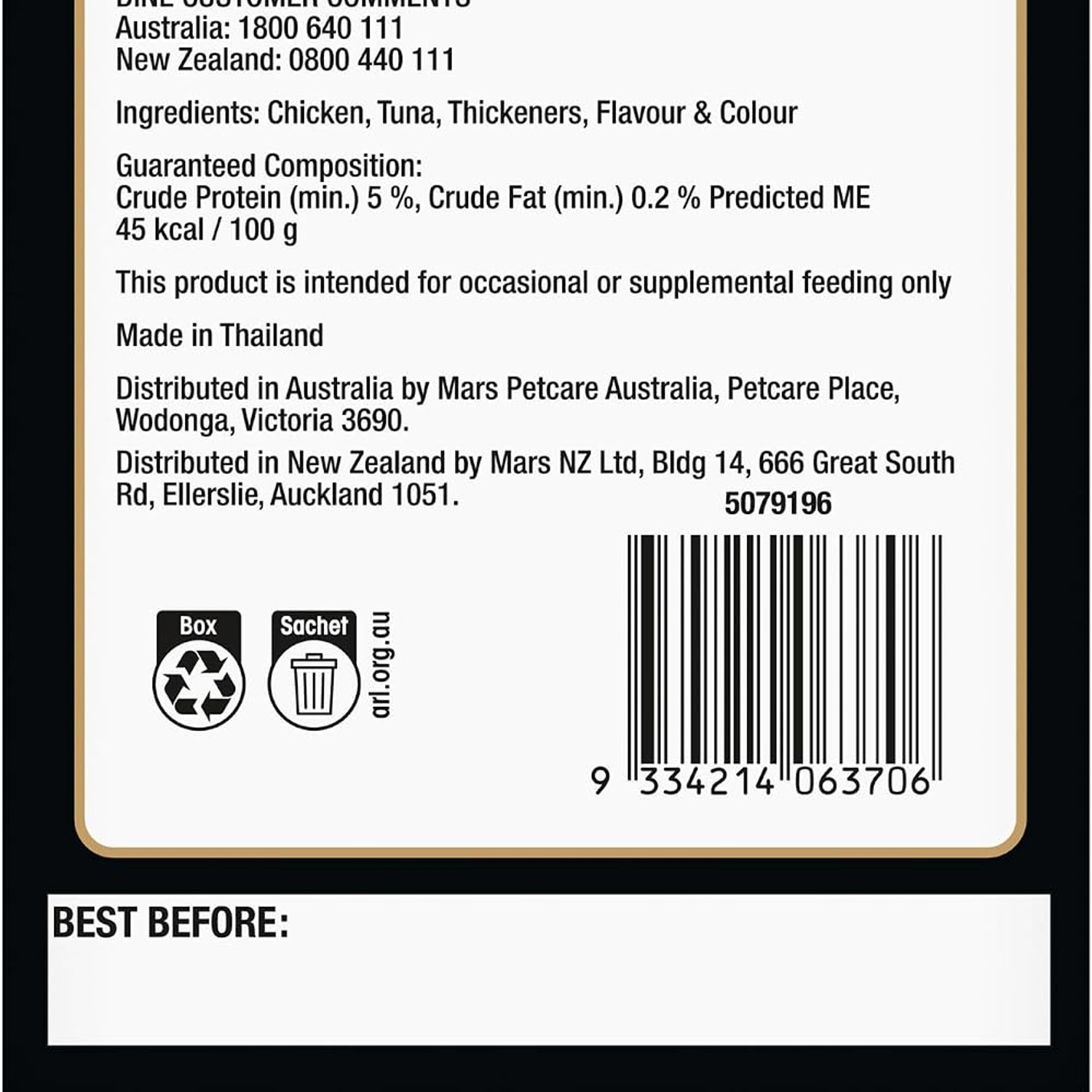
The flavour here is chicken. DINE lists the ingredients as chicken, tuna, thickeners, flavours and colour, and states no artificial colours. Tuna being in the recipe is worth noticing, and the allergen note says fish may be present. If your cat has a known sensitivity, read the pack and ask your vet before you open anything.
Who these suit
DINE lists this product for cats over 12 months of age, so adult and senior cats, across all breed sizes. It is not listed for kittens.
The cats who tend to get the most out of lickable cat treats are:
- Fussy eaters who sniff at dry treats and turn away
- Older cats who find hard biscuits less appealing than something soft
- Cats who like company but do not want to be held
- Nervous cats who need a reason to stay still for a brush or a check-over
If your cat already hoovers up anything you put down, these still work, they just do not solve a problem you have. Buy them because the hand-feeding bit is enjoyable, not because you need them.
One thing to be clear about. DINE states these are for occasional or supplemental feeding only. They go alongside your cat's regular meals, not instead of them. How many a day suits your particular cat depends on their weight, their usual diet and their health, and that is a conversation for your vet rather than a shop.
Choosing the right pack size
Treat sachets usually sell in fours or eights. This box is 8 packs of 4, so 32 sachets, 384g in total.
Work out roughly how often you would reach for one. If it is a nightly thing with one cat, a box of 32 is about a month. Two cats having one each in the evening gets you a fortnight. If you only use them for brushing or trips to the vet, the same box could last half a year.
Buying 32 at once is almost always cheaper per sachet than buying a four-pack whenever you remember. The format helps here, because sealed sachets keep well in a cupboard, so a bigger box is not a gamble the way a big bag of fresh food would be. That said, if your cat has never tried a purée treat, consider whether you want to commit to 32 before you know their opinion. Most cats take to them, but cats are cats.
Making treat time work
A few small habits make a difference.
Hold the sachet low and steady, roughly at your cat's chest height, so they do not have to stretch up. Squeeze a little at a time rather than emptying half of it at once. Let them set the pace. If your cat is shy about hands, squeeze some onto a saucer for the first few goes and move to hand feeding later.
If you have more than one cat, feed them in separate spots. One sachet in a room with two cats usually ends with one cat getting all of it and the other getting cross.
A lot of owners keep a sachet near the grooming brush or the nail clippers. The treat gives the cat something to concentrate on, and a minute of licking is often all you need to finish a job that would otherwise turn into a wrestle. Same idea with carriers and car trips. It is not magic, and a genuinely frightened cat needs more than a snack, but for mild fuss it helps.
Storage and care
Keep unopened sachets in a cool, dry cupboard, away from direct sunlight. No refrigeration needed while they are sealed.
Once a sachet is open, use it in that sitting. Purée left in a torn sachet is not worth saving, so throw away whatever your cat does not finish. That is part of why the 12g size makes sense.
The best-before date is printed on the pack. Check it when the box arrives and use the older packs first if you are stocking up.
Store the box where your cat cannot reach it. Cats have been known to find a pack and chew straight through it, which is a mess you only clean up once before you learn.
Delivery and returns
Orders are dispatched within 2 working days, then take up to 7 working days by tracked courier. Delivery is free on orders over $99 and $12 below that.
Unopened, sealed packs can be returned within 14 days of delivery, with return postage paid by the customer. Opened food cannot be returned for change of mind, which is standard for anything edible. The Australian Consumer Law applies in full and nothing in our policy takes away from your rights under it.
The short version
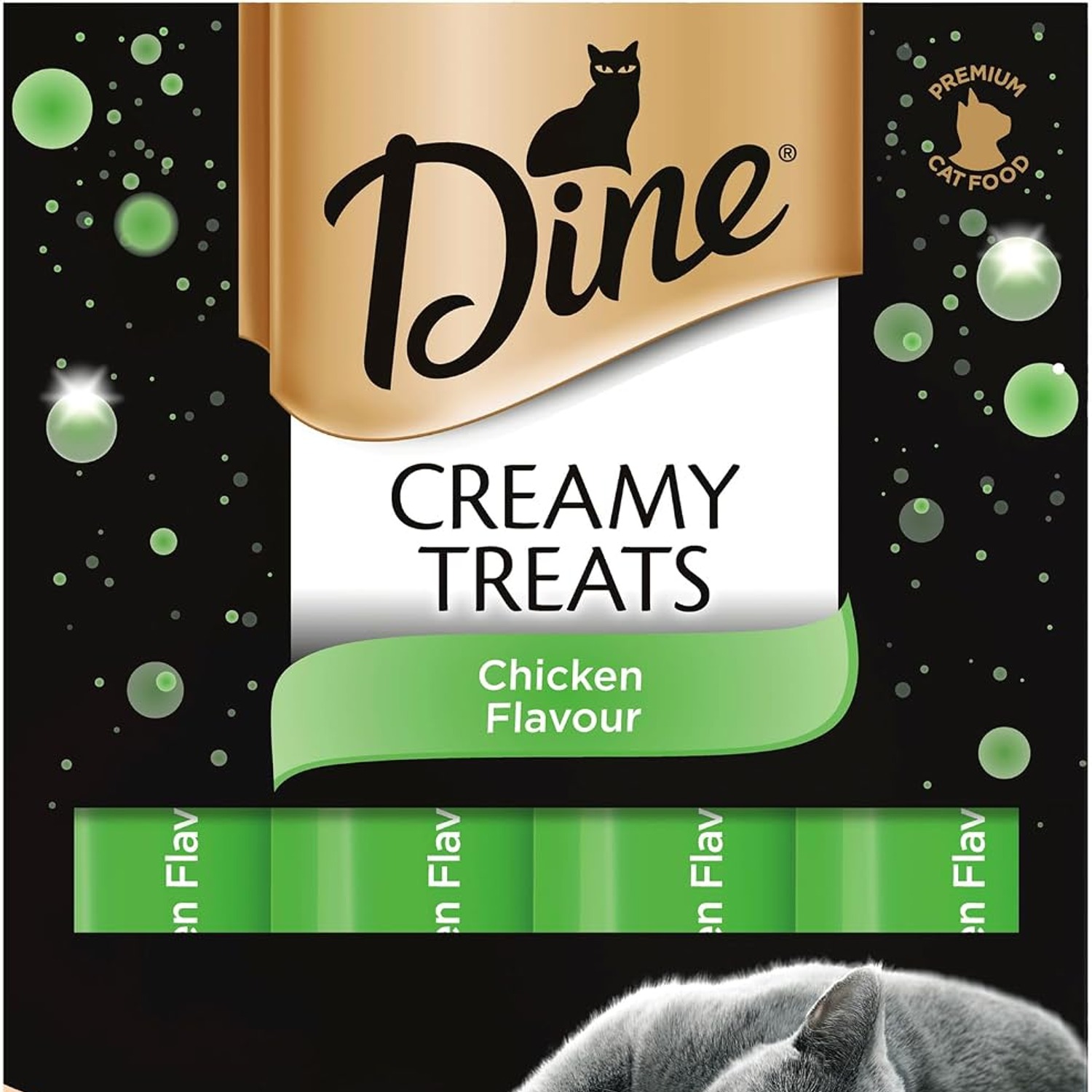
DINE Creamy Treats Chicken Flavour gives you 32 sachets of 12g, 384g in total, in 8 packs of 4. The recipe is chicken, tuna, thickeners, flavours and colour, with no artificial colours, and fish may be present. It suits adult and senior cats over 12 months, all breeds.
The format is the selling point. A lickable sachet turns a four-second biscuit into a few minutes you spend with your cat, which is useful if yours is fussy, older, or the sort who likes to be near you without sitting on you.
DINE says to hand feed lovingly and that these are for occasional or supplemental feeding only. Keep your cat's normal meals as they are, and take any question about diet, allergies or health to your vet.