

The complete guide
How to Choose an Indoor Dry Cat Food (and Make the Bag Last)
The problem with the cat food aisle
Buying cat food should be a two minute job. Instead you stand in front of a wall of bags, each one shouting a different message, and you end up picking whichever one your cat tolerated last time. Then you get home and find the bag is either too small to be worth the trip or so large it sits half-finished for months.
Most of the real decisions come down to four plain questions. What is in it? What life stage is it made for? How much do I actually feed? And how long will this bag last before it goes stale?
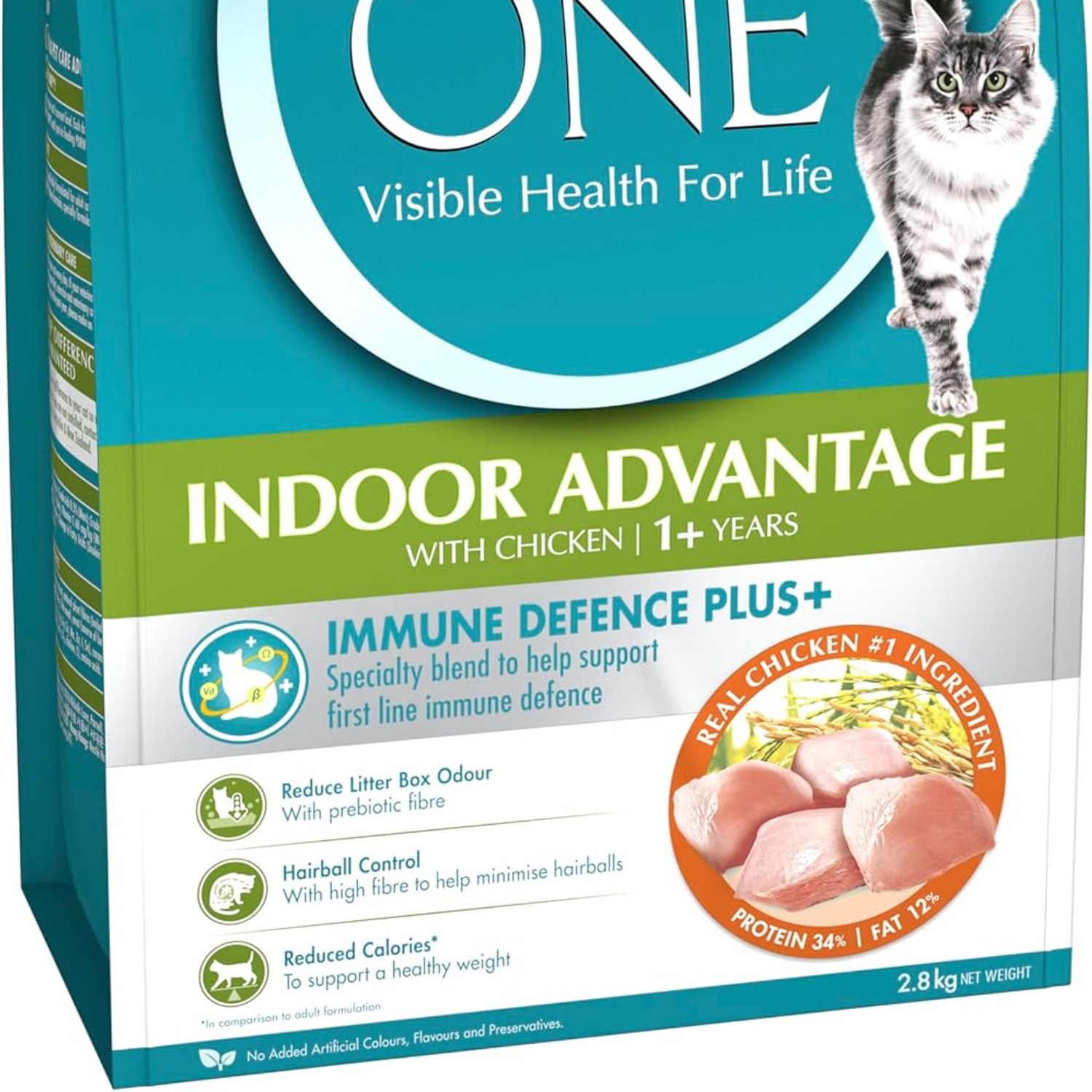
This guide walks through those questions using Purina ONE Adult Indoor Dry Cat Food with Chicken as the worked example. Everything stated about the recipe, the pack and the feeding amounts comes from the maker.
What is actually in the bag
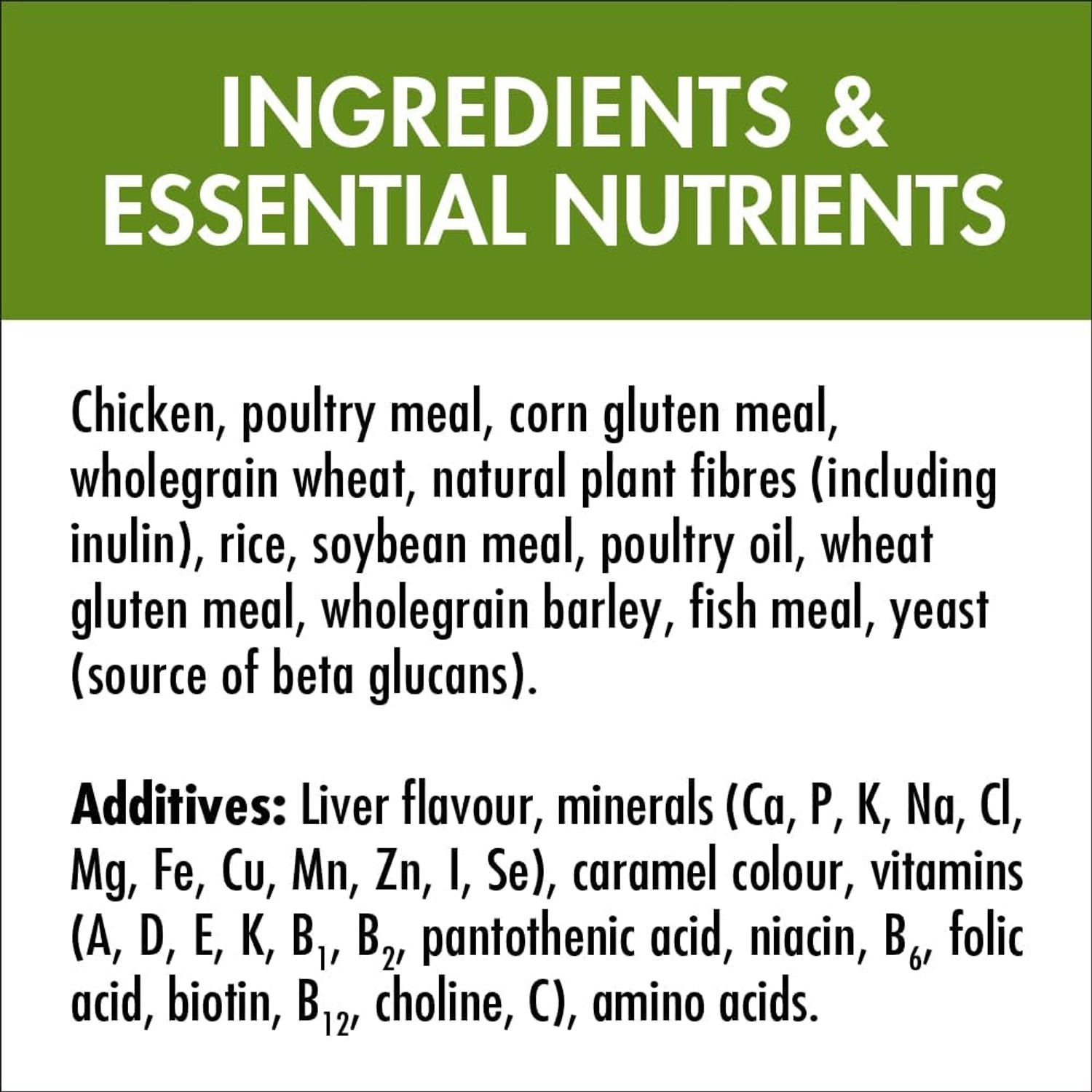
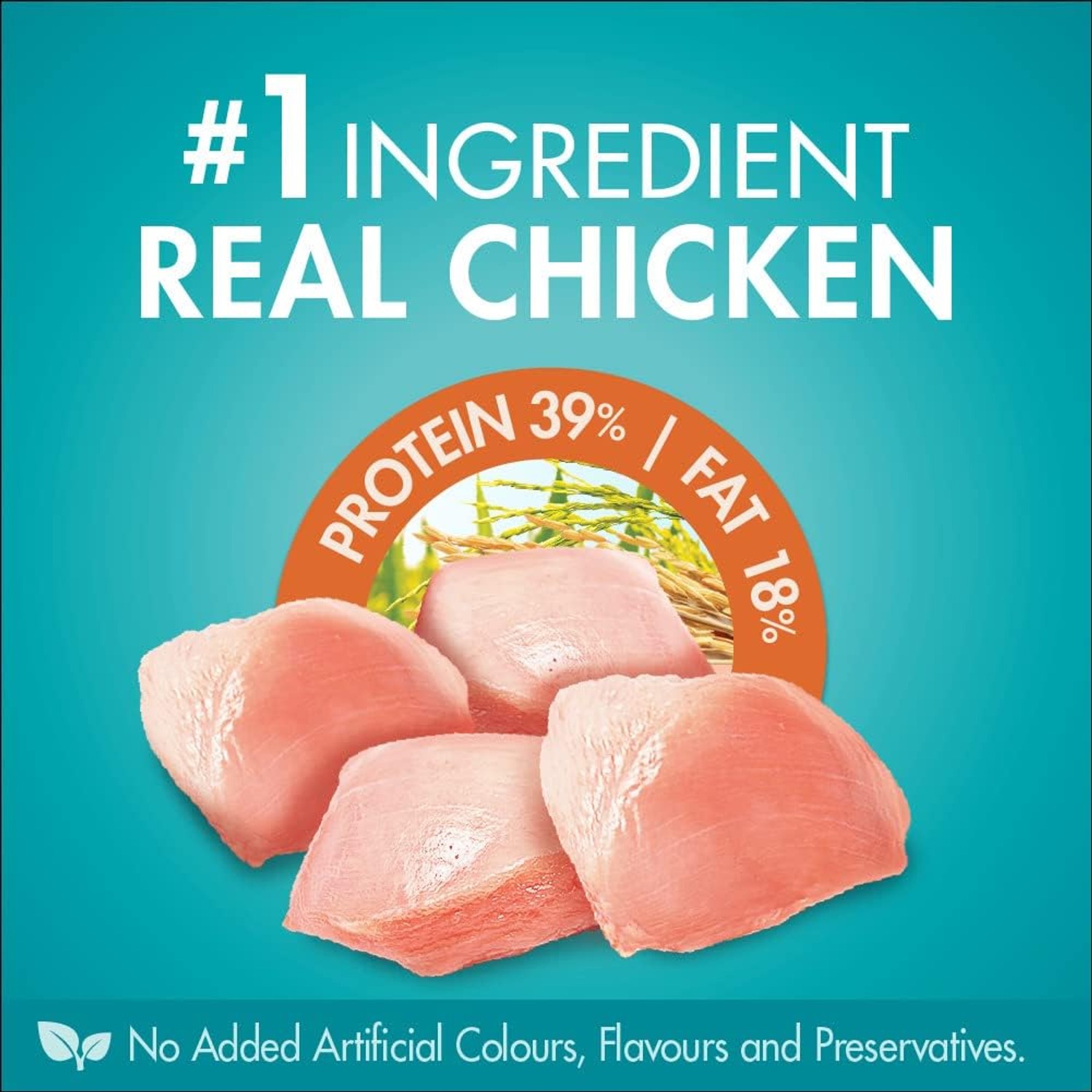
The ingredient list is the most useful thing on any pack, because ingredients are listed in order of quantity. On this one, chicken comes first, described by the maker as poultry meal and chicken. After that are wholegrain wheat, corn protein and corn, then vegetable protein, animal fat (derived from beef and/or lamb and/or chicken) and plant fibres.
Further down the list sit meat meal and meat by-products (derived from beef and/or lamb and/or pork), cereal bran, barley and natural antioxidants. That means chicken is first, but it is not the only animal source in the recipe. If a single-protein diet matters in your household, read the full list before you buy.
Then there is the vitamin, mineral and amino acid block. For this formula the maker lists calcium carbonate, choline chloride, copper, DL-methionine, folic acid, iodine, iron, magnesium, manganese, phosphorous, potassium chloride, selenium, sodium chloride, taurine, vitamins A, B1, B2, B3, B5, B6, B12, D and E, and zinc. Taurine is worth noting because cats cannot make enough of it themselves, which is why you will see it on cat food labels.
Prebiotic fibre is listed by the maker as an additional feature of the recipe. Purina ONE also states the food is 100 per cent complete and balanced. We pass those along exactly as the maker words them. Anything beyond that, including whether this food suits a cat with a particular health condition, is a conversation for your vet.
Grain, no grain, and reading past the marketing
Plenty of buyers come in asking for grain-free food. This product is not grain-free. Wholegrain wheat, corn, cereal bran and barley are all on the list. That is a design choice by the maker, not an accident, and millions of cats eat grain-inclusive food without trouble.
Whether grain belongs in your cat's bowl is genuinely a question for a vet, especially if you suspect a food sensitivity. Food reactions in cats are not common but they do happen, and guessing at an elimination diet from an internet search rarely ends well. Get the diagnosis first, then shop for the food.
Why "indoor" is a flavour line, not a medical claim
The flavour on this pack is named Indoor. That tells you which product line you are holding and which recipe is inside. It is a naming convention used across the range so you can tell the bags apart on a shelf.
Indoor cats do tend to live differently from cats with outdoor access. They often have more predictable routines, eat on a schedule, and move less across a day. That is worth thinking about when you set portion sizes, which brings us to the part of the pack most people skip.
The feeding guide, in plain numbers
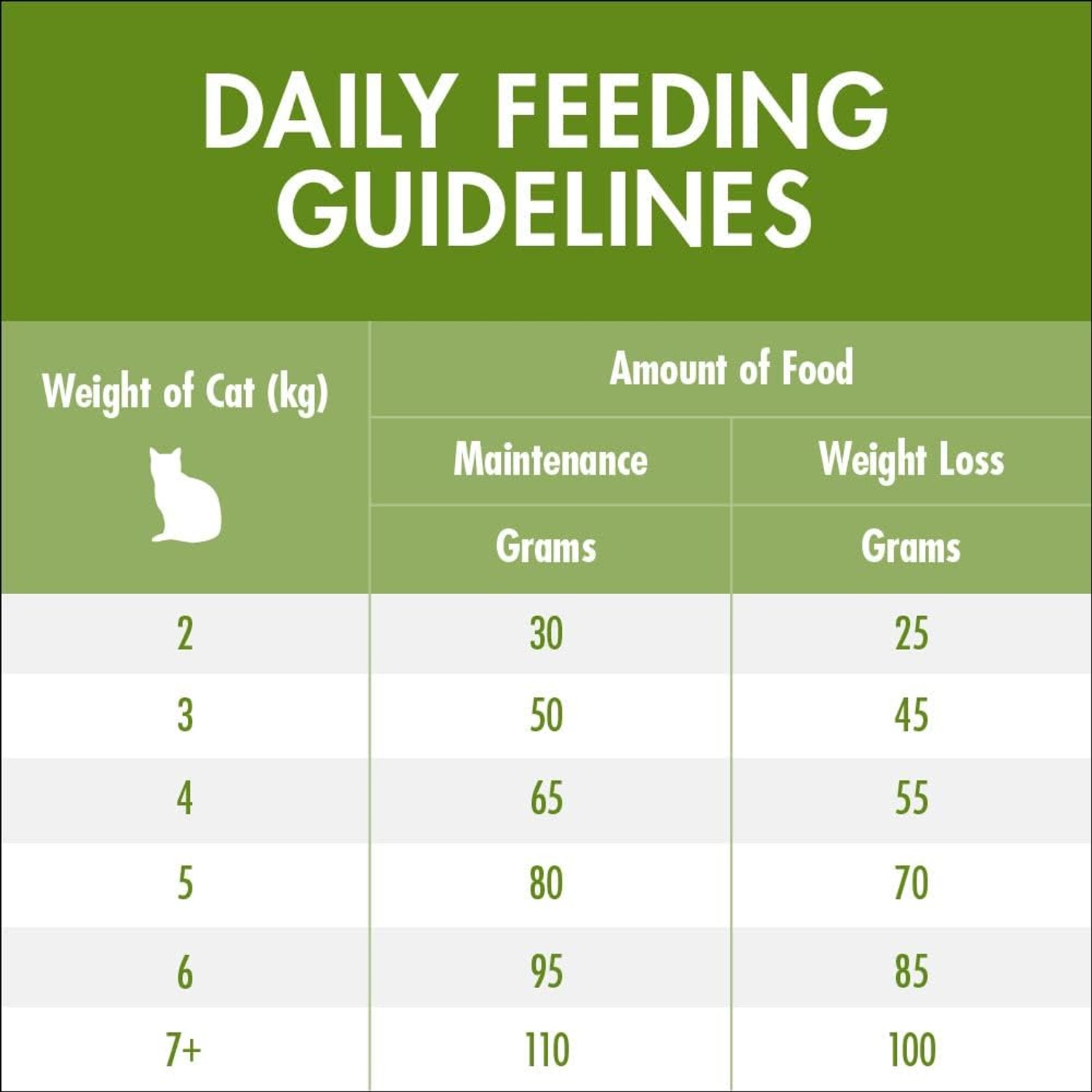
The maker prints a feeding guide on the pack, and it is the single most useful piece of information on there. The amounts are daily totals for adult cats with normal activity, measured with a standard 250 ml cup that holds roughly 100 g of this product.
Here is the guide as the maker states it. A 2 kg cat, 34 g or about a third of a cup. A 3 kg cat, 51 g or half a cup. A 4 kg cat, 68 g or two thirds of a cup. A 5 kg cat, 85 g or three quarters of a cup. A 6 kg cat, 102 g or one cup. A cat of 7 kg and over, 119 g or one and a quarter cups.
Two practical notes. First, that is a daily total, not a per-meal amount, so split it however suits your household. Second, weigh your first few serves on kitchen scales rather than trusting the eye. Scoops vary wildly, and a scoop that is 20 per cent generous adds up fast across a year.
If you are unsure what your cat should weigh, or you are feeding alongside wet food or treats, your vet can help you work out a sensible total. That is their job, not ours.
Working out the right pack size
A 2.8 kg bag lands in a practical middle ground. Run the maths with the feeding guide and the picture gets clear quickly.
One 4 kg cat eating 68 g a day gets through about 480 g a week, so a 2.8 kg bag lasts close to six weeks. Two cats of similar size will finish it in about three. A single small 2 kg cat on 34 g a day could stretch it past ten weeks, which starts to push the limits of how long you want an opened bag sitting around.
The rough rule most owners settle on is to buy a bag you will finish within about six to eight weeks of opening it. Bigger is cheaper per kilogram, but only if the food is still fresh and appealing when you reach the bottom. For many single and two cat homes, this size works out about right, which is part of why people looking for the best value cat food online keep coming back to mid-size packs rather than the biggest sack on the shelf.
Storing it so the last cup is as good as the first
Dry food is stable, but it is not indestructible. Heat, sunlight, damp air and repeated opening all take a toll on the fat in kibble, and cats notice before we do.
Keep the bag in a cool, dry cupboard away from direct sun and away from the oven or hot water system. Fold or clip the top closed after every serve. If you prefer a container, tip the kibble in and keep the original pack alongside it so you can still read the batch and best-before details.
Use clean, dry hands or a dedicated scoop. Crumbs and moisture introduced from a washed-but-damp cup are the usual culprit when kibble turns stale early. Wash the food bowl regularly and keep fresh water available in a separate bowl, since cats on dry food rely on drinking for most of their fluid.
The best-before date is printed on the pack. Check it when the parcel arrives and feed within it.
Changing foods without drama
If your cat is currently on something else, change over gradually rather than all at once. A common approach is a week-long transition, starting with a small proportion of new food mixed into the familiar one and shifting the ratio a little each day.
Cats are creatures of habit and some will protest at a change of texture or smell regardless of how slowly you go. If your cat refuses food for more than a day, call your vet. A cat that stops eating is not a situation to wait out.
Delivery, returns and the fine print
Orders are dispatched within 2 working days and then take up to 7 working days with a tracked courier. Delivery is free over $99 and $12 below that.
Unopened, sealed packs can be returned within 14 days of delivery, with return postage at your cost. Opened food cannot be returned for change of mind, which is standard for anything edible. The Australian Consumer Law applies in full, so if a pack arrives damaged or is not what was described, get in touch with your order number. There is no separate warranty on food.
The short version
Purina ONE Adult Indoor Dry Cat Food with Chicken is a 2.8 kg bag of dry kibble for adult cats, with chicken listed as the first ingredient and a long vitamin, mineral and amino acid list that includes taurine. The maker states it is 100 per cent complete and balanced and made in Australia by Nestlé Australia.
Use the printed feeding guide, measure with scales at least once, store the bag somewhere cool and sealed, and finish it within a sensible window. For anything to do with your cat's health, weight or diet, talk to your vet. We will tell you exactly what is in the bag and get it to your door.