
The complete guide
How To Choose Freeze Dried Cat Treats, And How To Use Them Well
The problem with most cat treats
Anyone who has lived with a cat knows the routine. You buy a bag of something colourful, your cat eats three pieces with great enthusiasm, and then the bag sits in the cupboard for six months. Cats are hard to please, and they are also very good at noticing when a treat is mostly filler with a meaty coating sprayed on the outside.
The other problem is the label. Pick up a random bag and you can find twenty ingredients, half of which you would need to look up. If your cat has a sensitive stomach, or you simply like knowing what you are handing over, that long list is frustrating.
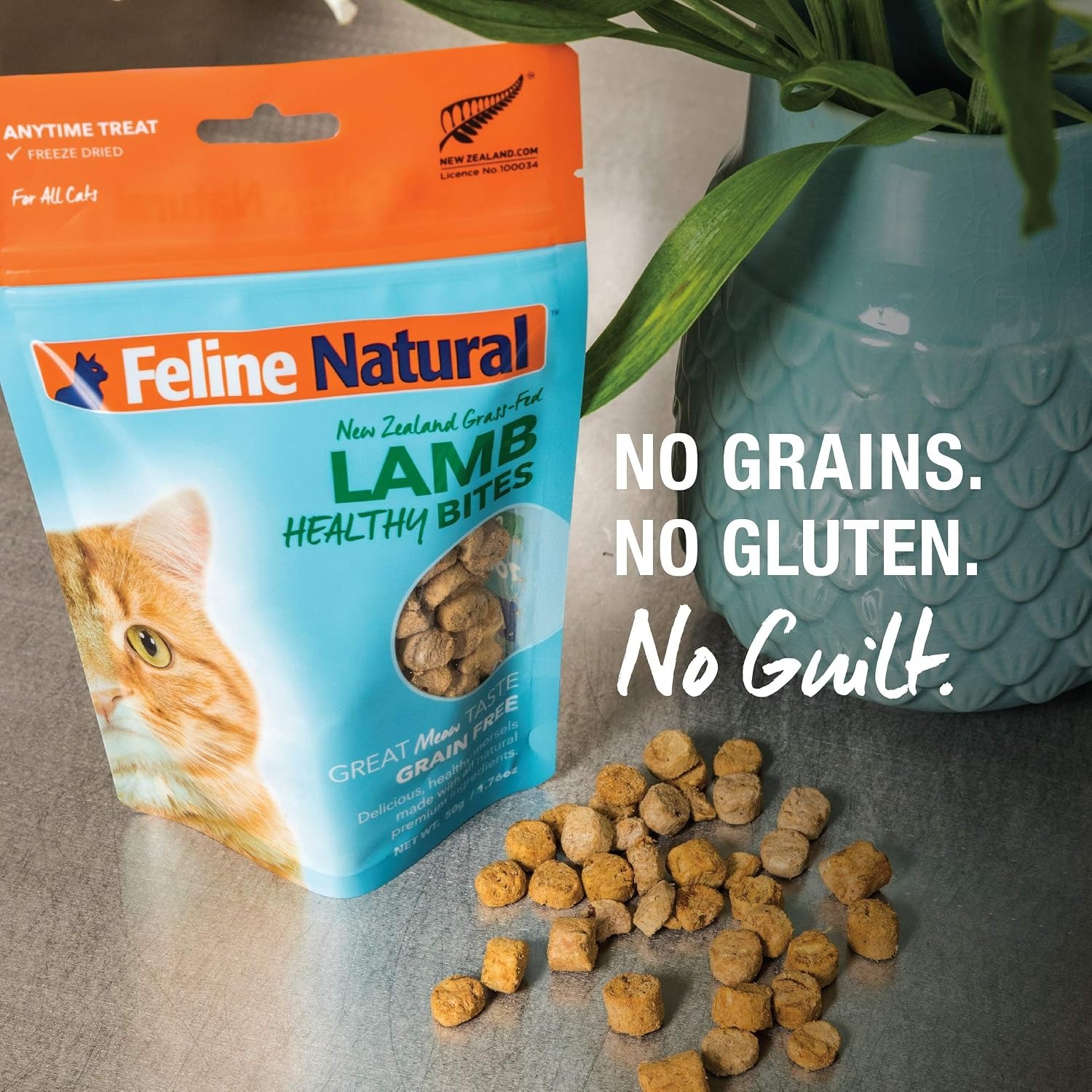
Freeze dried cat treats answer both of those complaints in a fairly direct way. The ingredient list is short because there is not much to add. The appeal comes from the meat itself rather than from anything layered on top.
What freeze drying actually does
The process is not complicated. Fresh meat goes into a freezer, then into a vacuum chamber. Under low pressure, the ice turns straight into vapour without passing through a liquid stage, so the moisture leaves without the meat ever getting hot or wet. What comes out is dry, light and crisp, and it holds its shape.
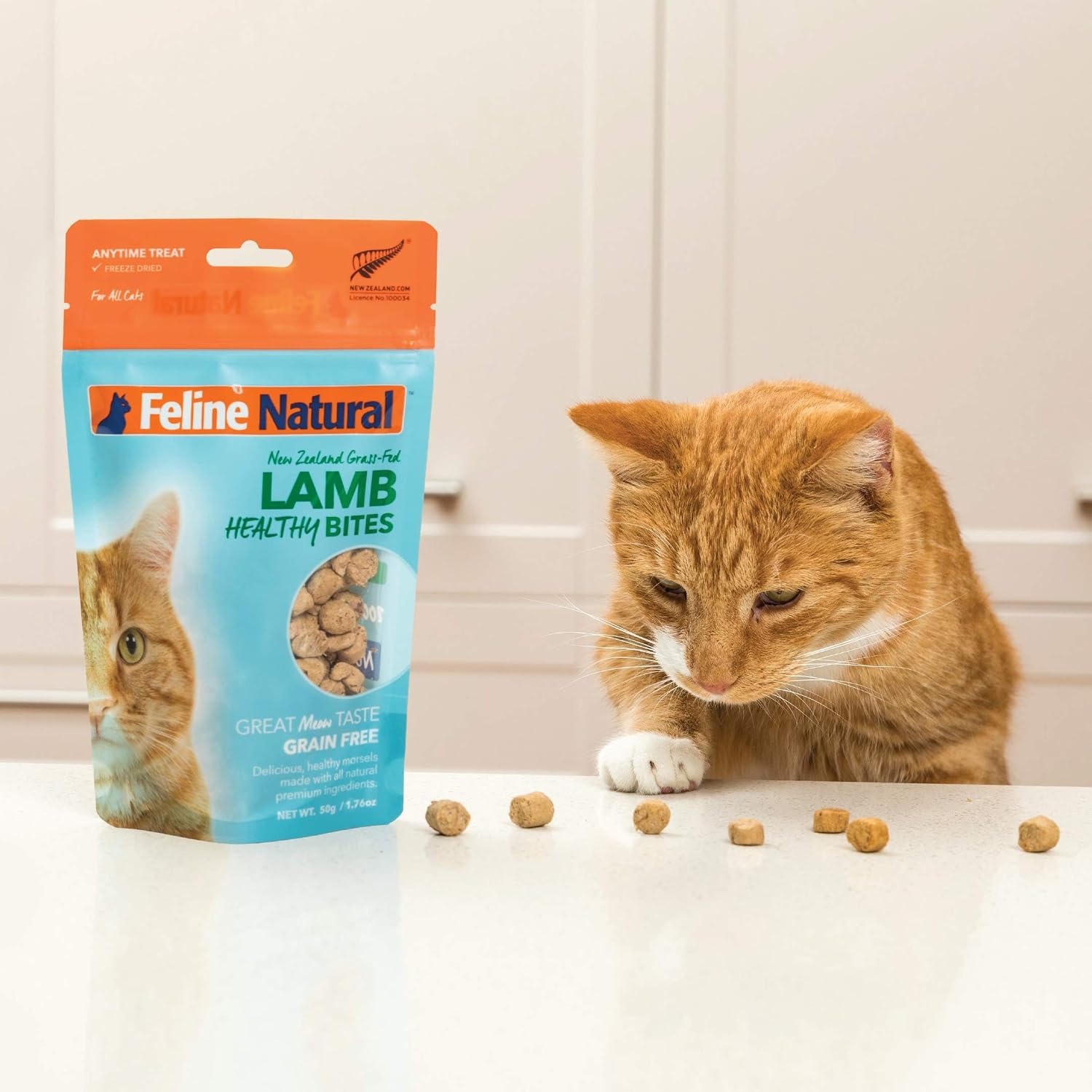
Because the meat is never cooked at high heat, the smell survives the process. Open a pouch of freeze dried lamb and the aroma is unmistakable. For a cat, that is the whole sales pitch. Cats lead with their nose, and a strong meat smell is far more persuasive than any shape or colour on the pellet.
The dryness also makes storage simple. There is no oil to go rancid quickly and no soft centre to dry out. The trade-off is that freeze dried food takes moisture back out of the air if you leave the bag open, which is why the resealable cat treat pouch matters more than it might seem.
What is in this particular bag
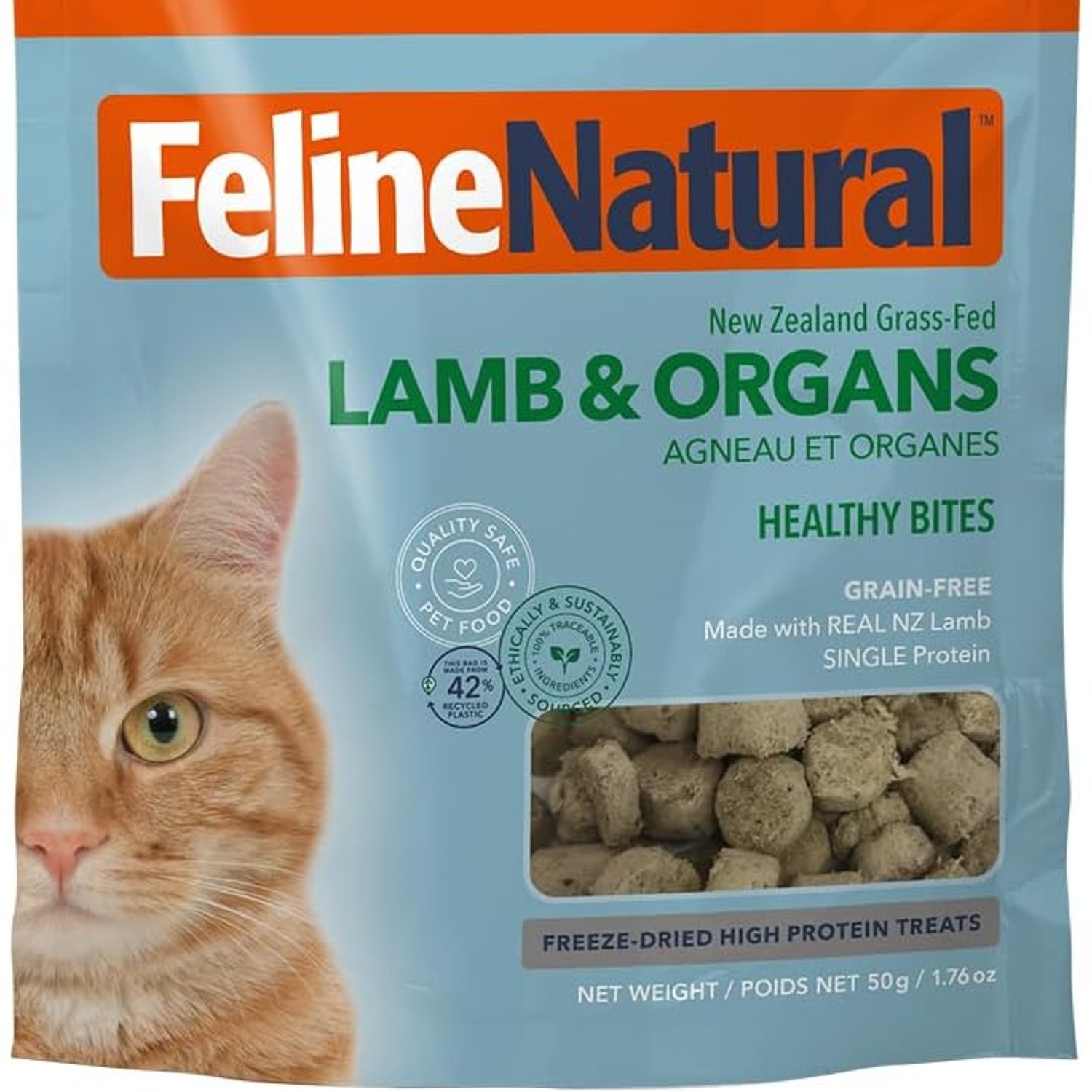
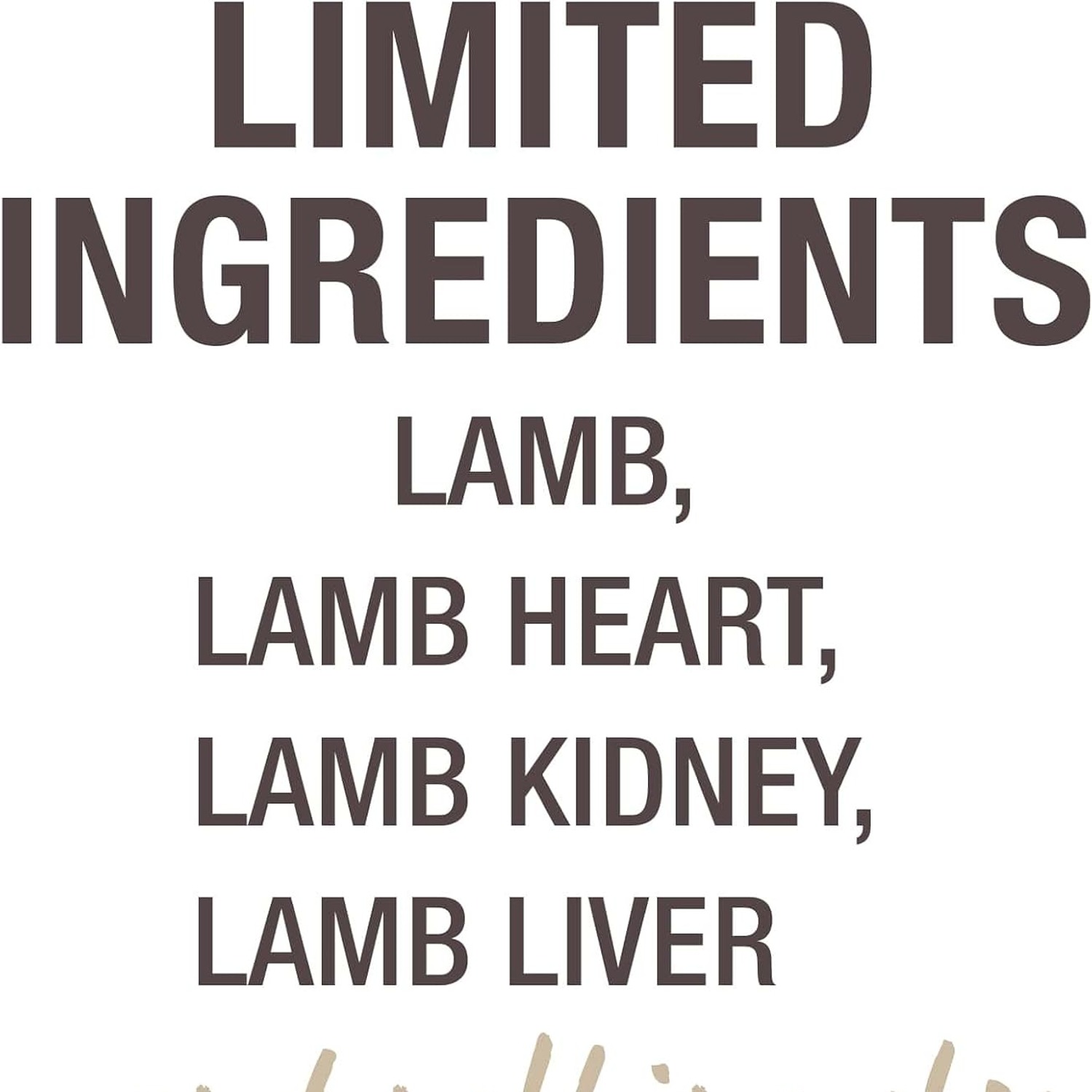
Feline Natural lists four ingredients for the lamb treats. Lamb, lamb heart, lamb kidney and lamb liver. That is the lot. The maker describes the product as a limited ingredient recipe, gluten free, and suitable for all life stages and all breed sizes. The format is a small pellet and the bag holds 50 g.
Organ meat is worth a word on its own. Heart, kidney and liver are not padding. They are the parts of an animal that a cat eating whole prey would get, and they are also where a lot of the flavour sits. Organ meat cat treats tend to be the ones a cat remembers.
The maker's feeding guide is short, too. Serve as a treat. That is the official instruction, and it is a useful boundary. These pellets are not a meal, and they are not meant to replace one.
Who these suit
Fussy cats are the obvious group. If you have tried four different bags and none of them survived the second week, a single protein freeze dried pellet is a sensible next thing to test. The smell does the convincing.
Cats on a short ingredient list are the second group. If you are deliberately keeping things simple, grain free cat treats with four ingredients fit that approach neatly. If your cat has a diagnosed food sensitivity or allergy, that is a conversation for your vet rather than something to work out from a label.
People who train their cats are the third. Yes, cats can be trained, and carrier practice alone is worth the effort. Small, dry, strong-smelling cat training treats are the right tool for that job because you can hold several in one hand and give them out quickly without mess.
And then there is the plain dinner-time problem. A cat who is bored with her usual bowl will often start eating again if a few pellets are crumbled over the top. The maker lists meal topper as a recommended use for exactly this reason.
How to choose between treats
A few things are worth checking before you buy any treat.
Read the ingredient list first and count the items. A short list is easier to assess and easier to compare against what else your cat eats. If you are already feeding chicken in the main diet, a lamb treat gives you some variety without adding a long list of unknowns.
Look at the format next. Pellets suit training and topping. Larger pieces suit a slower, more deliberate treat moment. Think about how you actually plan to use them.
Check the pack size against your household. A 50g bag is a good trial size. If you have three cats and a generous hand, you will go through it quickly. If you have one cat and use treats for training only, that same bag lasts a while.
Finally, check how it is sealed. A resealable pouch is not a luxury on freeze dried food. An open bag in a humid kitchen loses its crispness faster than you would expect.
Getting started with a new treat
Go slowly. Offer one pellet, placed on the floor or held flat on your palm, and then step back. Cats are suspicious of anything offered too keenly. Let her walk over, sniff it, and decide on her own schedule.
If she ignores it, do not throw the bag out. Try crumbling one pellet over the top of her usual food so the smell is mixed into something familiar. That often works where a bare pellet on the tile does not.
Keep the quantity modest. Treats are an extra, not a meal, and a cat who fills up on pellets will eat less of her complete food. If you are changing anything substantial about what your cat eats, a gradual transition over several days is the usual advice, and your vet is the right person to ask about amounts for your particular cat.
Fresh water should always be available, which is true for any dry food.
Storing the bag properly
Press the seal firmly closed every time. Keep the pouch in a cupboard that stays cool and dry, out of direct sun. Use clean, dry hands or a spoon when you take pellets out, because a little moisture carried in on wet fingers will affect the rest of the bag.
The best-before date is printed on the pack. Have a look when your order arrives so you know where you stand, and write the opening date on the bag if that helps you keep track.
Delivery and returns in plain terms
Orders are dispatched within two working days, and delivery then takes up to seven working days by tracked courier. Delivery is free on orders over $99, and $12 below that.
On returns, food is a special case. Unopened, sealed packs can be returned within 14 days of delivery, with return postage paid by you. Opened food cannot be returned for change of mind, which is a food safety rule rather than a hard line on our part. The Australian Consumer Law applies in full, so if something arrives faulty or is not what was described, your rights are unaffected. There is no separate warranty on food.
The short version
Feline Natural Lamb Freeze Dried Cat Treats are lamb, lamb heart, lamb kidney and lamb liver in a 50g resealable pouch. Gluten free, limited ingredient, suitable for all life stages and all breed sizes, in a small pellet form. The maker's guide is to serve as a treat, which includes using them as a reward or crumbled over a meal.
If your cat has been walking away from everything else in the cupboard, a short ingredient list and a strong meat smell is a reasonable place to start. Buy the small bag, offer one pellet, and see what she thinks. For any question about diet, allergies or health, your vet is the right person to ask.