




The complete guide
How To Choose Grain Free Dry Cat Food That Your Cat Will Actually Eat
The problem with the cat food aisle
Buying cat food should be simple. You have one cat, maybe two, they need feeding twice a day, and you want something they will eat without a standoff at the bowl. Then you look at the shelf and there are forty bags, each one shouting something different, and half of them cost more than your own lunch.
Grain free is one of the labels you will trip over most often. It sounds like a health claim, but at its core it is a recipe description. It tells you what is not in the bag, not what is. Peas, pea protein and potato usually take the place of wheat, corn or rice. Whether that matters for your cat depends on your cat, and that is a conversation for your vet rather than a product page.
What a page like this can do is lay out what is actually in the bag, how much of it there is, and how the maker says to feed it. Then you can decide.
What this particular bag is
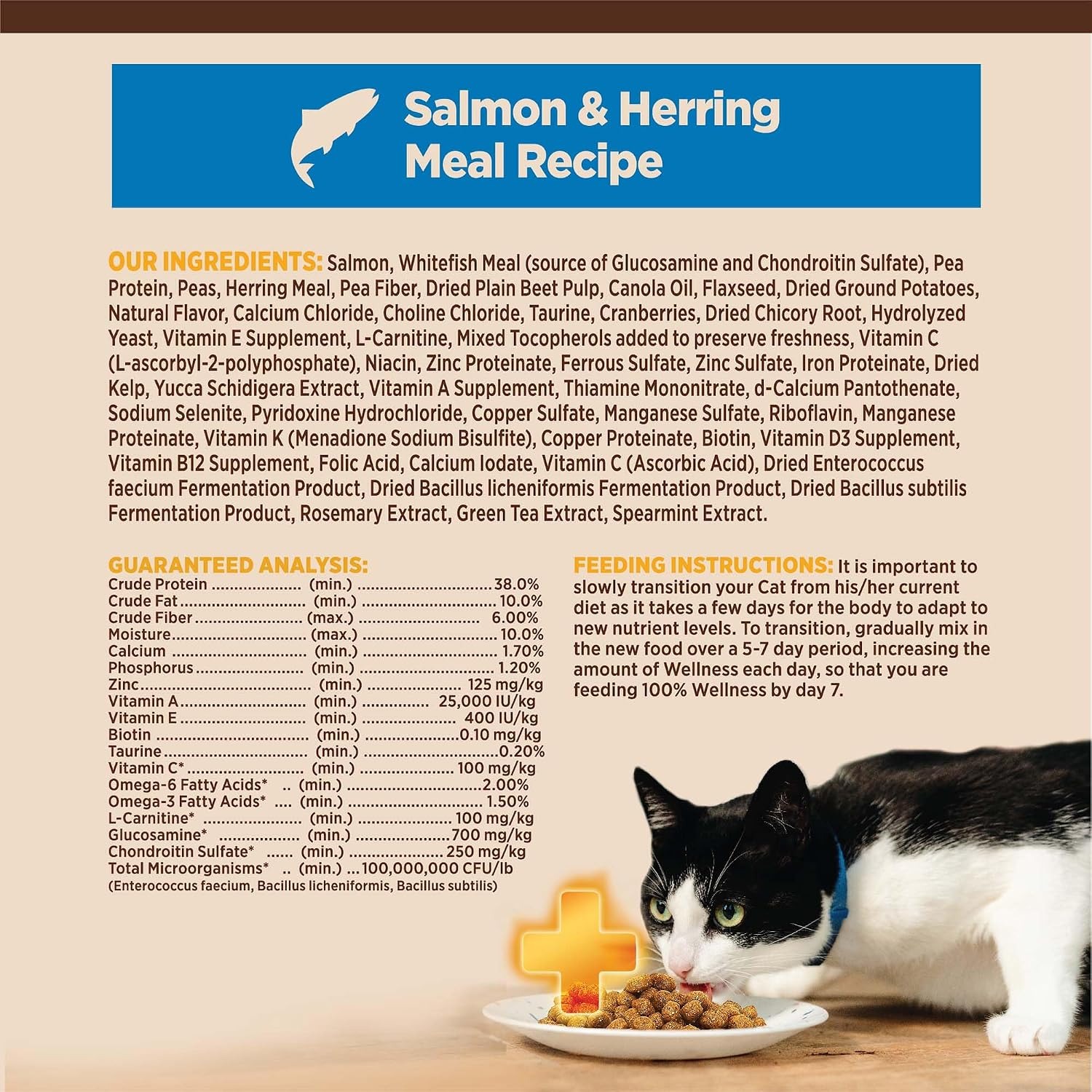
Wellness CORE Salmon & Herring is a dry kibble for adult cats, sold here as a single 2.27kg bag. Salmon is the first thing on the ingredient list. After that come whitefish meal, pea protein, peas and herring meal, so this is firmly a fish recipe rather than a chicken one with a fish name on the front.
The rest of the list runs through pea fibre, dried plain beet pulp, canola oil, flaxseed and dried ground potatoes, then into the smaller inclusions: cranberries, dried chicory root, hydrolysed yeast, dried kelp, taurine, a long run of vitamins and minerals, and several dried fermentation products. Rosemary, green tea and spearmint extracts sit at the end. Mixed tocopherols are added by the maker to keep the food fresh.
The maker lists it for adult cats and for all breed sizes. The model number is 8326. Salmon is flagged as the allergen, which is worth noting if your cat has reacted to fish before.
How dry food fits into a cat's day
Dry kibble earns its place mainly on convenience and cost. It can sit in a bowl without spoiling over a few hours, it is easy to portion, and it works in timed or gravity feeders. That makes it the default for households where nobody is home at lunchtime.
The trade off is water. Dry food does not bring much moisture with it, so your cat has to drink to make up the difference. The maker is direct about this and recommends feeding wet food alongside dry where possible, and keeping clean, cool fresh water available at all times. Their feeding guide builds that in, with combination amounts that pair a smaller measure of kibble with an 85g wet can.
If you have only ever fed dry, adding a single wet meal a day is an easy change. If your cat already gets wet food, use the combination column rather than the dry only one, otherwise you are feeding two full meals at once.
Reading the feeding guide properly
This is the part most people skim, and it is the part that matters most. The maker's guide works off your cat's weight, not their appetite.
Cats of 2 to 3kg sit in the lowest band, 3 to 5kg in the middle, and 5 to 7kg in the upper one, with amounts given in both cups and grams for dry only feeding. Above 7kg, the maker says to add roughly a further portion for each extra kilogram of body weight. Wellness also adds a useful note: CORE is a food cats tend to like, so some will eat more of it than they did of their last food. Watch your cat's habits for the first week or two and adjust.
Use a proper measuring cup or, better, kitchen scales. A handful is not a measurement, and the gap between a generous handful and the recommended gram amount adds up quickly over a month. Every cat is different, and the maker says as much: age, size, activity level, breed and environment all shift what works. For anything beyond that, ask your vet.
Who this suits
A fish based grain free kibble like this makes sense for a few households. If your cat has gone off poultry recipes, a salmon and herring food gives them something genuinely different to smell. Plenty of people searching for the best fish flavour cat food are doing exactly that, trying to break a hunger strike at the bowl.
It also suits anyone who already wants a recipe without grains and would rather compare like with like. And the 2.27kg size fits a one or two cat home neatly, which is why it comes up when people are after the best small bag cat food rather than a sack they will still be working through at Christmas.
It is not the right pick if your cat has a known fish sensitivity, since salmon is the listed allergen. It is also not a kitten food. The maker's age range is adult.
Switching food without drama
Cats are creatures of habit, and a sudden swap can end with a full bowl and a sulking cat. The usual approach is gradual. Start with a small proportion of the new kibble mixed into the old, then shift the ratio over several days until you are feeding the new food alone. Some cats cope with a faster change, some need longer.
If your cat has a sensitive stomach, a history of digestive upset, or any ongoing health issue, talk to your vet before you change anything. That advice is not a formality. A vet who knows your cat can tell you things a product page never can.
One practical tip: do not introduce a new food at the same time as anything else stressful. A house move, a new pet or a trip to the cattery already uses up a cat's patience. Give the food its own week.
Storage, freshness and bowls
Kibble goes stale when it meets air and warmth. Keep the bag somewhere cool and dry, out of the sun, and seal or roll the top after every scoop. If you prefer a storage container, put the whole bag inside it instead of tipping loose kibble in. That way the original seal, the batch details and the best-before date all stay with the food. The best-before date is printed on the pack.
Clean containers properly before you refill. Old oils cling to plastic and can turn, and that is enough to put a fussy cat off an otherwise perfectly good food. Same goes for bowls. Wash them as often as you wash your own dishes, and keep the water bowl away from the food bowl if your cat drinks better that way. Many do.
Working out the real cost
Compare food on grams, not on bag price. A bigger bag usually looks cheaper per kilo, but only if your cat finishes it while it is still fresh. A 2.27kg bag that gets eaten in a few weeks can be better value in practice than a large sack that goes flat halfway through.
Work out your cat's daily gram amount from the feeding guide, divide 2270 by that number, and you have a rough number of days per bag. That one calculation tells you more about cost than any shelf label. It also tells you when to reorder.
The short version
This is a 2.27kg bag of salmon and herring kibble for adult cats, made without grains. Salmon leads the ingredient list, peas and potato stand in for the grains, and the maker publishes a clear feeding guide based on your cat's weight, including amounts for feeding alongside wet food.
Check the allergen note if your cat has reacted to fish. Measure meals rather than guessing. Keep water available. Switch over gradually. And for any question about your cat's diet or health, your vet is the right person to ask.