
The complete guide
Buying Wet Cat Food Tins, A Practical Guide
The problem with the cat food aisle
Feeding a cat should be simple. Instead you stand in front of a wall of tins, pouches, trays and sachets, every one of them promising something. Pate, jelly, gravy, chunks, mousse, broth. Labels with twenty-two ingredients. Labels with three. Prices that swing wildly for what looks like the same amount of chicken.
Then there is the cat, who has opinions. A food that worked beautifully for six months gets ignored one Tuesday for no reason you will ever understand.
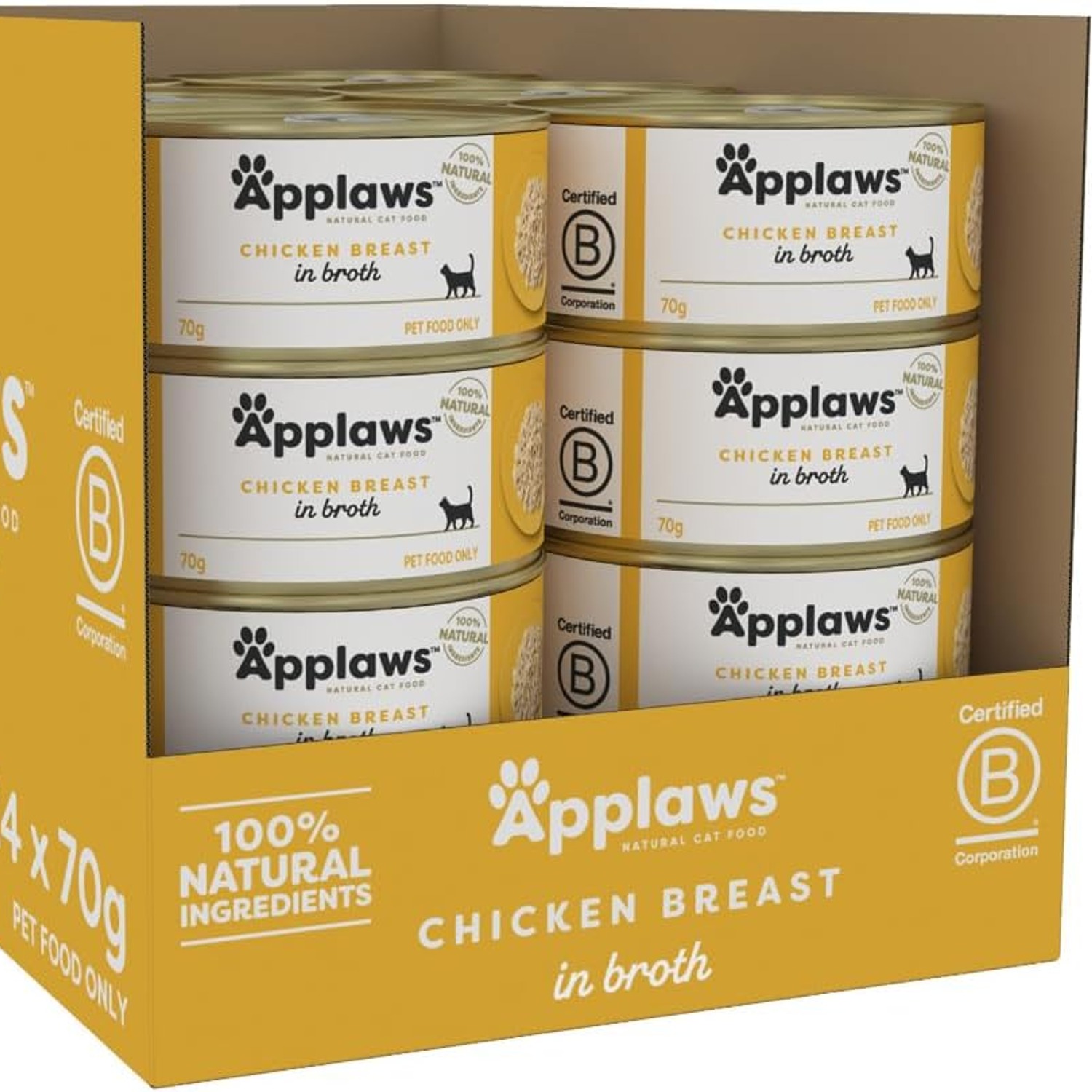
This guide is about one specific style, wet cat food tins holding shredded meat in broth, using the Applaws chicken breast 24 pack as the example. The aim is to help you work out whether this format suits your cat before you commit to a whole box.
What broth style food actually is
Most wet cat food falls into a few textures. Pate is ground smooth and holds its shape when you tip it out. Chunks in jelly or gravy are small cubes of meat suspended in a set or pourable sauce. Broth style is the loosest of the lot. The meat sits in a thin, watery liquid rather than a sauce, and it is usually shredded or flaked rather than cut into cubes.
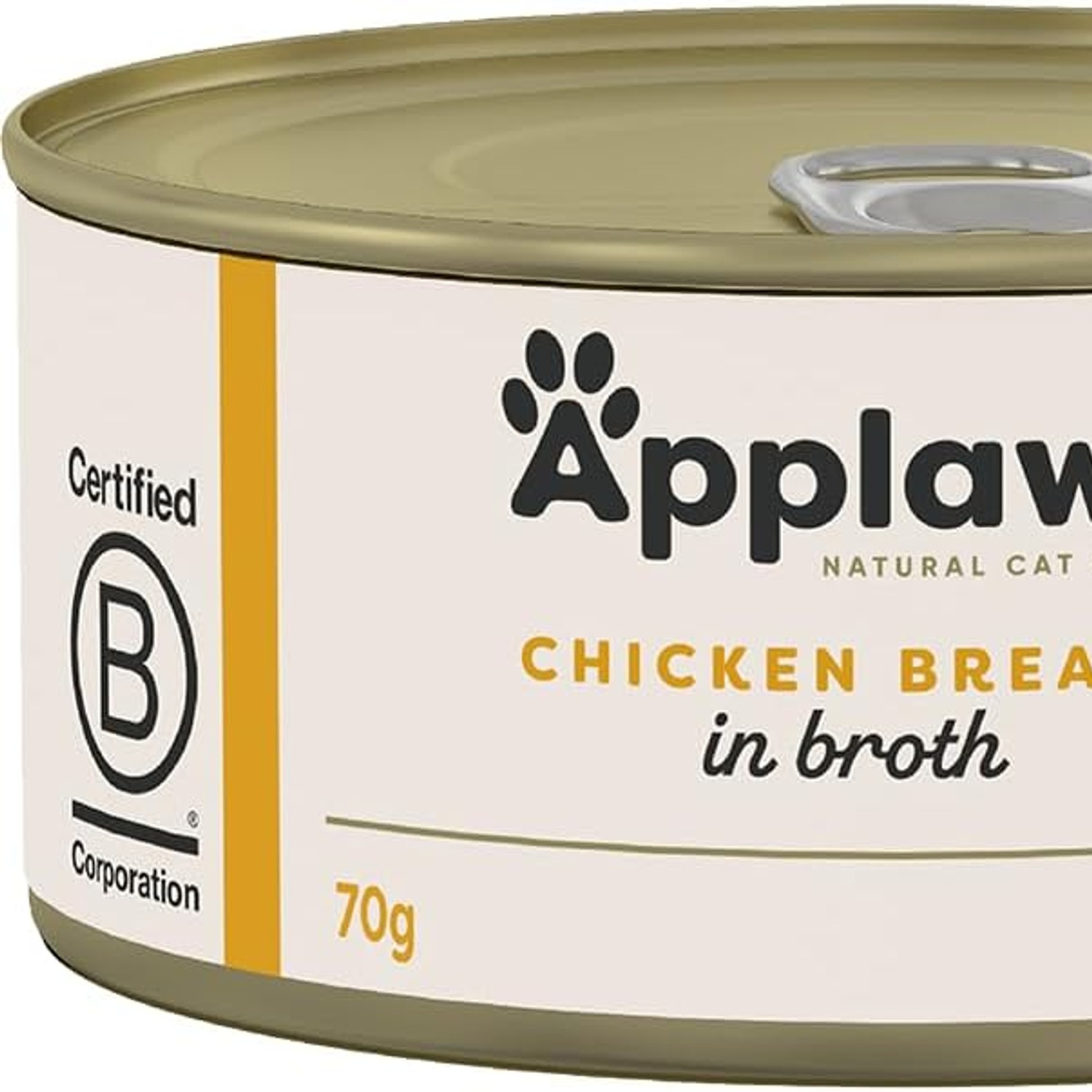
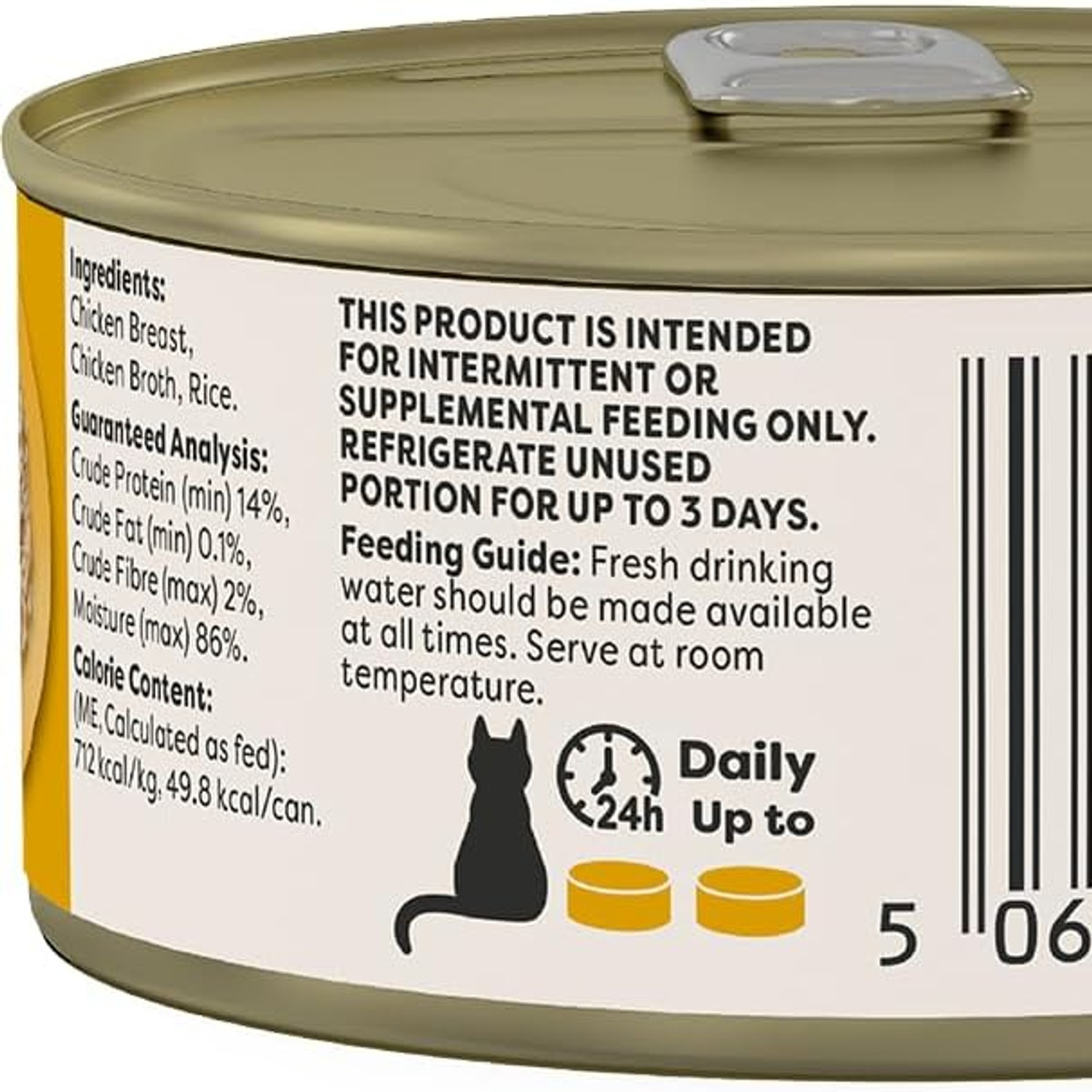
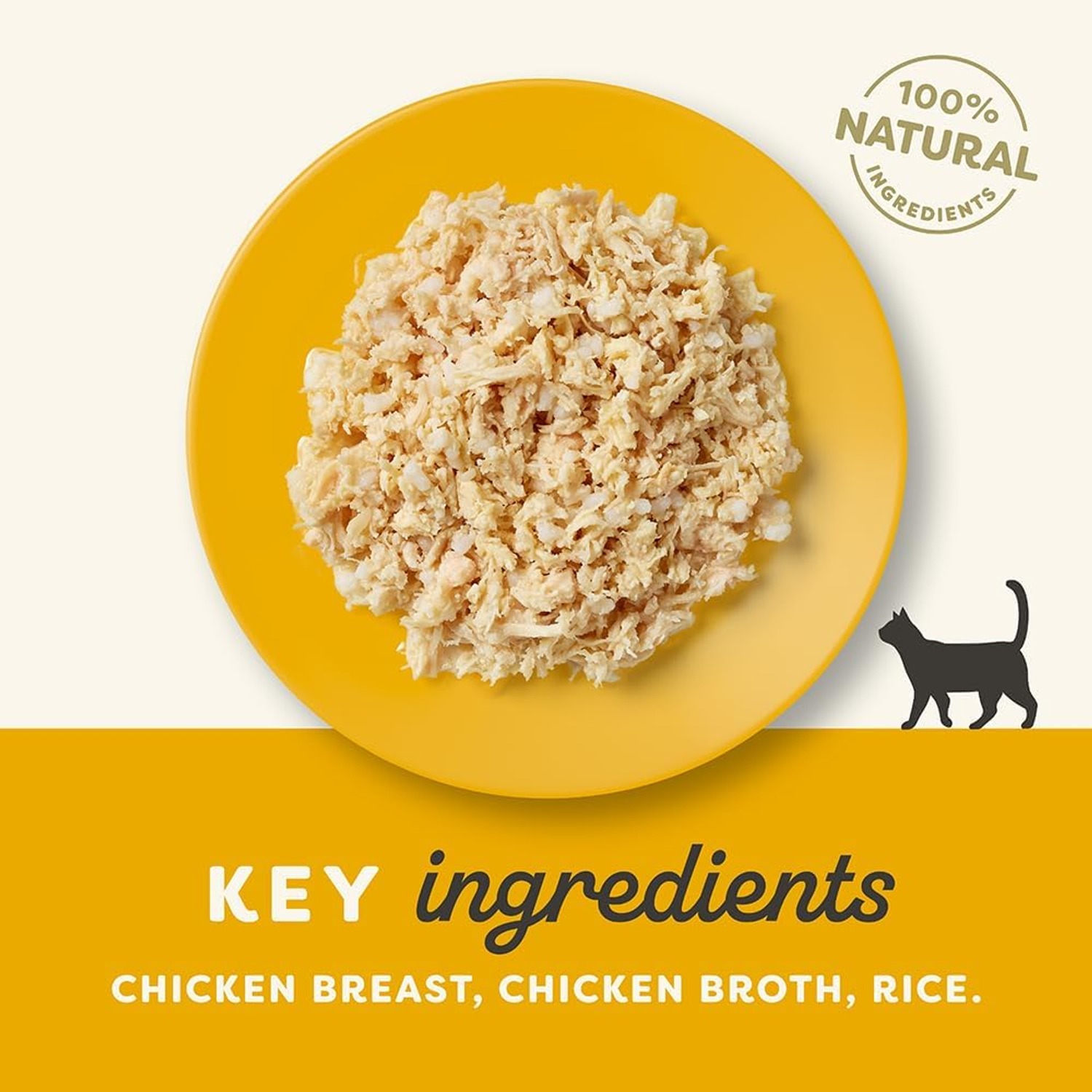
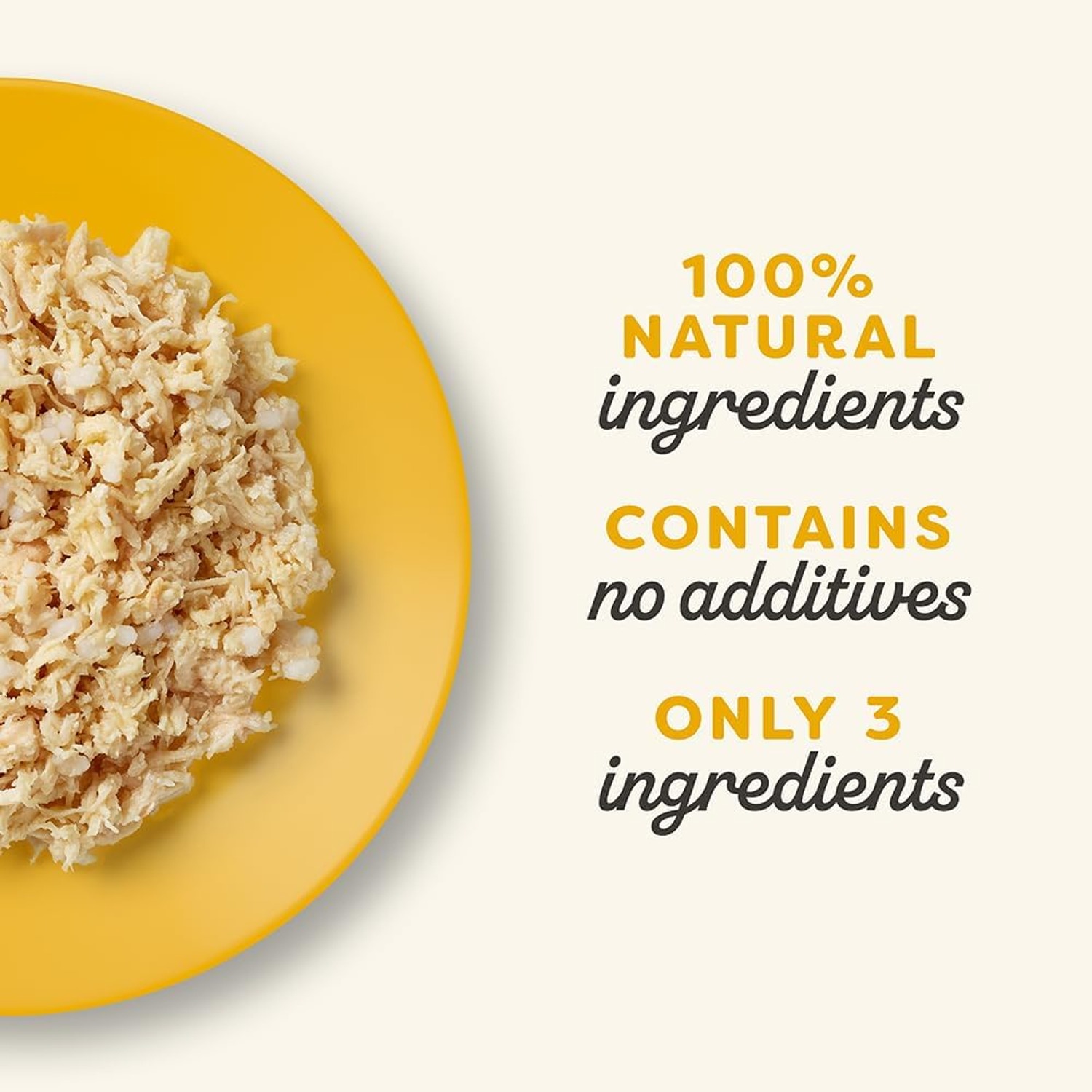
Applaws describes this product as shredded chicken breast in a hydrating broth. The ingredient list the maker gives is chicken breast, chicken broth and rice. That is it. Three lines.
The practical difference at the bowl is that broth food looks like food. You can see the strands of chicken. Some cats find that more interesting than a uniform brown block, and the liquid carries the smell more readily, which matters because cats decide a lot with their nose before the first bite.
The practical difference for you is that it is messier. A soupy food can slop over the edge of a flat plate and it dries into the bowl if left out. A small bowl with a bit of a lip handles it better.
Complementary versus complete
This is the part people miss, and it is worth being clear about.
Applaws labels this food as complementary. The maker's own recommendation is to serve it with Applaws complete dry cat food so the overall diet is balanced. A complementary food is not designed to be the only thing your cat eats. It is a part of the day, not the whole of it.
That is not a flaw in the product, it is just what it is. A short ingredient list of chicken, broth and rice does not contain the full range of nutrients a cat needs across a lifetime. Complete foods add those in deliberately. If you feed a complete dry food as the backbone of the diet and use tins like these alongside it, you are doing what the maker intends.
Where it goes wrong is when someone assumes any wet food is a full meal and feeds nothing else. If you are building a diet from scratch, or your cat has a health condition, that is a conversation for your vet rather than a product page.
Who this format suits
Cats that pick at food. A cat that nibbles and walks away often responds better to a texture with visible pieces. There is something to work at rather than a smooth paste.
Households that already use dry food. If kibble is already the main meal, a complementary tin slots in neatly as the wet component without you rethinking the whole diet.
Owners who want a short ingredient list. Three ingredients is easy to check against anything your vet has told you to avoid. It is also easy to explain to a cat sitter.
People who want to cut shopping trips. A 24 pack of 70g cat food tins covers roughly three to four weeks for a smaller cat, or about eight days for a cat over 5kg on three tins a day.
Who it suits less well is anyone after a single complete food in one tin, and anyone whose cat has firmly decided it only eats dense pate. Cats can be stubborn about texture in a way they rarely are about flavour.
How to choose a pack size
The maths on the Applaws feeding guide is straightforward. Cats 0 to 3kg get 1 tin a day. Cats 3 to 5kg get 2. Cats over 5kg get 3. Any unused portion gets covered and refrigerated.
Run that against 24 tins and you can see how long a box lasts in your house. A 4kg cat on two tins a day gets twelve days from the box if the tins are the only wet food. If you are using them as a topper over kibble and splitting a tin across two meals, the box stretches a lot further.
Buying a bulk cat food multipack is almost always cheaper per tin than picking up singles. The catch is flavour commitment. Twenty-four identical tins is a lot of chicken if your cat decides on day four that it is now a fish cat. The sensible move with a new food is to trial a few tins first, then buy the box once you know it goes down well.
Storage and handling
Unopened tins are easy. A cupboard that stays cool and dry, out of direct sunlight, is all they need. They stack well and they do not take much shelf depth.
Once opened, cover the tin or decant the rest into a sealed container and refrigerate it. That is the maker's instruction and it is worth following, because broth style food has a lot of moisture in it and will not sit happily on a bench.
When you serve the refrigerated half, give it a few minutes out of the fridge first. Cold food smells like much less than room temperature food, and a cat that would happily eat it warm might walk straight past it cold. Do not microwave it, you will get hot spots and you risk burning a mouth.
Wash the bowl after every meal. Broth dries into a film that is unpleasant the next day, and a clean bowl is one less reason for a cat to refuse dinner.
The best-before date is printed on the pack. When a box arrives, check the date and put the newest tins at the back so you are always working through the oldest first.
Introducing a new food
Switch slowly. Most people mix a small amount of the new food in with what the cat already eats, then increase the share over several days until the changeover is done. Rushing a change is the usual cause of a cat going off food entirely for a day or two.
Watch what happens. If something seems off, stop and talk to your vet. We are not in a position to give veterinary advice, and any question about allergies, weight, or an existing health condition belongs with the person who has your cat's records.
Delivery, returns and the practical bits
Orders are dispatched within 2 working days, then sent by tracked courier with delivery in up to 7 working days. Delivery is free on orders over $99 and $12 below that, so a full box usually lands on the right side of that line.
Unopened, sealed packs can be returned within 14 days of delivery if you change your mind, with return postage at your cost. Opened food cannot be returned for change of mind, which is standard for anything edible. The Australian Consumer Law applies in full and nothing in that policy reduces your rights under it.
The short version
Applaws chicken breast in broth is a loose, shredded wet food in 70g tins, sold here as a box of 24. The ingredient list is chicken breast, chicken broth and rice. It is made for adult cats of any breed size, and the maker sells it as a complementary food to be served with a complete dry food rather than on its own.
If your cat already eats kibble and you want a simple wet component with a short label, it fits well. If your cat is a committed pate eater, test a few tins before you buy a carton. And if you have any question about what your particular cat should be eating, your vet will give you a better answer than any product page can.