
The complete guide
Choosing A Grain Free Dry Cat Food, A Buyer's Guide
The problem with the cat food aisle
Buying cat food should be simple. You have a cat, the cat eats, you buy more food. In practice, the shelf is a wall of bags shouting different things at you, and half of them use words that sound important but tell you very little.
The useful information is almost always in two places. The first is the ingredient list, in order of quantity. The second is the feeding guide on the back of the pack. Everything else on the front is design work.
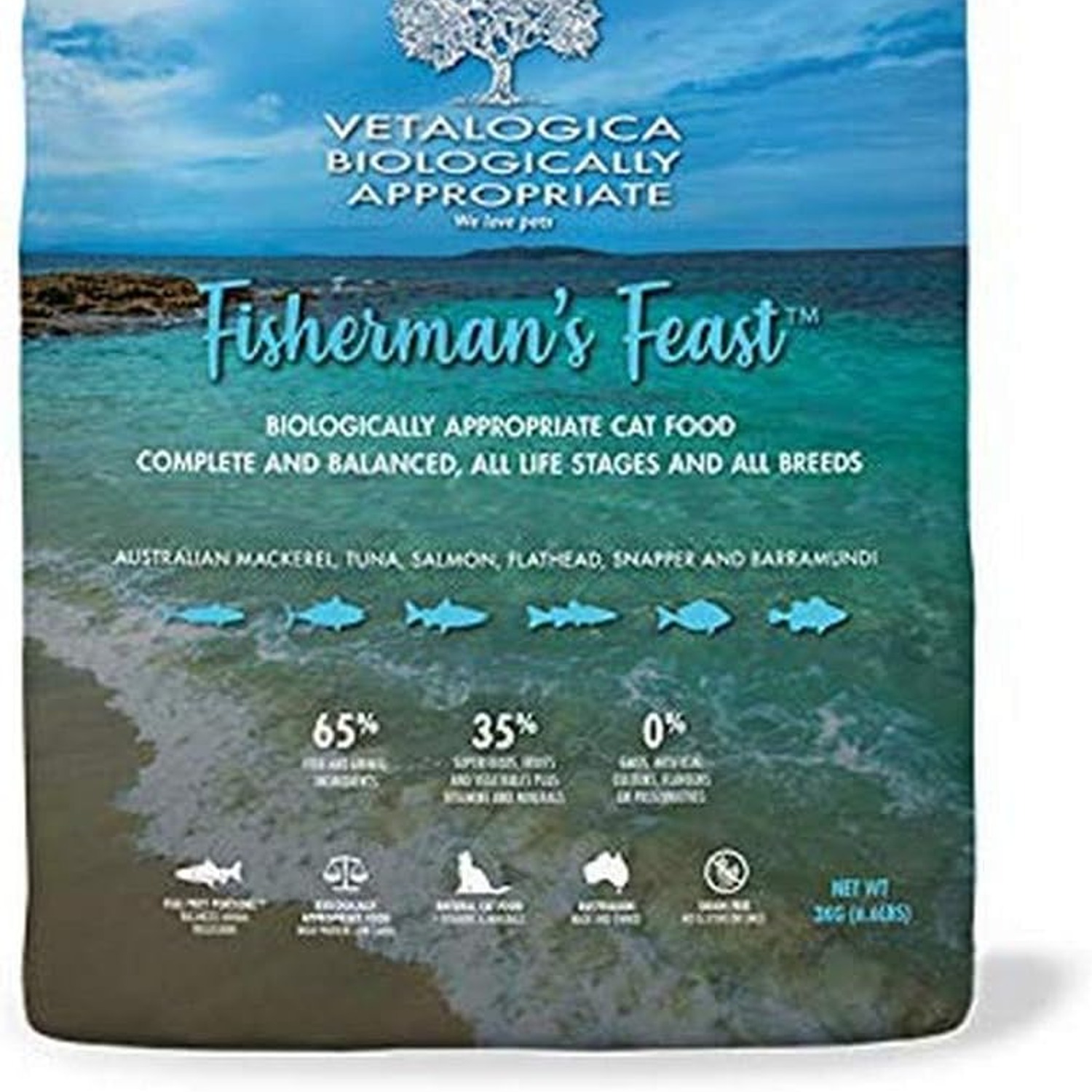
This guide is about how to read a bag like Vetalogica Fisherman's Feast and work out whether it fits your household. It is not veterinary advice. If your cat has a health condition, is on a prescribed diet, or you suspect a food allergy, your vet is the person to ask before you change anything.
What "grain free" actually means on a bag
Grain free means the recipe does not use grains such as wheat, corn, rice or barley as carbohydrate sources. Something still has to hold a dry biscuit together and provide the starch that makes extrusion work, so grain free foods generally swap in other plant ingredients.
In this Vetalogica recipe, those replacements are sweet potatoes, chickpeas, green lentils and red lentils. You can see them sitting directly after the meat meals on the ingredient list. The maker also records the food as gluten free, dairy free, hypoallergenic and non-GMO.
It is worth being clear about what grain free is and is not. It is a recipe choice. It is not a health claim, and it does not automatically make one food better than another for your cat. Some owners go grain free because of a specific issue their vet has identified. Others simply prefer the ingredient mix. Both are reasonable reasons, but the decision should be about your individual cat.
If you are browsing for the best grain free cat food, the honest answer is that "best" depends on the animal in front of you. Age, weight, activity level, appetite and any existing conditions all matter more than a label on the front of the bag.
Reading the ingredient list properly
Ingredients are listed in descending order by weight. That single rule tells you most of what you need.
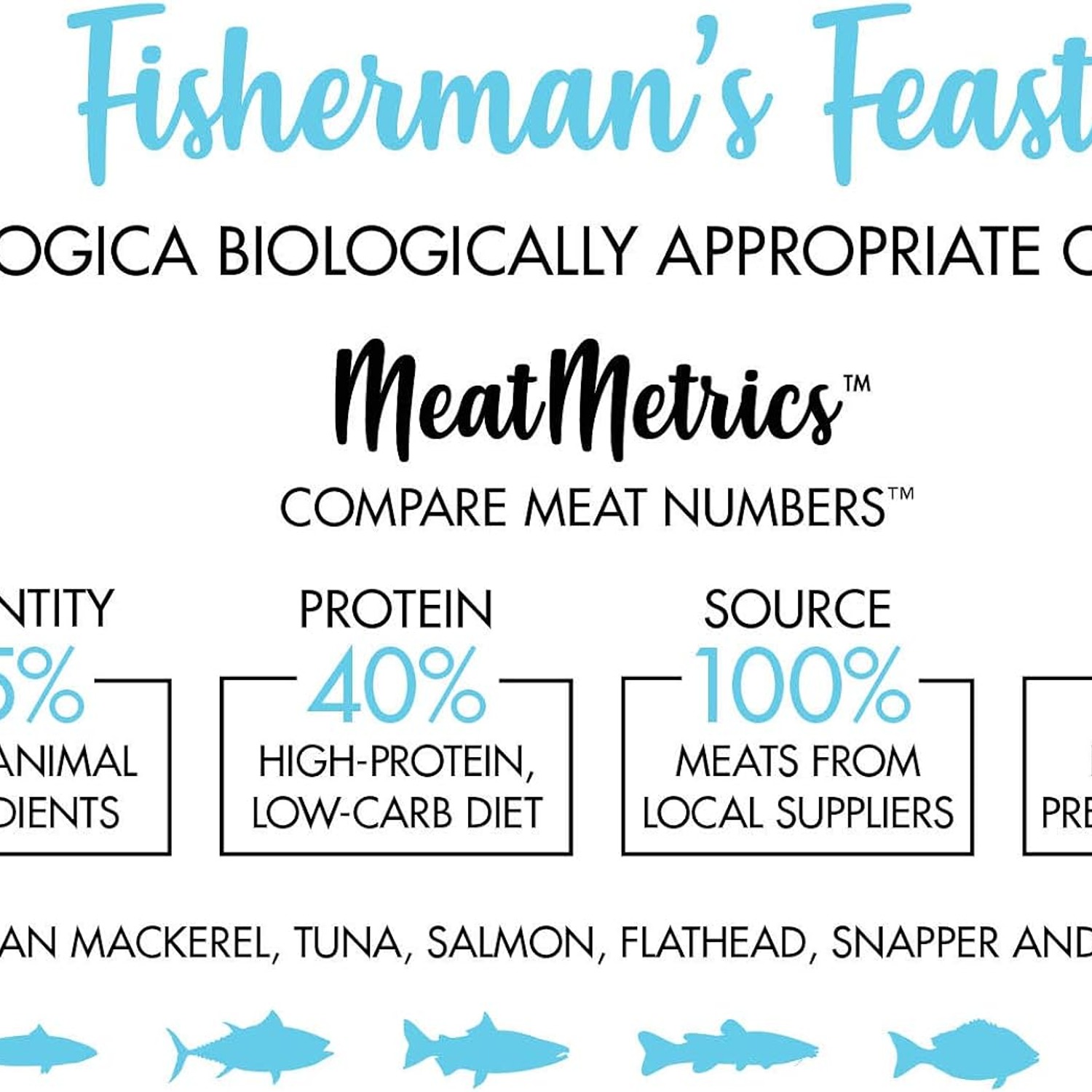
For Fisherman's Feast, the list opens with Australian meat and animal ingredients at 65 per cent, which the maker breaks down as chicken meal, duck meal, tuna meal and mackerel meal. Meals are concentrated protein sources with much of the water removed before they go into the mix, which is why they sit high on a dry food list.
After the plant carbohydrates come chicken fat, preserved with mixed tocopherols, then ground flaxseed, eggs and coconut oil. Fats matter in dry food because they carry flavour and help with palatability, which is relevant if your cat has opinions.
The back end of the list is the smaller inclusions. Kale, dried blueberries, dried spinach, tomato pomace, dried pumpkin, chicory root and kelp. Then the added vitamins and minerals, taurine, dl-methionine, turmeric root, yucca schidigera extract, mixed tocopherols and rosemary extract.
One quirk worth noting. The product details field records the flavour as chicken, while the name and ingredient list both bring fish into the picture. Both details come from the maker. If flavour drives your choice, the ingredient panel is the more detailed of the two.
Who this sort of food suits
This is an adult cat food. That life stage label matters, because kittens and older cats can have different requirements, and a food formulated for one stage is not automatically right for another.
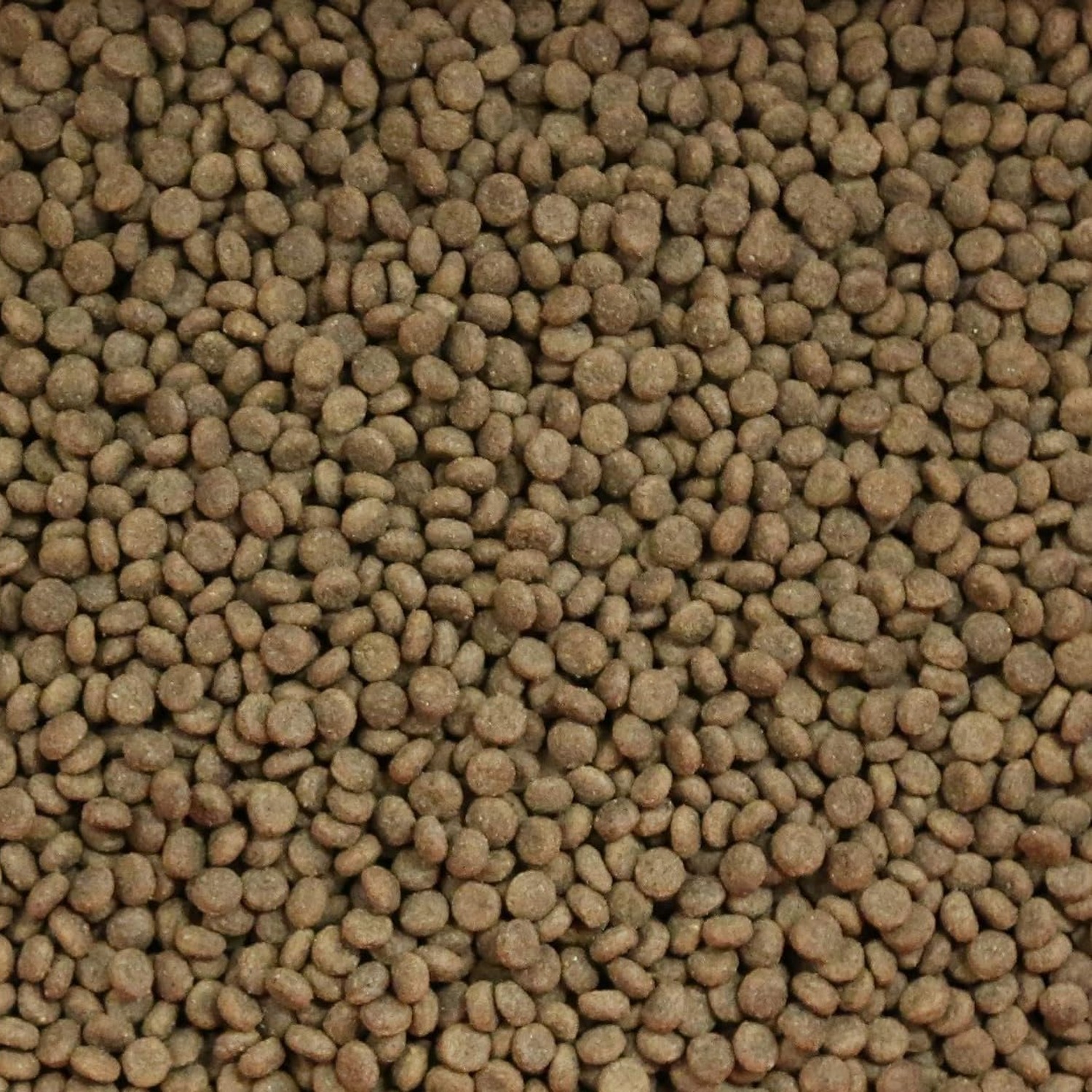
It suits a household that wants a dry food with fish and poultry ingredients high on the list, and that prefers a grain free recipe. The pellet format is the standard dry biscuit, so if your cat is already on biscuits, the texture will be familiar.
It also suits people who like the convenience of dry food. You can measure a portion in seconds, it does not need refrigeration once served, and a sealed bag lives happily in a cupboard. For many owners that practicality is the whole point.
Where you should pause is if your cat is on a diet their vet set, has a diagnosed allergy, or has any condition that affects what they eat. In those cases, take the ingredient list to your vet first rather than making the swap on your own.
Picking the right pack size
A 3 kg cat food bag is a middle-of-the-road size, and that is usually a good thing.
Buy too small and you are reordering every fortnight and paying more per kilogram. Buy too large and the bag sits open for months, which is not ideal for a dry food that is better used while fresh. For a single cat, a 3 kg bag generally strikes a sensible balance, though exactly how long it lasts depends on the feeding directions on the pack and your cat's size.
With two or three cats, the same bag will obviously empty faster. Some multi-cat homes buy the larger size when they find a food that works, but it is worth proving the food suits everyone before committing to a big bag.
Work out your rough weekly usage once, using the pack's own feeding guide, and you can time reorders so you never run out. Running out is how cats end up on an unplanned sudden food change, which is the one thing most owners want to avoid.
Changing foods without drama
Cats are creatures of routine. A sudden swap of the bowl contents can be met with suspicion, a hunger strike, or an upset stomach.
The usual approach is gradual. Start with a small proportion of the new food mixed into the old, and shift the ratio over several days until you are fully across. Some cats handle it in three days. Others need a fortnight and a bit of patience.
A few practical things help. Serve at the same times you normally would. Keep the bowl clean, because stale residue puts cats off. Make sure there is always fresh water available, which matters more with dry food than with wet. And resist the urge to keep switching if the first attempt is slow, because constant changes make fussiness worse rather than better.
If your cat refuses food for a prolonged stretch or seems unwell at any point, stop and call your vet. Cats should not go long without eating.
Storage and keeping it fresh
Dry food is easy to store, but it still deserves a bit of care.
Keep the bag sealed between meals. Rolling the top down and clipping it works, and so does tipping the pellets into an airtight container. If you use a container, many people keep the original bag inside it or cut out the panel with the batch code and best-before date, so that information is not lost.
Store it somewhere cool and dry, away from direct sunlight. A pantry shelf is ideal. A sunny laundry windowsill or the boot of a car is not.
Wash bowls regularly with hot soapy water. Fat residue builds up on plastic bowls in particular and can turn rancid, which is an easy and avoidable reason for a cat to snub their dinner.
The best-before date is printed on the pack. Check it when your bag arrives and plan your usage around it.
The short version
Fisherman's Feast is a 3 kg bag of pellet-format dry food for adult cats, made by Vetalogica Australia Pty Ltd. The recipe is 65 per cent Australian meat and animal ingredients, including chicken meal, duck meal, tuna meal and mackerel meal, with sweet potatoes, chickpeas and lentils as the plant ingredients, plus flaxseed, eggs, coconut oil, kale, blueberries, spinach, pumpkin, chicory root, kelp, added vitamins and minerals, taurine and a few botanical extracts.
The maker lists it as dairy free, gluten free, grain free, hypoallergenic and non-GMO. Feeding directions are printed on the pack, and that is the guide to follow.
Choose it if you want a grain free dry food with fish and poultry ingredients up front, in a pack size that suits a single-cat or small multi-cat home. Introduce it slowly, store it sealed, and take any health or diet questions to your vet.