
The complete guide
Lickable Cat Treat Tubes, A Practical Buyer's Guide
The problem with most cat treats
You buy a bag of dry treats. You shake it, the cat appears, you put three on the floor, the cat eats them and walks off. Thirty seconds, start to finish. Nothing much happened between the two of you, and half the time a couple of the treats end up under the fridge.
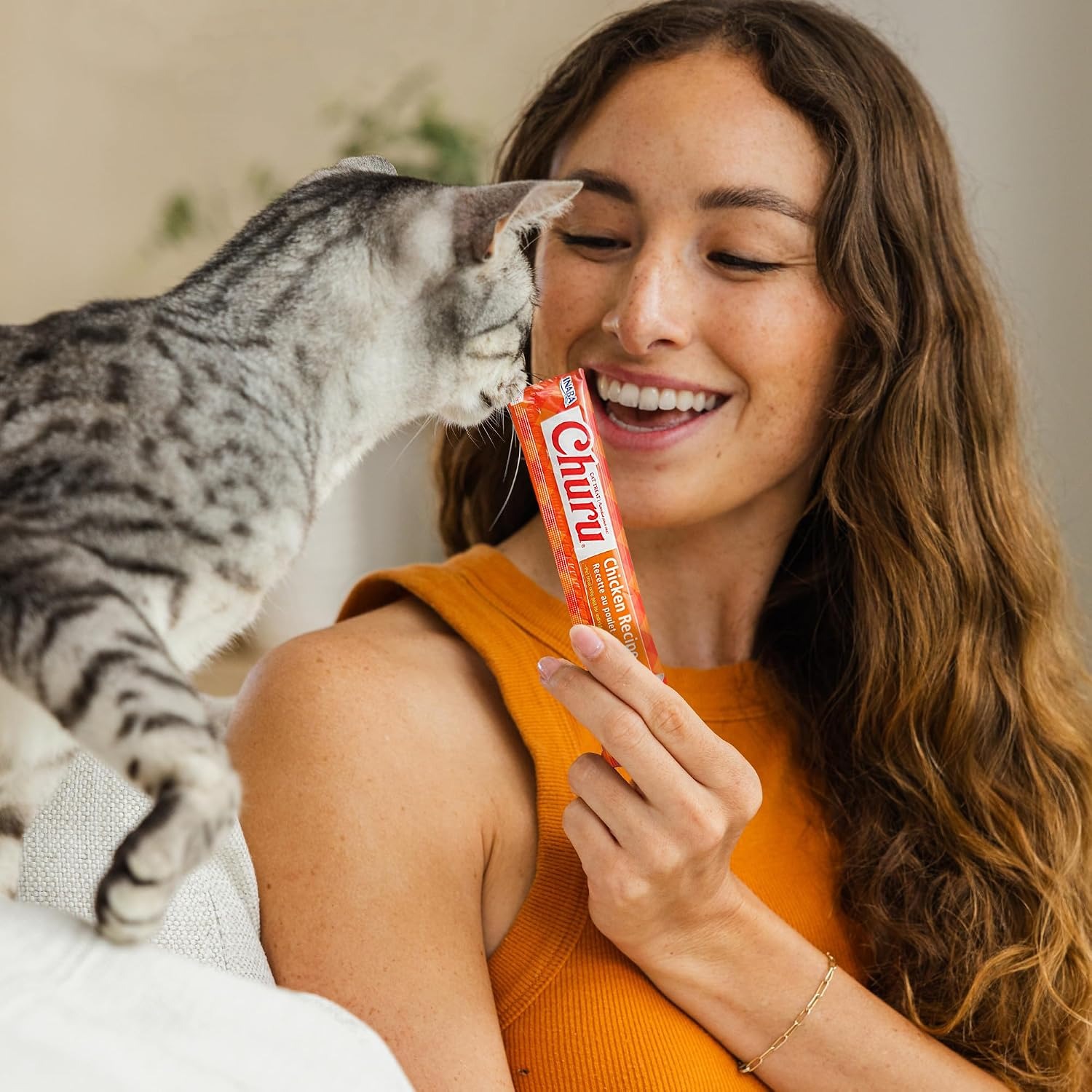
Cats are not always easy to connect with on demand. They come when they want to. So the moments where they do choose to sit near you and pay attention matter more than they do with a dog, who will give you that attention all day for free. A treat that takes two minutes instead of thirty seconds, and that you hold while they eat it, changes the shape of that moment.
That is the gap lickable cat treat tubes fill. They are not better nutrition than a dry treat, and they are not a meal. They are a different format with a different job. The job is time spent together.
How a purée tube actually works
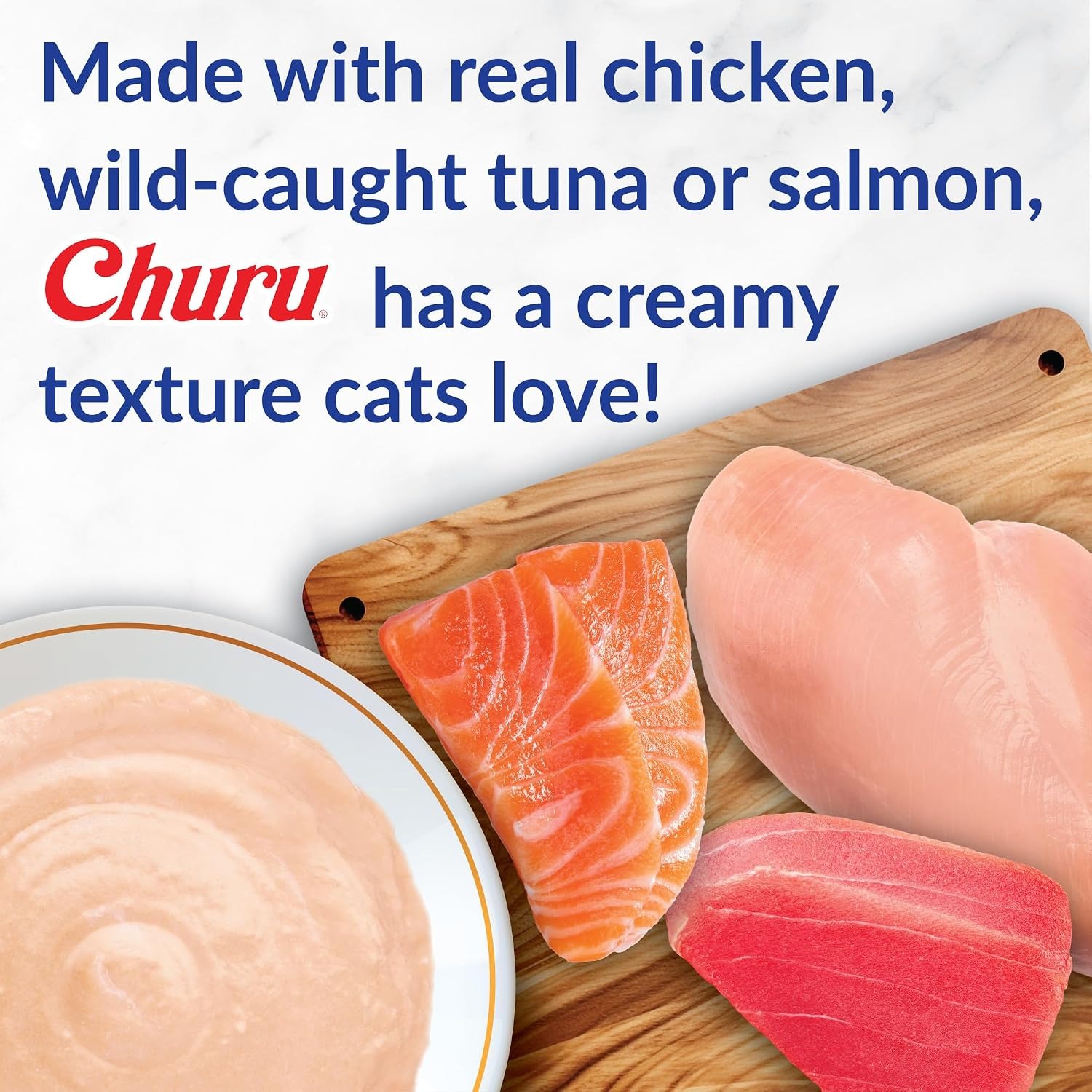
Each tube holds a single serve of soft chicken purée. You tear the top off, hold the tube out, and squeeze gently while your cat licks. The purée is thick enough to stay put and thin enough to come out with light pressure. Water and chicken are the first two ingredients in every recipe in this pack, with tapioca starch and guar gum giving it the consistency that lets it sit on a tube tip without running everywhere.
The texture is the whole trick. Cats lick. It is already how they groom and how they drink. A purée plays to something they do naturally, which is why some cats who turn their nose up at a biscuit will go straight at a tube.
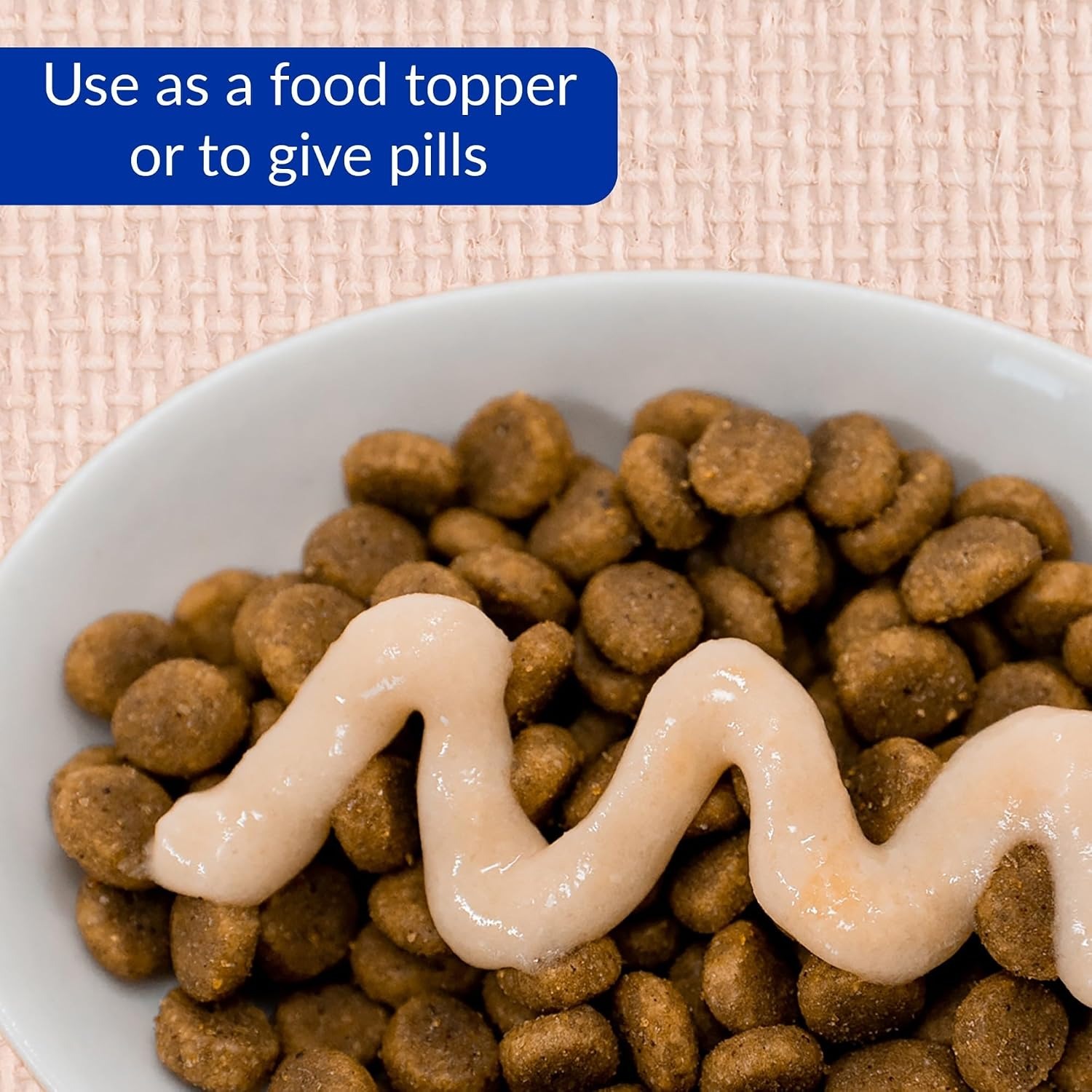
You do not have to hand feed. A tube squeezed onto a saucer works. So does spreading one across a lick mat, which stretches the same amount of food over several minutes and suits cats who inhale everything at speed. And you can stir a tube through a bowl of wet or dry food as a topper, which is probably the most common use after hand feeding.
What is in this particular pack
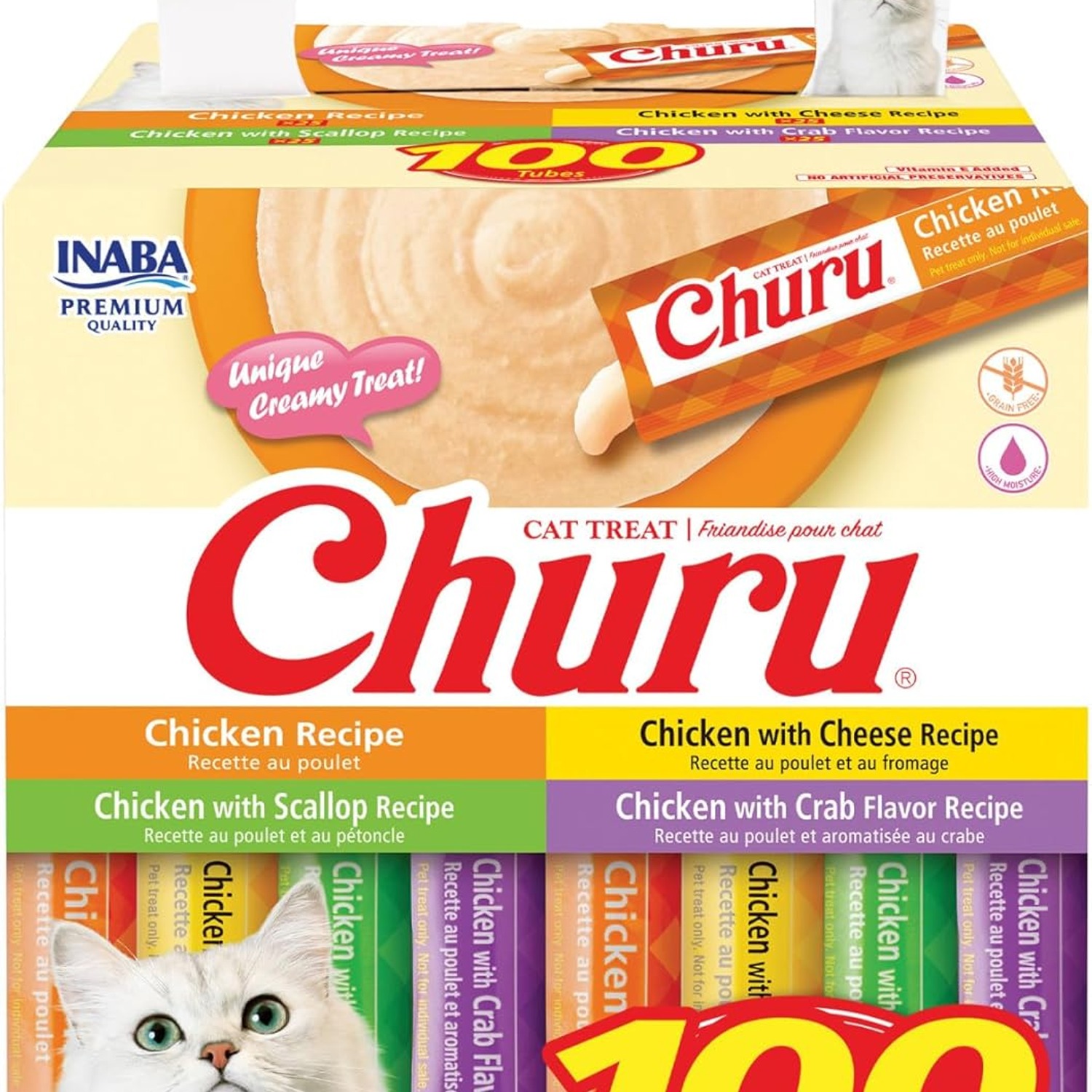
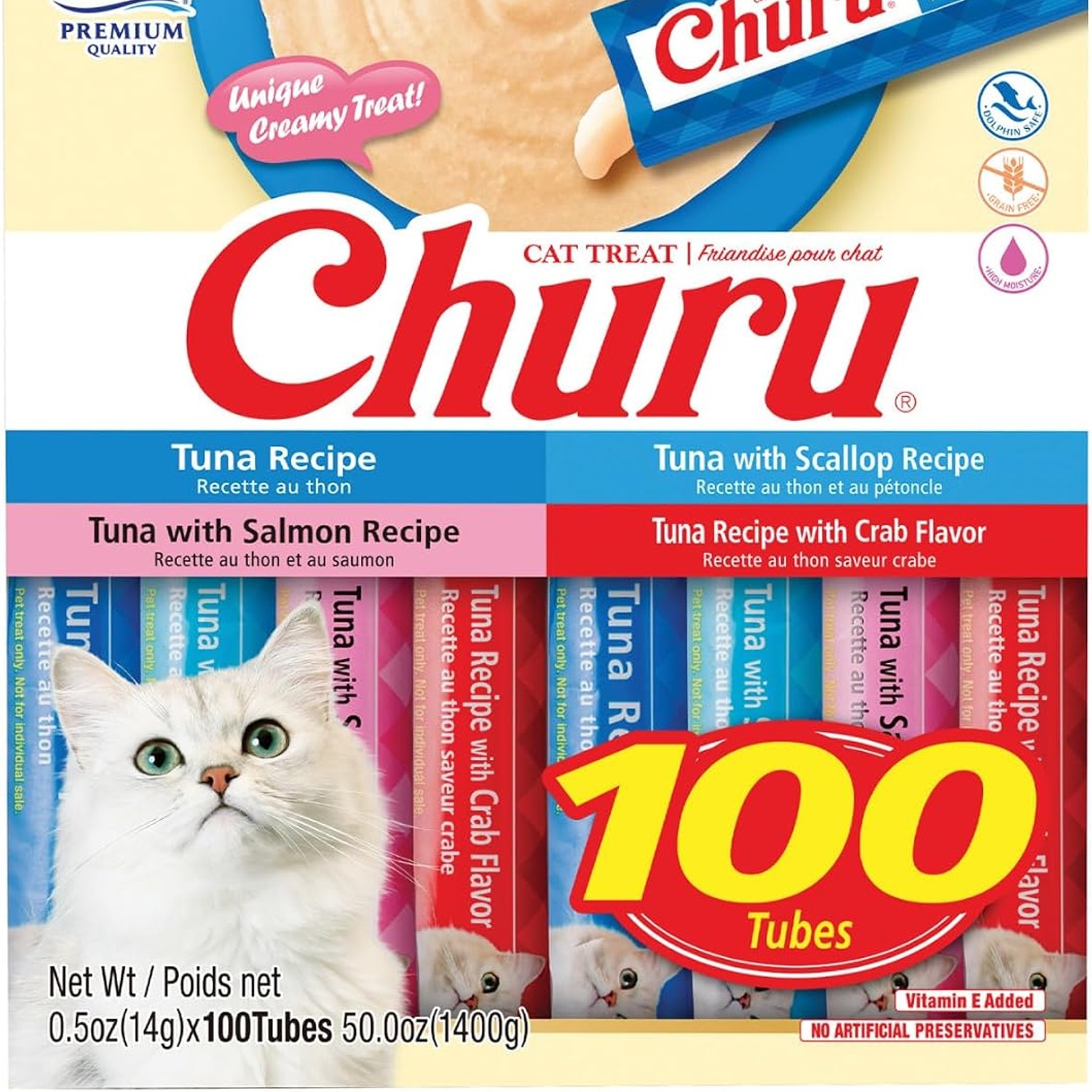
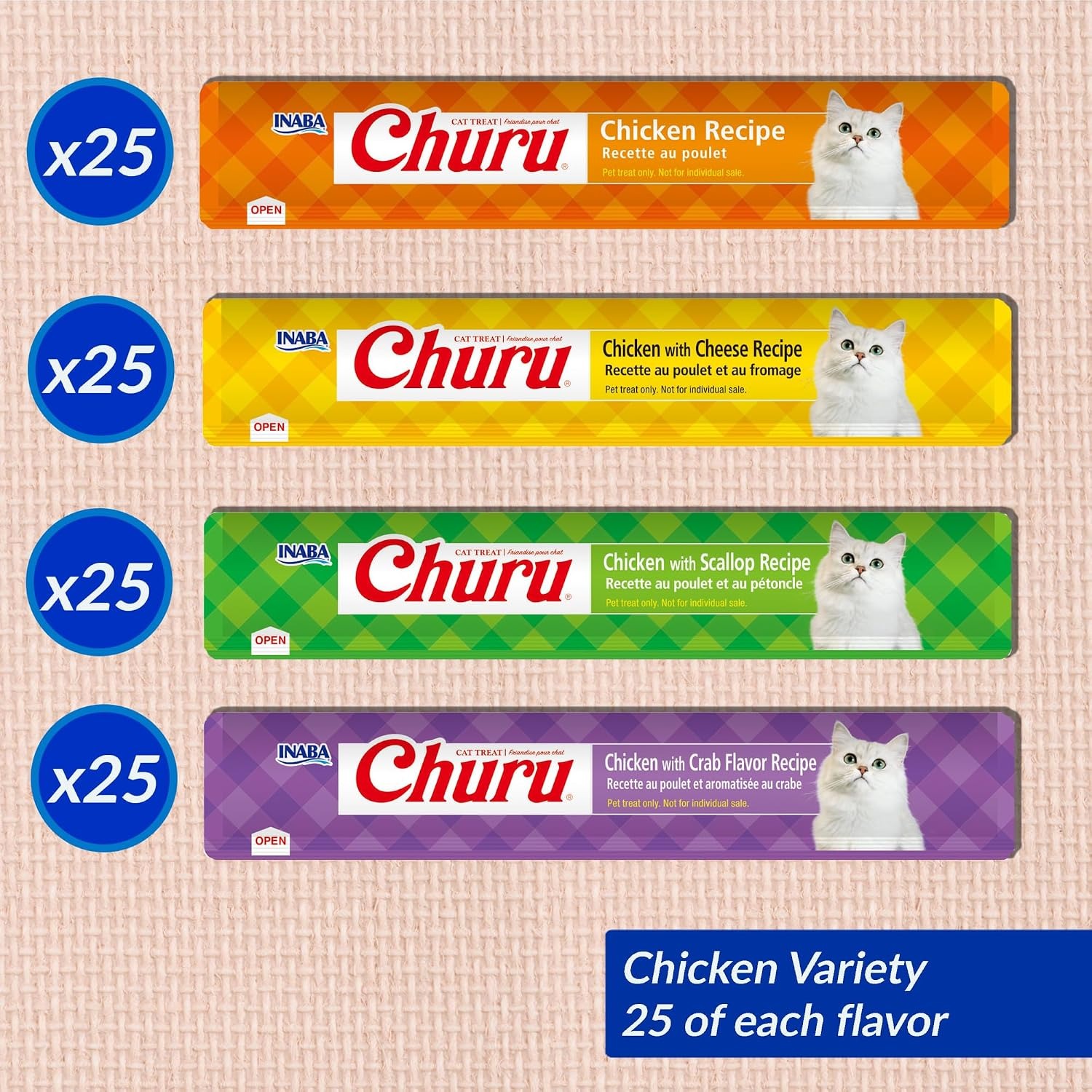
This carton holds 100 tubes, 1400 g of product, split across four chicken recipes with 25 tubes of each. The four are plain chicken, chicken with cheese, chicken with scallop, and chicken with crab flavour. All four share the same chicken and water base. The differences are what gets added, so the cheese recipe includes actual cheese made from milk, and the scallop recipe includes scallop.
INABA lists the range as grain free and preservative free, with no artificial colours and no artificial flavours. Each recipe carries a vitamin E supplement. The maker's feeding guide is short and worth repeating, serve one tube at a time as a prize. That is the framing. A prize, not a meal.
The ingredient lists are printed in full in the specs above. If your cat is on a restricted diet or has a known sensitivity, read them properly before you buy, and run anything you are unsure about past your vet. We are not in a position to give dietary or health advice and will not try.
Who a 100 tube carton suits
Buying 100 of anything only makes sense if you will use 100 of them. A few situations where this size earns its place.
Multi cat households get through tubes quickly, and a variety box means you are not stuck with one flavour that two of the three cats refuse. Owners who use treats daily, for a morning routine or a bedtime ritual, will work through a carton steadily. People who use tubes as a distraction during brushing, nail trims or ear cleaning tend to go through more than they expect.
If you have one cat who gets a treat on Sundays, a smaller pack is the better buy. There is no benefit in holding 100 tubes for two years. The best-before date is printed on the pack and you want to be comfortably inside it.
Choosing between flavours and formats
The honest answer on flavour is that you cannot predict it. Cats who love fish ignore scallop. Cats who have never had cheese go mad for it. This is exactly why a variety carton is worth more than a single flavour box for a first purchase. Four recipes, 25 chances each, and after a fortnight you will know what works.
If you are comparing formats more broadly, think about what you want the treat to do. Dry treats are tidy and good for tossing across a room during play. Soft chunks in jelly suit cats who want something to chew. A purée tube is for close contact, for topping food, and for slow feeding. They are not competing products so much as different tools, and most households end up with two of the three.
Pack size is the other variable. Smaller boxes cost more per tube but reduce the risk if your cat says no. Bulk boxes are the better value once you know what your cat likes. Starting with a variety carton splits the difference, because you are unlikely to strike out on all four recipes at once.
Using them without overdoing it
A treat is an extra. The sensible approach is to keep your cat's normal complete food doing the heavy lifting and let tubes sit on top of that as a bonus. How many tubes a day or a week is right for your cat depends on their size, age, activity and health, and that is a question for your vet rather than a product page. The maker's own guide of one tube at a time as a prize is a reasonable anchor.
A few practical habits help. Give the tube at a consistent moment, like after a nail trim or before bed, so it becomes a routine rather than a random handout. If you have more than one cat, feed them separately so nobody gets elbowed out. And if your cat tends to bite the tube rather than lick it, go straight to a plate.
Storage and handling
Keep the carton somewhere cool and dry, out of direct sunlight, with the tubes sealed until you need them. No refrigeration required for unopened tubes. If your storage cupboard sits in a hot garage or a damp laundry, move it indoors.
Once a tube is open, serve it. These are single serve by design and are not made to be resealed and saved. If a whole tube is more than your cat wants in one go, split it between two cats or spread the rest on a lick mat at the same sitting.
Wash your hands after hand feeding and give any plate or mat a proper wash. The best-before date is printed on the pack, so check it when the carton arrives and plan your use around it.
Delivery, returns and the rest
Orders are dispatched within 2 working days and then take up to 7 working days with a tracked courier. Delivery is free on orders over $99 and $12 below that. You will get a tracking number when the box leaves.
On returns, unopened and sealed packs can come back within 14 days of delivery, with return postage at your cost. Opened food cannot be returned for change of mind, which is standard for anything edible. If something is faulty or not as described, contact us, and your rights under the Australian Consumer Law apply in full. There is no separate warranty on a food product.
The short version
INABA Churu Chicken Variety is 100 tubes of soft chicken purée, split four ways, made to be squeezed out and licked rather than dropped in a bowl. It is grain free and preservative free according to the maker, suits all life stages and all breed sizes, and works as a hand treat, a food topper or something to spread on a lick mat.
Buy it if you have more than one cat, if you use treats most days, or if you want a reliable way to hold a cat's attention during grooming. Buy a smaller pack if treats are an occasional thing in your house. And for any question about diet, allergies, weight or health, ask your vet, not a website.